


More news on this day
The gradual restoration of flights between India and Qatar through Doha is reactivating one of the world’s most important transit corridors, reshaping how travelers reach the United Kingdom, continental Europe and North America after months of disruption.
Get the latest news straight to your inbox!
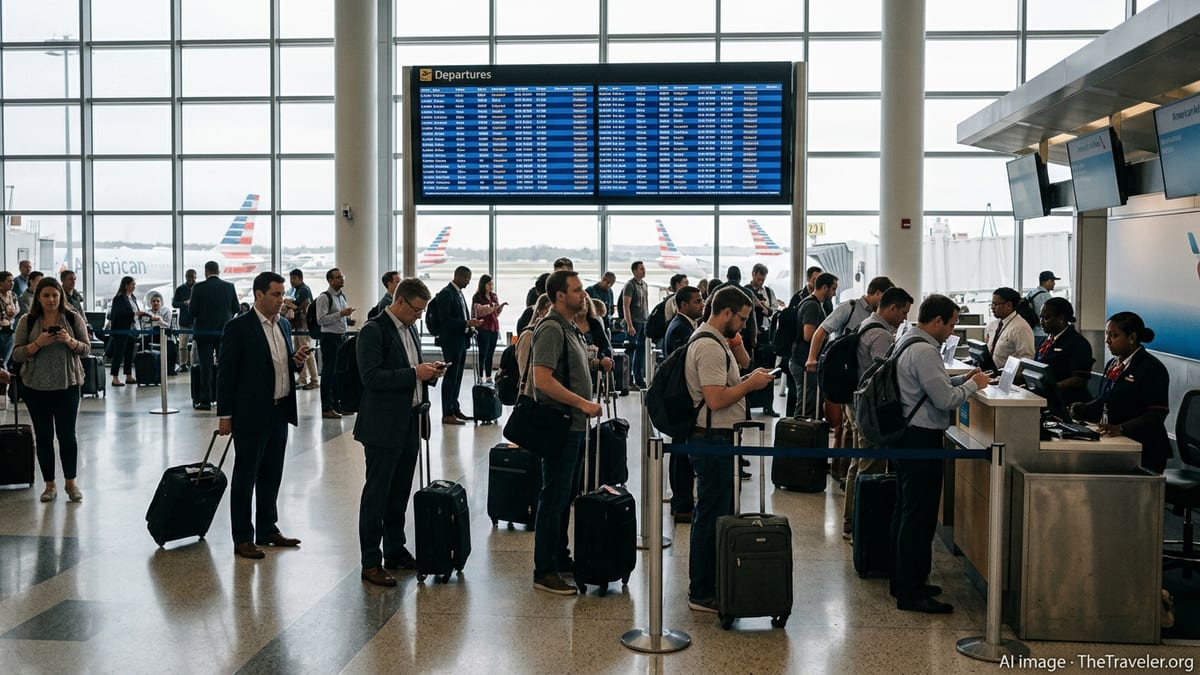
Doha’s Hub Reawakens After Regional Airspace Shock
Qatar’s aviation sector has spent the past two months working back from an abrupt shutdown of Qatari airspace on 28 February 2026, an event that temporarily halted passenger movements through Doha and scattered itineraries worldwide. Publicly available information shows that, through limited contingency corridors, authorities began allowing a controlled restart of operations in early March, prioritizing evacuation and essential cargo flights before gradually reintroducing scheduled passenger services.
That phased reopening has been critical for India–Qatar links. Before the disruption, Doha functioned as a dense connecting node for Indian travelers heading to London, Frankfurt, Paris and key North American gateways such as New York and Toronto. When Doha went offline, many passengers were forced into longer routings via Europe or Southeast Asia, with higher fares and reduced seat availability across school holiday and early summer booking periods.
Recent schedule data and industry coverage indicate that Qatar Airways and Indian carriers are now rebuilding frequencies on core India–Doha city pairs, including Delhi, Mumbai and several secondary Indian cities. While capacity remains below pre‑closure levels, the resumption of daily and near‑daily links is already restoring a predictable bridge between the Indian subcontinent and Doha’s long‑haul network.
The Qatar Airways hub at Hamad International Airport is operating under constraints while a single‑runway maintenance program proceeds through the second quarter of 2026, but the carrier is progressively adding back departures. Forecasts from aviation analysts suggest that most primary long‑haul corridors through Doha, including those to Western Europe and North America, are expected to see further normalization into the northern summer schedule.
India–Qatar Flights Plug Back Into UK and European Trunks
For travelers between India and the United Kingdom, Germany and France, the revival of India–Doha services is particularly significant. In late February and March, many India–Europe passengers who were originally ticketed via Doha were rebooked over alternative hubs such as Istanbul or were forced onto more expensive nonstop or two‑stop itineraries. Reports from passenger forums and travel agencies describe an extended period of uncertainty, with rolling cancellations and limited interline options.
As Doha’s airspace reopened in stages, Qatar Airways began operating targeted repatriation flights to key European hubs, including London Heathrow, Paris Charles de Gaulle, Madrid, Rome and Frankfurt, using narrow safe corridors to and from Qatar. Those flights initially catered to stranded travelers but have since evolved into the backbone of a more stable, if still slimmed‑down, schedule connecting Europe back through Doha.
With India–Doha operations now steadily returning, the missing middle of that corridor is being restored. Passengers in major Indian metros are again able to access one‑stop routings to London and major German and French gateways by transiting through Doha within a single ticket and alliance ecosystem. Travel agents report that these itineraries are reappearing in global distribution systems with shorter elapsed times compared with many of the improvised routings that dominated during the height of the disruption.
However, capacity discipline remains evident. Published schedule analysis shows that Qatar Airways has trimmed frequencies on some of its busiest European routes during the current maintenance period at Hamad International, notably to London and Paris, and is offsetting some of the cuts with larger aircraft on remaining flights. For India‑origin passengers, that translates into fewer daily choices but often higher‑capacity flights, with a premium placed on early booking.
New Momentum for Gulf–India–North America Connections
The knock‑on effect of Doha’s partial shutdown was felt acutely in the India–North America market, where Gulf hubs play a central role in stitching together one‑stop connections. The interruption forced many travelers onto longer itineraries via Europe or East Asia, often adding hours and connections to journeys that had become routine through the Gulf.
As Qatar rebuilds its long‑haul network, reports from airline schedule trackers indicate that transatlantic services from Doha to North American cities are ramping up from their March lows. While not yet back to full strength, this trend, combined with the restoration of India–Doha flights, is reopening competitive one‑stop options for Indian travelers to the United States and Canada.
Industry commentary suggests that North America‑bound passengers from cities such as Bengaluru, Hyderabad and Kochi are again able to find through‑fares that combine regional legs into Doha with onward wide‑body services across the Atlantic. For corporate travel planners and visiting‑friends‑and‑relatives segments, the reappearance of these itineraries is expected to ease pressure on fares that spiked when capacity was suddenly diverted away from Doha‑centric routings.
Travel data providers are also pointing to early signs of booking momentum on restored India–Qatar–North America corridors for the late summer and early autumn period. As additional frequencies are added and confidence in the stability of the corridor improves, analysts anticipate a gradual rebalancing of demand away from some of the emergency routings that surged in March and April.
Low‑Cost and Regional Carriers Reinforce the Corridor
The reconnecting of India and Qatar is not limited to full‑service long‑haul operators. Recent announcements from India‑based low‑cost and hybrid carriers highlight a broader rebuilding of the India–Gulf ecosystem, particularly across the Gulf Cooperation Council region. Air India Express, for example, has reinstated routes to Qatar and Bahrain and increased flying to the United Arab Emirates, Oman and Saudi Arabia, underscoring the strength of short‑ to medium‑haul demand between India and the Gulf.
This resurgence of regional capacity is important for Doha’s role as a connector. A dense pattern of flights shuttling workers, families and business travelers between smaller Indian cities and Gulf states underpins the viability of long‑haul services funnelling through hubs such as Doha. As more of these regional seats come back into the market, it becomes easier for Indian travelers outside the main metros to plug into the restored Doha corridor and access onward flights to Europe and North America.
Airport statements and traffic forecasts from across the Gulf indicate that the India–GCC market remains one of the busiest and most resilient global aviation corridors, driven by large expatriate populations and strong trade links. That resilience is helping airlines justify the accelerated restoration of frequencies, even as they navigate airspace constraints and infrastructure projects like Doha’s single‑runway period.
For passengers, the practical impact is a gradual return of choice. One‑stop options combining regional India–Gulf sectors with Doha‑routed long‑haul flights are reappearing in flight search results, giving travelers more flexibility on timings and enabling competitive pricing across both full‑service and low‑cost combinations.
What Travelers Should Expect in the Months Ahead
Despite clear progress, Qatar’s aviation network is still in a transition phase. Airspace remains governed by special corridors, and Hamad International Airport is managing a planned maintenance program that limits runway availability through mid‑June 2026. Airlines are responding with a mix of schedule reductions, upgauged aircraft and selective route additions, leading to an environment where flight options can improve from one week to the next.
Publicly available airline advisories emphasize that schedules are being updated frequently as capacity increases are cleared and operational assessments evolve. Travelers booking India–Doha connections to the United Kingdom, Germany, France or North America are being advised by travel intermediaries to pay close attention to schedule changes, allow ample connection times in Doha and verify that both sectors of a journey are operating as planned.
Industry analysts expect that by the peak summer travel period many of the principal corridors through Doha will resemble a more typical network, even if frequencies and timings differ from previous years. For India‑origin travelers, that should translate into a more stable menu of options to major European and North American gateways compared with the ad hoc routings that characterized the immediate aftermath of the airspace closure.
In the meantime, the revival of the India–Qatar corridor through Doha marks a significant milestone in the broader recovery of Gulf‑centric global connectivity. As one of the key bridges joining South Asia with Western Europe and North America comes back online, global flyers are beginning to regain the seamless one‑stop travel patterns that have defined long‑haul flying in the Gulf era.