


More news on this day
Across Kenya and much of Africa, households are feeling the strain of rising living and travel costs as renewed tensions around Iran, higher global oil prices and expensive imports push up everyday expenses from food baskets to airfares.
Get the latest news straight to your inbox!
Kenya’s Inflation Pressure Builds From Fuel To Food
Kenya has not returned to the double-digit inflation peaks seen in earlier commodity shocks, but recent data points to a steady build-up in price pressures. Official figures show headline inflation rising from 4.4 percent in March 2026 to about the mid‑5 percent range in April, the highest level in roughly two years, as food, transport and housing costs climb in tandem.
Publicly available analysis of Kenya’s consumer basket indicates that fuel-linked items are again a major driver, with the cost of road transport, cooking gas and electricity edging higher. Analysts tracking the market note that a sharp jump in Murban crude import prices in March has begun to filter through to pump prices, with domestic energy regulators signaling further adjustments in the months ahead.
Higher transport costs are also being compounded by local shocks. Flooding in parts of Kenya during March and April disrupted logistics and damaged infrastructure, contributing to temporary shortages of some fresh foods and adding another layer of pressure to consumer prices already elevated by global energy markets.
While core inflation that strips out volatile food and fuel remains relatively contained, Kenya’s central bank has warned that imported inflation, particularly via energy, is a growing risk. Market commentary suggests that policymakers are watching global oil benchmarks closely as they calibrate interest rates and exchange-rate management to protect the shilling and keep inflation expectations anchored.
African Peers Grapple With High And Sticky Inflation
Kenya’s experience is echoed across a number of African economies that rely heavily on imported fuel and fertilizer. Public data for Ghana, Ethiopia, Egypt and several others indicates that headline inflation remains elevated after successive external shocks, even where central banks have tightened monetary policy aggressively.
Ghana, which has been working through a debt restructuring program, has seen inflation fall from earlier peaks above 40 percent but still contend with double‑digit price growth, driven in part by fuel, transport and imported food. In Ethiopia, official statistics show consumer prices decelerating from very high levels, yet remaining among the steepest on the continent, a reflection of both domestic conflict legacies and expensive imports.
In South Africa, inflation has been lower than in many peers but remains highly sensitive to changes in global oil benchmarks and domestic electricity tariffs. Mauritius, which depends on tourism and imported fuel, continues to navigate price pressures in food and transport, with government support measures and currency dynamics playing a significant role in how those costs are passed on to residents and visitors.
Taken together, the region presents a picture of uneven but persistent inflation where even moderate headline readings translate into daily hardship, particularly for low‑income households that spend a high share of their income on food and transport. Rising energy and shipping costs ripple through supply chains, pushing up the price of everything from staple grains to school transport and domestic tourism.
Oil Market Volatility After Setbacks In U.S.-Iran Diplomacy
The latest squeeze comes as global oil and gas markets adjust to renewed uncertainty over the future of Iranian exports. After months of on‑off negotiations, recent coverage of the 2025–2026 U.S.–Iran talks indicates that Washington has rejected Tehran’s latest proposals for a nuclear arrangement, while a U.S. naval blockade and sporadic fighting around the Strait of Hormuz continue to unsettle traders.
Analysts who follow energy markets report that every setback in diplomacy tends to be followed by a bout of price volatility. Brent crude has oscillated around and above the 100‑dollar mark at several points in 2026, with spikes linked to fears of supply disruptions and counter‑blockade measures aimed at Iran’s shipments to Asia. Liquefied natural gas cargoes, many of which pass through or near the Gulf chokepoints, have also faced routing uncertainty and higher insurance costs.
For African net importers, including Kenya, Uganda, Tanzania and Ethiopia, this environment has translated into higher landed costs for crude oil, LPG and, indirectly, LNG. Local fuel pricing formulas, which often lag global benchmarks by several weeks, suggest that a significant portion of recent increases at the pump reflects renewed war risk premiums and higher freight charges embedded in international contracts.
Economic commentaries from multilateral institutions have warned that a prolonged period of elevated oil prices would complicate inflation control across emerging markets. Countries with limited fiscal space may find it difficult to continue fuel subsidies or tax reductions that cushioned earlier price shocks, meaning more of the global volatility is ultimately borne by domestic consumers and travelers.
Costly Air Routes And Travel Links To The Gulf
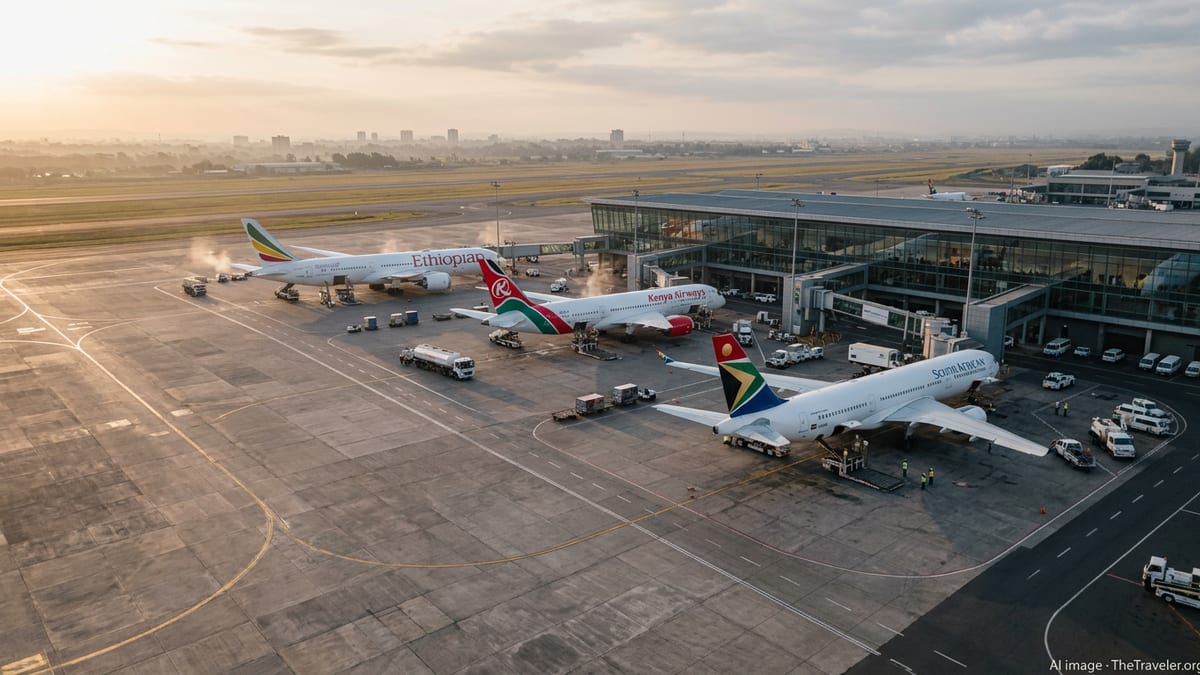
The Middle East remains a key hub for African travel, trade and tourism, with major carriers based in the United Arab Emirates, Qatar, Saudi Arabia and Oman providing connections between African capitals and the wider world. As jet fuel prices track higher crude benchmarks, airlines serving routes between Nairobi, Addis Ababa, Johannesburg and Gulf hubs have been contending with rising operating costs.
Publicly available fare trackers and travel-industry reports indicate that average ticket prices on some routes between East Africa and the Gulf have moved higher over the past year, especially during peak seasons. Carriers have also adjusted schedules and capacity to match demand, meaning fewer discounted seats are available even when headline fares appear stable.
For leisure travelers and migrant workers who rely on connections through Dubai, Doha, Abu Dhabi, Muscat and other hubs, higher fares compound the effect of domestic inflation. The same is true for business and conference travel into Kenya, South Africa and Mauritius, which must now factor in both elevated airfares and higher accommodation and local transport costs driven by fuel.
Carriers across Africa and the Gulf have invested in more fuel‑efficient fleets and hedging strategies to manage volatility, but industry commentary suggests that such measures only partially insulate them when geopolitical tensions in the Gulf push up both fuel prices and overflight or insurance costs. The result is a more expensive travel environment on some of the continent’s most critical international corridors.
Everyday Trade, Tourism And Mobility Under Strain
Beyond air travel, the broader cost of moving goods and people across Africa has increased as shipping lines, trucking companies and logistics providers pass on higher fuel and insurance bills. Rising freight rates from Gulf ports to African destinations feed directly into the retail prices of imported foodstuffs, building materials and household goods.
Tourism, a crucial foreign-exchange earner for countries such as Kenya, Tanzania, South Africa and Mauritius, is also navigating a more complex landscape. Visitors face not only higher long‑haul fares and regional flights, but also increased costs for safari transport, coastal transfers and internal flights that rely heavily on fuel. Industry updates suggest that some operators are absorbing part of the shock to protect demand, while others have introduced fuel surcharges or seasonal price revisions.
For local residents, the combination of rising fuel prices, higher bus and matatu fares, and more expensive domestic flights has tangible social effects. Commuters in Nairobi, Kampala and Dar es Salaam are spending a larger share of their income on daily transport, while middle‑class households reconsider discretionary travel, from weekend getaways to international holidays routed through Gulf hubs.
As the geopolitical standoff around Iran continues and oil markets remain sensitive to diplomatic headlines, African policymakers and businesses are looking for ways to bolster resilience. These range from diversifying energy supply and accelerating renewable projects to rethinking how fuel costs are shared along the travel and logistics value chain. For now, though, many travelers and consumers across Kenya and its regional peers are left grappling with the immediate reality of higher prices on the road, in the air and at the market stall.