


More news on this day
Scandinavian carrier SAS is set to become a core part of the Air France-KLM stable, in a prospective majority takeover that is expected to reshape Europe’s competitive aviation landscape and unlock new long-haul and regional options for passengers worldwide.
Get the latest news straight to your inbox!
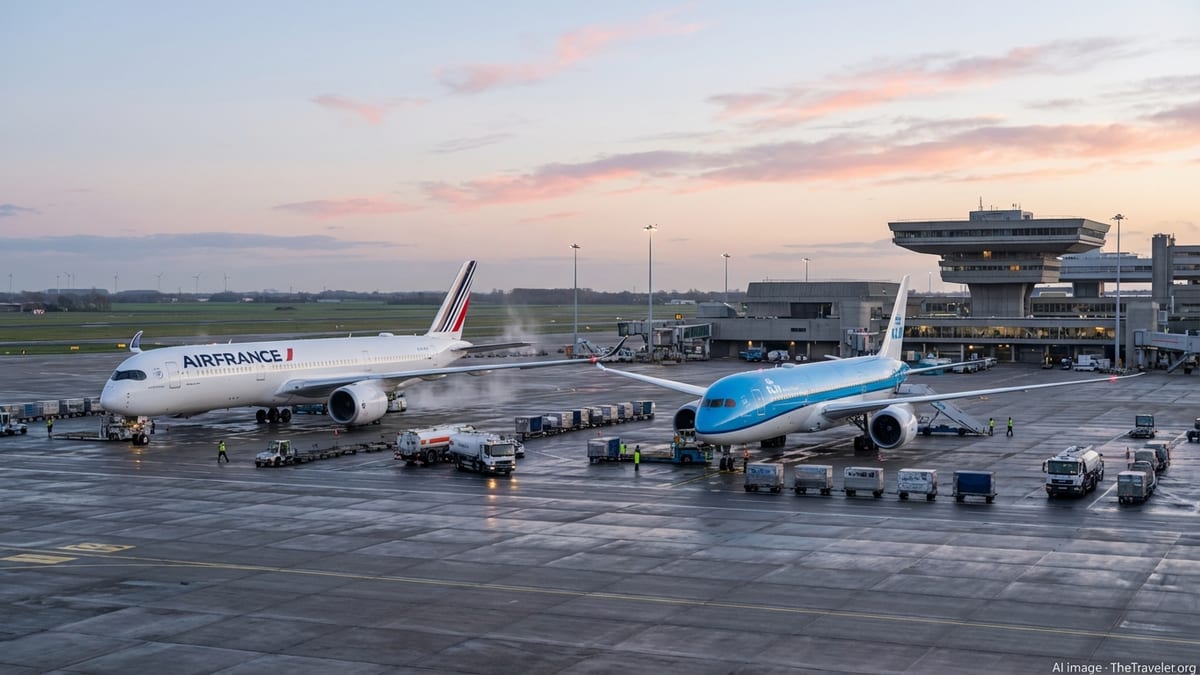
A Strategic Majority Stake That Redraws Airline Alliances
Publicly available filings and corporate announcements show that Air France-KLM currently holds a 19.9 percent stake in SAS as part of a wider investment consortium that backed the Scandinavian airline’s restructuring and exit from Chapter 11 proceedings. The group has now launched a process to raise its stake to 60.5 percent by acquiring shares held by investment funds Castlelake and Lind Invest, a move that would turn SAS into a controlled subsidiary alongside Air France and KLM.
The planned majority ownership is positioned as a cornerstone of Air France-KLM’s medium-term strategy. The Franco-Dutch group has long sought a stronger presence in Northern Europe, a region traditionally dominated by SAS and low-cost rivals. By taking control of SAS, Air France-KLM stands to secure an entrenched position across the Scandinavian markets of Denmark, Norway and Sweden, which can then be linked more tightly into its hubs in Paris and Amsterdam.
The transaction remains subject to regulatory approvals and conditions that observers expect to run into 2026, but the direction of travel is clear. SAS, which historically built its long-haul and regional network around partnerships in the Star Alliance, is gradually shifting its commercial center of gravity toward the SkyTeam ecosystem and the joint ventures anchored by Air France and KLM.
Analysts following the European airline sector note that the deal would create one of the continent’s most geographically balanced groups. With Air France-KLM’s strength in Western Europe and transatlantic markets combined with SAS’s Nordic footprint and strong brand recognition in Scandinavia, the new constellation is expected to carry well over 120 million passengers annually once fully integrated.
New Hub Dynamics and Expanded Northern Europe Connectivity
An early sign of the changing landscape came even before the majority stake announcement, when extended codeshare and interline agreements linked SAS with Air France and KLM. Since late summer 2024, customers of the Franco-Dutch group have been able to book travel to dozens of Scandinavian and Baltic destinations beyond SAS’s main hubs in Copenhagen, Oslo and Stockholm, using through-ticketing and coordinated schedules.
For travelers in Northern Europe, the next phase is expected to see Copenhagen, already a key SAS base, evolve into a de facto third long-haul hub for the wider group. Industry commentary suggests that Air France-KLM sees the Danish capital as a natural complement to Paris Charles de Gaulle and Amsterdam Schiphol, particularly for flows between Northern Europe and North America as well as Asia.
That vision would likely translate into more banked connections and improved schedules for passengers originating in smaller Nordic cities. Routes that today require multiple tickets or long layovers could, over time, be folded into a single network architecture, with coordinated departure waves in Copenhagen feeding long-haul departures operated either by SAS or, via connections, by Air France and KLM.
Regional travelers also stand to benefit from increased resilience in the route map. With SAS plugged into a larger group fleet and scheduling pool, observers expect greater flexibility to redeploy capacity seasonally, reinforcing key leisure routes in summer and business-heavy city pairs in winter.
Global Market Reach and Loyalty Program Shake-Up
Beyond regional connectivity, the Air France-KLM and SAS tie-up is expected to open new global markets for Scandinavian passengers while channeling fresh flows to the group’s long-haul network. SAS already serves North America and selected destinations in Asia and the Middle East, but its long-haul reach is more limited than those of Air France and KLM. As integration progresses, itineraries combining SAS-operated feeder flights with long-haul segments on Air France and KLM are likely to multiply.
Travelers based in Copenhagen, Oslo and Stockholm could see more options to connect via Paris and Amsterdam to secondary cities in North America, Africa and Asia that are not currently accessible on a single SAS ticket. Conversely, passengers from North America or Asia intending to reach smaller Nordic or Baltic destinations may find it easier to do so under one booking, using a mix of Air France, KLM and SAS flights.
A significant change is also expected on the loyalty front. SAS has announced its intention to leave Star Alliance, with reports indicating a roadmap toward eventual integration into the SkyTeam framework dominated by Air France-KLM and partners in North America and Asia. Frequent flyers are watching closely to see how elite status recognition, mileage earning and redemption charts will evolve as SAS aligns with the Flying Blue program used by Air France and KLM.
For many regular travelers, the key question will be whether points and perks transfer seamlessly as alliances shift. Public information suggests that transitional arrangements will be implemented to preserve continuity for SAS customers, but the long-term result is likely to be a fully harmonized loyalty environment that rewards multi-brand itineraries across the combined network.
Competitive Pressures in a Consolidating European Market
The prospective majority takeover of SAS adds another chapter to the ongoing consolidation of European aviation. Over the past decade, flagship groups built around Lufthansa, International Airlines Group and Air France-KLM have each sought to extend their reach through equity stakes, joint ventures and acquisitions, while low-cost carriers such as Ryanair and Wizz Air have expanded aggressively.
In this context, the addition of SAS is widely viewed as a strategic answer to competitive moves in Northern Europe. Lufthansa Group had historically been a close partner of SAS within Star Alliance, but the Scandinavian carrier’s financial troubles and Chapter 11 restructuring created an opening that Air France-KLM was ultimately quicker to seize.
For rivals, the emergence of an Air France-KLM group strengthened by a Scandinavian arm will sharpen competition for both corporate and leisure travelers in the region. Airlines that have built sizeable Nordic operations, including low-cost operators and regional carriers, may face pressure on yields as a restructured SAS backed by a large group deploys more sophisticated revenue management, joint sales efforts and broader connectivity.
Regulators scrutinizing the deal are expected to focus on route overlaps and market concentration at key airports. However, the fragmented nature of Nordic aviation, with strong representation from low-cost competitors, may weigh in favor of approvals, particularly if commitments are made to preserve slots and maintain baseline connectivity on essential routes.
Operational Integration, Sustainability Goals and What Travelers Can Expect Next
While ownership and alliance decisions attract most headlines, the ultimate impact on passengers will depend on the pace and depth of operational integration. Industry observers anticipate a multi-year process covering fleet planning, scheduling, ground handling, digital platforms and customer experience alignment across the three main brands.
Air France-KLM has publicly emphasized sustainability as a pillar of its investment agenda, including increased use of sustainable aviation fuel and modernization of its fleet. SAS has also committed to renewing its aircraft and improving environmental performance. As the integration progresses, coordinated fleet orders and joint fuel procurement could accelerate the phase-in of more efficient aircraft types across Scandinavian routes.
In the near term, travelers are likely to notice incremental changes: more extensive codeshares on existing routes, broader availability of through-ticketing, and gradual harmonization of services such as baggage policies and rebooking rules between SAS and its new sister airlines. Over a longer horizon, schedule redesign around Copenhagen as a third group hub, new long-haul destinations and fully integrated loyalty benefits are expected to take shape.
The combination of SAS with Air France-KLM reflects a broader trend of national carriers becoming parts of multinational airline families. For passengers, the outcome will be measured less in ownership structures and more in whether the new group delivers on expectations for smoother journeys, broader choice and a more sustainable way to cross Europe and connect to the world.