


More news on this day
Qatar is moving back into the heart of global aviation as airlines progressively restore capacity to Doha and Dubai, reconnecting key markets such as the United Arab Emirates, the Philippines and Kazakhstan after months of disruption and constrained schedules.
Get the latest news straight to your inbox!
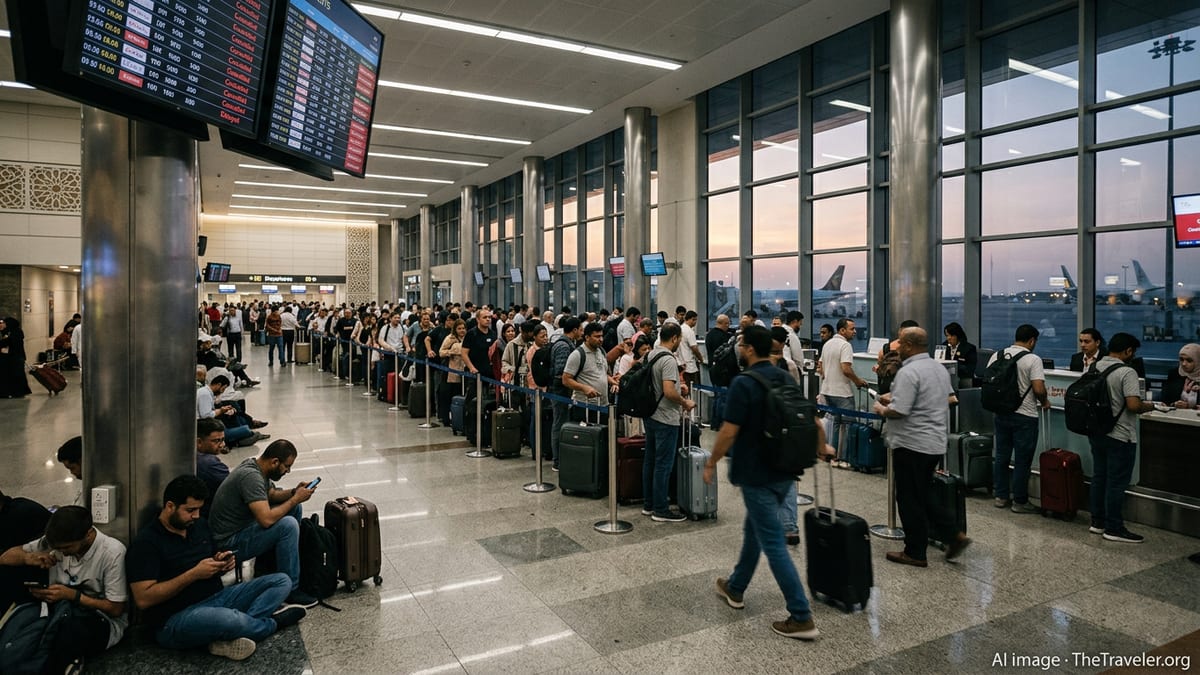
Doha and Dubai Return as Twin Hubs for Re-routed Global Traffic
Recent schedule updates and operational notices show that carriers are rebuilding their networks over Doha and Dubai, restoring the two Gulf cities to their familiar role as twin hubs for long-haul connections between Europe, Asia and Africa. Publicly available information indicates that Qatar’s airspace, which has seen temporary restrictions in early 2026, is gradually reopening to regular commercial traffic through designated corridors, allowing airlines to reintroduce connecting itineraries via Doha alongside Dubai.
Major Gulf operators are leaning on their extensive transfer traffic to capture returning demand. Industry coverage on Emirates shows the Dubai-based airline operating close to its pre-disruption footprint, with about 96 percent of its global route network restored and schedules rebuilt across the Americas, Europe, Africa, West Asia and the Asia-Pacific region. Reports note that Dubai International Airport has returned to handling intensive wave‑style banks of connecting flights, pushing more passengers back through the UAE gateway.
At the same time, Doha’s Hamad International Airport is reappearing more prominently in global booking systems. Qatar Airways has been adding frequencies on selected routes as conditions allow, revising interim timetables and opening additional transit options through the Qatari capital. Travel industry data and aviation forums highlight that more routes are again being ticketed over Doha, indicating that the hub is being woven back into complex multi‑leg journeys that had been diverted elsewhere during the airspace closure period.
Aviation analysts point out that the restoration of capacity through both Doha and Dubai is occurring against a backdrop of robust global demand. The latest World Air Transport Statistics from the International Air Transport Association show international passenger traffic and premium cabins growing at double‑digit rates, suggesting that the market is well-positioned to absorb newly reinstated seats on Gulf connectors.
Philippines Links Strengthen as Carriers Restore Manila–Gulf Services
The Philippines is emerging as one of the clearest beneficiaries of the renewed focus on Doha and Dubai connectivity. Philippine travel and business media report that Emirates has rebuilt a dense schedule to the country, operating dozens of weekly flights to Manila, Cebu and Clark after temporary cancellations earlier in 2026. Cargo data referenced in regional coverage also underlines the importance of these routes, with Emirates ranking among the leading foreign carriers by freight volume on the Philippine market.
Low-cost operators are also returning to the corridor. Gulf-based and Philippine outlets have detailed how Cebu Pacific will resume its Manila–Dubai service from early July 2026 after a suspension linked to elevated fuel prices and operational disruptions at Dubai International Airport. The airline plans several weekly rotations between the two cities, restoring a budget option for Filipino workers and leisure travelers who had been relying on more expensive or indirect itineraries.
On the Doha side, connectivity between Qatar and the Philippines is being reinforced through deeper airline cooperation. Financial research reports and aviation-focused publications describe an expanded codeshare and loyalty partnership between Qatar Airways and Philippine Airlines, in which Philippine Airlines places its code on Qatar Airways flights from Manila, Cebu, Clark and Davao to Doha. In return, Qatar Airways applies its code to Philippine Airlines domestic services, enabling through‑ticketed journeys from Doha to popular island destinations such as Caticlan and Puerto Princesa.
Travel trade analysts suggest that this partnership effectively integrates the Philippine archipelago into Qatar’s long‑haul network, giving travelers in provincial cities more direct access to Europe and the Middle East via Doha. With Philippine aviation authorities reporting record domestic and international passenger volumes in 2025, the restoration and expansion of Gulf links arrives as the market sets new traffic highs.
Kazakhstan and Central Asia Tap Into Restored Doha Connectivity
Central Asia is another region where the rebuilding of Qatar’s air links is beginning to reshape travel flows. Bilateral documents and civil aviation notices show that Kazakhstan and Qatar have steadily expanded their air services framework in recent years, including memoranda of understanding that allow additional passenger frequencies between Doha and key Kazakh cities such as Astana and Almaty.
Industry filings on Kazakhstan’s aviation sector indicate that the country is pursuing an “open skies” approach at several airports, with bilateral arrangements that facilitate more flights from Gulf carriers, including those based in Qatar and the United Arab Emirates. Financial disclosures related to Kazakh airlines highlight continued investment in fleet growth and infrastructure, which analysts see as preparation for greater east–west transfer traffic routed via Gulf hubs.
While detailed schedules can vary seasonally, timetable data and route trackers show multiple weekly services connecting Doha with Kazakhstan, either directly or via codeshare arrangements. These flights plug Central Asian cities into the broader Qatar Airways network, offering one‑stop access to Europe, South Asia and Southeast Asia and giving Kazakh travelers additional options beyond traditional Russian and Turkish hubs.
For Qatar, the growing Central Asian market provides diversification at a time when some traditional long‑haul segments remain exposed to geopolitical and economic volatility. For Kazakhstan, restored and expanded Doha connectivity supports tourism, business travel and labor mobility, complementing separate intergovernmental agreements on regulated employment of Kazakh workers in Qatar.
Network Restorations Reflect Broader Global Recovery Trends
The restoration of air links through Doha and Dubai to markets such as the Philippines and Kazakhstan aligns with broader recovery patterns tracked by global aviation bodies. The most recent statistics published by IATA show that international passenger demand continues to climb, with both economy and premium cabins recording strong year‑on‑year growth. Asia-Pacific routes have been especially dynamic, dominating rankings of the world’s busiest airport pairs.
Consultancy reports released in early 2026 note that airlines have responded to this demand by ordering additional widebody aircraft and reactivating parked capacity, focusing on networks that support long‑haul connecting traffic. Gulf carriers are prominent among the beneficiaries, as their geographically central hubs allow them to aggregate flows between multiple continents with high aircraft utilization.
In this environment, the gradual normalization of Qatar’s airspace operations and the near-complete restoration of Emirates’ global network help to rebalance capacity across key corridors. Schedules filed for the northern summer season indicate that more seats are returning on Europe–Asia and Europe–Australasia sectors via the Gulf, often providing competitive fares relative to nonstop or one‑stop options through other regions.
For travelers, the practical impact is a widening choice of routings and price points. More airlines are once again selling itineraries that pair origins in secondary European, African or Asian cities with connections over Doha or Dubai to destinations such as Manila, Astana or Almaty. Travel agents and online platforms report that these options are reappearing prominently in search results, signaling that Gulf connecting hubs are regaining their pre‑disruption visibility.
What Travelers Should Expect Next
Despite the clear trend toward restoration, industry observers caution that schedules through Doha and Dubai remain subject to adjustment, especially while Qatar continues to manage the phased reopening of its airspace. Operational notices and passenger experiences shared across travel communities suggest that carriers may still revise timings, aircraft types or frequencies at relatively short notice on some routes touching Doha.
Nonetheless, the direction of travel is firmly towards greater stability. Interim timetables issued by Qatar Airways for March and April 2026 already show additional destinations being reinstated and more transit itineraries being accepted through Doha. Parallel increases in Dubai capacity, led by Emirates and supported by other Gulf and Asian carriers, point to a competitive landscape in which both hubs will vie for connecting passengers from markets including the Philippines, Kazakhstan and wider Southeast and Central Asia.
Travel planners indicate that passengers booking for the second half of 2026 are likely to see more predictable operations, as airlines lock in aircraft rotations and staffing plans around restored networks. For Qatar, rejoining the ranks of fully functioning global hubs alongside Dubai is a critical step in regaining market share and reinforcing its role as a bridge between East and West.
As airlines continue to rebuild and refine their schedules, Qatar’s renewed connectivity to the United Arab Emirates, the Philippines, Kazakhstan and other emerging markets is set to influence fare levels, route choices and travel patterns across a wide swathe of the global aviation map.