


More news on this day
Early analysis of a recent fatal train crash suggests the incident was most likely a rear-end collision, according to technical assessments now emerging in publicly available reports and specialist commentary.
Get the latest news straight to your inbox!
Preliminary evidence points to impact from behind
Initial reconstructions of the crash sequence indicate that one train appears to have struck another from behind while both were on the same track, a scenario consistent with a rear-end collision. Track damage patterns, the position of the derailed rolling stock and the way carriages telescoped into one another have been highlighted in early technical discussions as typical signs of this type of crash.
Railway engineering specialists note that rear-end collisions most often occur when a following train either fails to stop in time for a stationary or slow-moving train ahead, or is not warned early enough by the signaling system. In this case, images from the scene show leading cars extensively compressed while trailing vehicles remain comparatively intact, a configuration that transportation analysts describe as more common when a moving train impacts the rear of another rather than in a head-on or side collision.
Investigators typically cross-check such physical evidence with digital data from onboard recorders, trackside systems and control centers. Although full results have not yet been published, experts observing the pattern of wreckage and damage distribution say it aligns more closely with a rear-end impact profile than with other collision types.
How rear-end train collisions happen
Rear-end train crashes are generally associated with a breakdown in one or more layers of protection, including signaling, train control technology and human oversight. Modern railways rely on interlocking signals, automatic train protection and strict operating rules to maintain safe separation between trains on the same line. If any of these barriers fail or are circumvented, a faster train can close on a slower or stationary one ahead, with little time to react.
In dense traffic conditions, trains may run at short headways, meaning there is relatively little distance between them. This makes precise adherence to speed restrictions and signal indications crucial. Even a small delay in braking, or a misinterpretation of a signal, can significantly reduce the margin for error. Technical literature on railway safety also points to the role of infrastructure bottlenecks and timetable pressure, which can lead to more frequent instances of trains queuing behind one another on busy corridors.
Published studies on rail operations describe rear-end collisions as less common than derailments but often severe when they do occur, because passengers in the leading cars of the struck train and the front units of the following train absorb much of the impact energy. Crashworthiness standards for locomotives and coaches are designed to manage these loads, but the level of protection depends on train design, speed at impact and whether energy-absorbing structures perform as intended.
Key questions for investigators
With rear-end collision now considered a likely scenario, attention is turning to the sequence of decisions and technical events that allowed two trains to occupy the same section of track. Specialists expect a detailed review of signal aspects leading up to the crash, including whether any stop or caution indications were displayed and how they were recorded in control logs. The functioning of automatic braking systems and any temporary speed restrictions in force at the time are also likely to be central to the investigation.
Another crucial line of inquiry is whether the rear train was operating within authorized speed limits and headway rules. Event recorders typically capture speed, brake commands and throttle position, offering a second-by-second view of how the driver responded to conditions ahead. Safety analysts say that if the crash was indeed a rear-end impact, investigators will be looking closely at how early any warning of the train ahead was given, and whether there was enough protected braking distance built into the system design.
Operational factors such as staffing levels, work schedules and any recent changes to timetables or routes are also expected to come under scrutiny. Comparative reviews of past rear-end crashes on other networks have frequently identified a combination of issues, from signal maintenance backlogs to limited training on new technology. This broader context helps determine whether the latest incident reflects an isolated lapse or symptoms of deeper structural problems.
Rear-end crashes highlight safety technology gaps
While many high-capacity rail systems have introduced advanced train control technologies designed to prevent collisions, coverage can be incomplete or limited to specific corridors. Automated systems can enforce speed limits and stop trains that pass signals at danger, sharply reducing the risk of a rear-end crash. However, where such systems are not fully deployed or are temporarily unavailable, railways remain more reliant on traditional signaling and human vigilance.
Safety researchers observe that rear-end collisions often prompt renewed calls for expansion of automated protection, more robust fail-safe signaling designs and better real-time monitoring of train spacing. In some previous incidents internationally, investigators have recommended additional safeguards such as continuous speed supervision, automatic braking if a red signal is passed and clearer cab displays that reduce the potential for driver confusion.
Infrastructure condition also plays a role. Congested junctions, legacy signaling equipment and mixed-traffic operations involving both fast passenger services and slower freight trains can all increase operational complexity. When train paths are tightly scheduled, any delay can cause knock-on effects that bunch trains more closely together, leaving less room for error if an unexpected stop occurs ahead.
Impact on passengers and the wider rail network
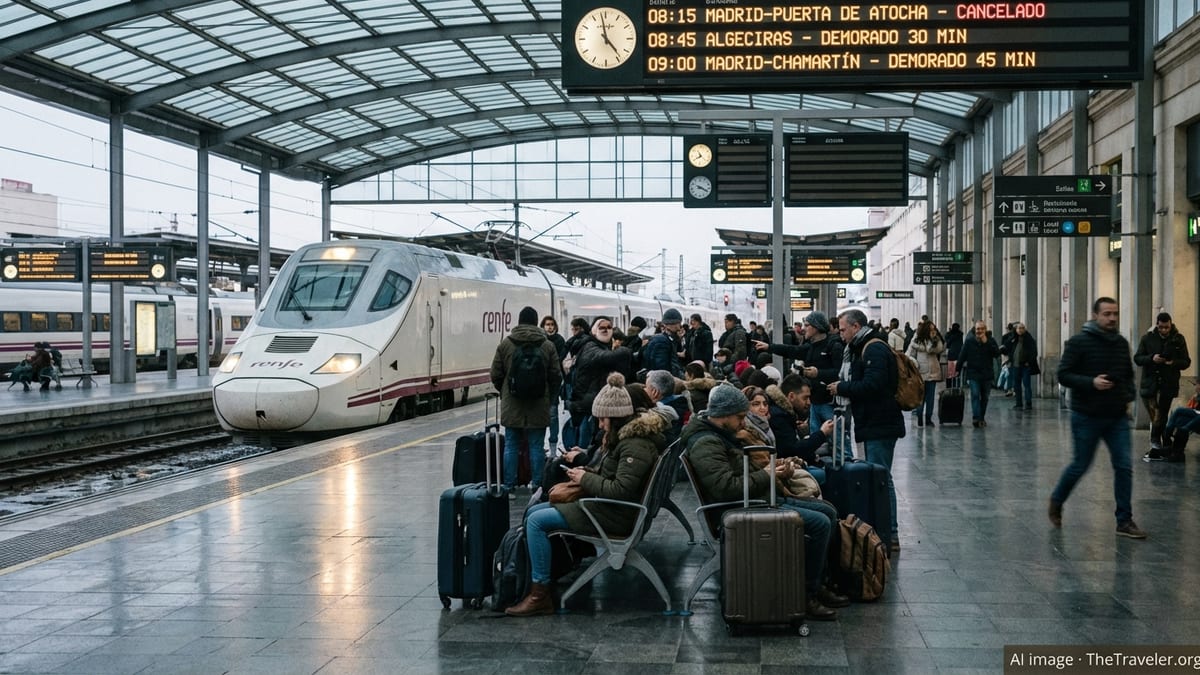
Rear-end collisions tend to cause significant disruption because wreckage often blocks multiple tracks and can damage signaling, power lines and adjacent infrastructure. The latest crash forced the suspension or diversion of services across a wide area, with rail operators implementing emergency timetables and replacement transport while recovery teams worked to clear the site.
For passengers and communities along the affected route, the incident has renewed concerns about the resilience of rail safety systems at a time when many countries are encouraging a shift from road and air travel to lower-emission trains. Publicly available commentary from transport advocates emphasizes that confidence in rail travel depends on visible, sustained investment in both infrastructure and safety technology.
As formal findings emerge, they are expected to influence not only local safety practices but also broader policy debates about funding priorities, regulatory oversight and the pace at which modern train control systems are rolled out. For now, the working theory of a rear-end collision provides a framework for investigators and experts to analyze what went wrong and how similar tragedies might be prevented in the future.