


More news on this day
Emergency services mobilized in large numbers on Friday after two passenger trains collided on a key rail corridor near Bedford, north of London, leaving multiple people injured and halting services on one of England’s busiest intercity routes.
Get the latest news straight to your inbox!
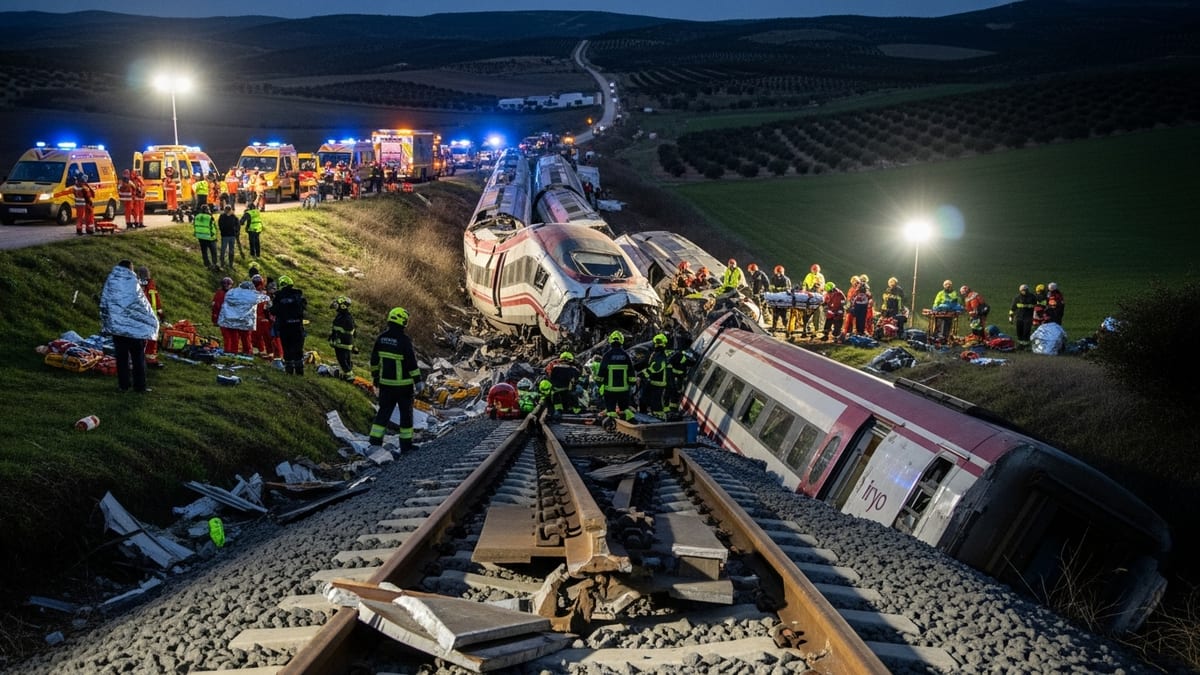
Collision on Busy St Pancras Corridor
According to published coverage from international and UK news outlets, the collision occurred on the afternoon of 19 June 2026 on lines linking London St Pancras with towns and cities in the English Midlands. Reports indicate that the incident involved two southbound East Midlands services operating between Corby, Nottingham and the capital.
Initial summaries describe one train having recently departed Bedford when it was involved in a rear-end impact with another service on the same corridor. Images shared publicly from the scene show damaged carriages aligned on the tracks, with at least one train appearing to have suffered crumpling at the front and along the sides.
Rail commentators note that the line where the crash took place is a central artery for both intercity and commuter traffic into London’s St Pancras station. The route carries a dense timetable of high-frequency services, meaning any disruption can quickly cascade into widespread delays for travelers across the region.
Early reports suggest that the collision happened at significant speed, although full technical details about train velocity, braking distances and signal aspects at the time have not yet been published. Investigators are expected to focus on the signaling system, communications protocols and the sequence of train movements leading up to the impact.
Large-Scale Emergency Response on the Line
Shortly after the collision, photos and video circulating on social media showed a substantial deployment of emergency vehicles lined up along access points to the railway. Publicly available footage depicts fire appliances, ambulances and police units positioned near embankments and bridges, with crews moving equipment toward the tracks.
Reports indicate that emergency teams established a coordinated response zone alongside the railway, using nearby roads and farm tracks to reach the carriages. Specialist rail rescue units and hazardous area response teams were also seen in the area, reflecting concerns about both trauma injuries and the complexities of working in a constrained rail corridor with damaged rolling stock.
Ambulance crews set up triage points near the line, where passengers with visible injuries were assessed and treated. Images shared with news organizations show individuals with bandaged heads and possible limb injuries being aided away from the trains, while others waited on the ballast and embankments under the supervision of responders.
Publicly available information from regional healthcare providers indicates that hospitals in the Bedfordshire area were placed on heightened readiness to receive casualties. Staff were reportedly alerted to the potential for a significant number of admissions, a standard precaution when early passenger counts and injury totals remain uncertain.
Passenger Experiences and Onboard Conditions
Accounts referenced in media coverage describe a chaotic moment inside the carriages as the impact occurred. Passengers reported feeling a sudden violent jolt, with bags and personal items thrown about and some riders being pitched from their seats. Windows were reported broken in some cars, and dust and smoke-like haze were visible in the aftermath.
In the minutes following the collision, passengers began evacuating under guidance from train crew and, later, emergency services. Images show people walking along the trackside, some supporting others who appeared dazed or in pain, highlighting the mixture of minor and more serious injuries typical of high-energy rail impacts.
Travelers posting on social platforms described long waits in the carriages before being escorted onto the track, a common feature of rail emergencies where power to overhead wires must be confirmed as isolated and the stability of the rolling stock assessed. Some passengers expressed gratitude in public posts for the assistance offered by rail staff and first responders, while also sharing frustration at the sudden end to their journeys.
Concerns about emotional impact are also being raised. Rail safety analysts note that even passengers who escape physical harm in a collision can experience significant psychological stress, and some organizations that support trauma victims are expected to offer services in the days ahead for those affected.
Severe Travel Disruption for Rail Passengers
The collision has caused major disruption on a key section of the Midland Main Line, with services suspended or heavily reduced between Bedford and London St Pancras while the emergency response and early investigation work continue. Operators have been advising passengers through public channels to check journey planners, expect delays and consider alternative routes.
Published travel updates show that some long-distance services have been canceled outright, while others are being terminated short of London or diverted where infrastructure allows. Replacement bus services are being organized in the wider Bedfordshire and East Midlands area, although journey times are significantly extended due to road congestion and the distance between available railheads.
The disruption is affecting not only intercity travelers but also commuters returning to the capital at the end of the working week. Rail advocacy groups are highlighting the broader economic impact of such a breakdown on a primary rail artery, from missed connections at St Pancras to crowded conditions on substitute routes into other London termini.
Infrastructure specialists point out that once emergency operations end, engineers must carry out structural checks on track, signaling equipment and overhead power lines before normal services can resume. Damaged rolling stock will need to be removed from the scene, a process that can require heavy lifting equipment and overnight work windows, suggesting that disruption may extend into the weekend.
Investigation and Safety Context
Attention is now turning to the formal investigation that will follow the initial emergency phase. In the United Kingdom, serious rail accidents typically trigger inquiries by the national rail accident investigation body, which examines event data recorders, signal logs, radio communications and maintenance histories to determine the sequence of events.
Rail experts commenting in broadcast and print coverage note that investigators are likely to examine whether signaling systems, train protection technology and operating procedures functioned as designed. Human factors, such as workload, visibility, and adherence to line speeds and signals, are also expected to be key areas of scrutiny.
The incident near Bedford comes in a year already marked by several significant rail accidents internationally, including collisions and derailments in Spain, Denmark and Indonesia that have prompted renewed debate over investment in signaling upgrades and driver assistance systems. Comparisons being drawn in specialist forums suggest that while overall rail travel remains one of the safest modes of transport, single high-impact events continue to raise questions about residual risks on busy mixed-traffic lines.
For travelers, the collision underscores the importance of checking service updates before departure and being prepared for extended delays when major infrastructure incidents occur. As emergency crews and investigators continue their work, the focus in coming days is expected to shift from immediate rescue and disruption toward understanding how such a collision occurred on a modern, heavily monitored rail corridor and what measures may be needed to prevent a recurrence.