


More news on this day
Flight operations at Raleigh-Durham International Airport were heavily disrupted after a collision involving a small plane and a box truck on the airfield led to the temporary shutdown of a runway and delayed dozens of flights.
Get the latest news straight to your inbox!
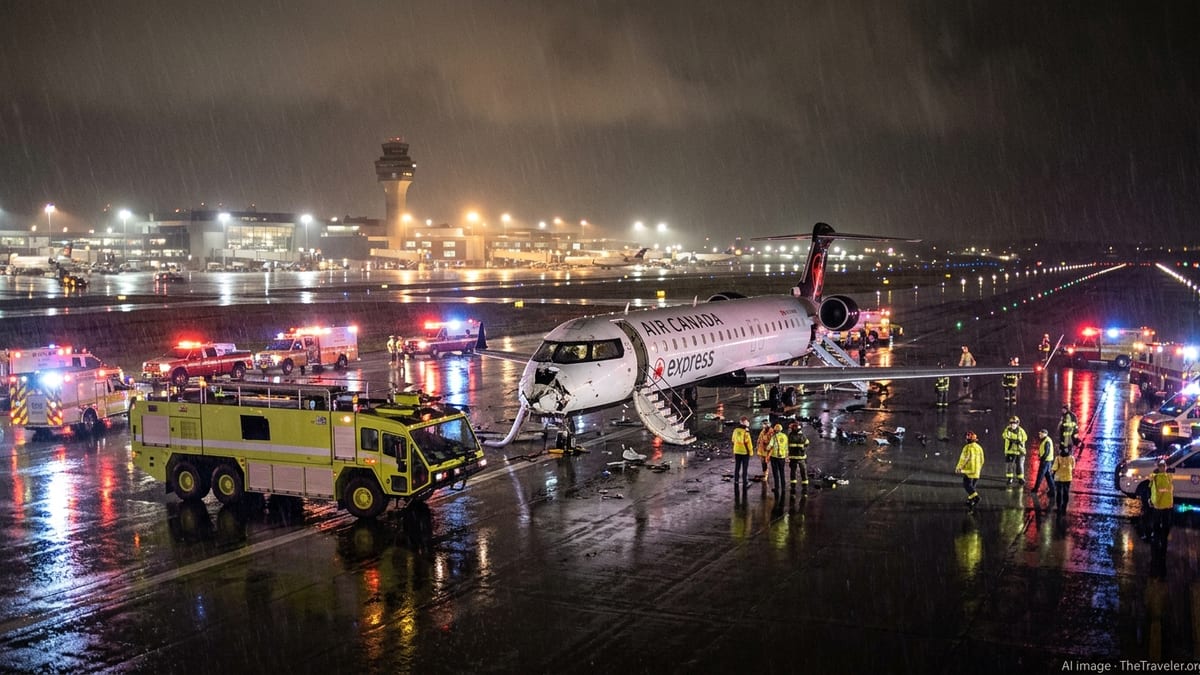
Runway incident triggers cascading delays
Reports from local and national outlets indicate that the incident occurred on a busy travel day when a small aircraft came into contact with a box truck in an active movement area at Raleigh-Durham International Airport. Initial accounts describe damage to the aircraft and truck, prompting an immediate suspension of operations in the affected zone while emergency crews responded.
Publicly available flight-tracking data and airport-status summaries show that the resulting runway closure forced air traffic controllers to redistribute arrivals and departures to other available infrastructure. This reduced capacity on the field, and the knock-on effect quickly accumulated into dozens of delays across multiple airlines serving the Research Triangle region.
Departure boards showed rolling schedule changes as crews worked through ground holds and revised departure sequences. Many inbound flights experienced extended holding patterns or were routed to alternative airports until conditions at RDU stabilized.
Airport communications channels highlighted that safety checks on both the aircraft and ground vehicles, along with inspections of pavement and lighting systems, were required before any portion of the closed area could be returned to normal use.
Impact on travelers and airlines
The disruption affected passengers across a mix of domestic business routes, leisure services, and regional connections. Information from airline status pages and traveler accounts pointed to long lines at customer-service counters as carriers worked to rebook travelers whose connections through Raleigh-Durham were no longer feasible.
Some travelers reported sitting on taxiways and at gates while crews awaited confirmation that departure queues could resume. Others were held at origin airports when airlines implemented ground stops or ground-delay programs to prevent additional aircraft from converging on the constrained airfield.
Operational data suggest that airlines prioritized maintaining long-haul and late-evening services where possible, while shorter regional hops bore the brunt of cancellations and re-timed departures. This pattern is consistent with how carriers typically manage irregular operations at mid-size hubs like Raleigh-Durham.
Airport parking facilities, rideshare pick-up zones, and rental car centers also experienced surges in activity as passengers chose to abandon delayed itineraries and seek alternate means of transportation within North Carolina and neighboring states.
Emergency response and safety procedures
Publicly available information from aviation databases and prior incident reporting shows that an event involving both an aircraft and a ground vehicle immediately triggers established emergency protocols. At RDU, that includes dispatching fire-rescue units, medical teams, and operations staff to the scene, as well as securing the surrounding area from additional vehicle or aircraft movements.
The collision between the small plane and the box truck required an on-the-spot assessment of potential fuel leaks, structural damage and debris on or near the runway and taxiways. These checks are designed to protect subsequent aircraft from foreign object damage and to confirm that airfield pavement has not been compromised.
Once the vehicles involved are stabilized and removed, airport operations teams typically conduct further sweeps using specialized equipment and visual inspections. Only after these verifications can air traffic control begin reopening portions of the airfield, often in stages, which explains why delays continue even after the immediate emergency phase appears to be over.
Historical data on similar ground incidents at busy airports show that such events rarely affect infrastructure permanently, but they can expose vulnerabilities in airfield traffic management and ground support coordination.
Broader context for RDU’s operations
Raleigh-Durham International Airport has seen sustained growth in passenger numbers in recent years, according to publicly released traffic reports. That expansion has driven more intense use of runways, taxiways, and support roads, increasing the importance of careful coordination between aircraft movements and ground vehicles such as fuel trucks, maintenance vehicles and cargo haulers.
Travel-industry analysts note that RDU’s route network includes a combination of major network carriers, low-cost airlines and regional operators, which can complicate recovery from disruption. When a runway is taken out of service, the airport’s role as a connecting point for the Research Triangle can quickly turn a localized incident into a broader schedule ripple across multiple states.
The latest collision involving a small plane and a box truck comes amid ongoing attention to airfield safety at airports nationwide. Regulators and airport authorities have been emphasizing improved vehicle tracking, enhanced runway incursion alerts, and stricter training for ground crews who operate near active runways and taxiways.
Observers say that the operational lessons learned from the RDU incident are likely to feed into continued efforts to refine procedures, technology, and communication protocols on the airfield, with the goal of minimizing the risk and impact of similar disruptions in the future.