


More news on this day
Ryanair is urging European governments to postpone parts of the European Union’s new Entry/Exit System, warning that biometric border checks could trigger a “nightmare” of queues and missed flights at already stretched airports this summer.
Get the latest news straight to your inbox!
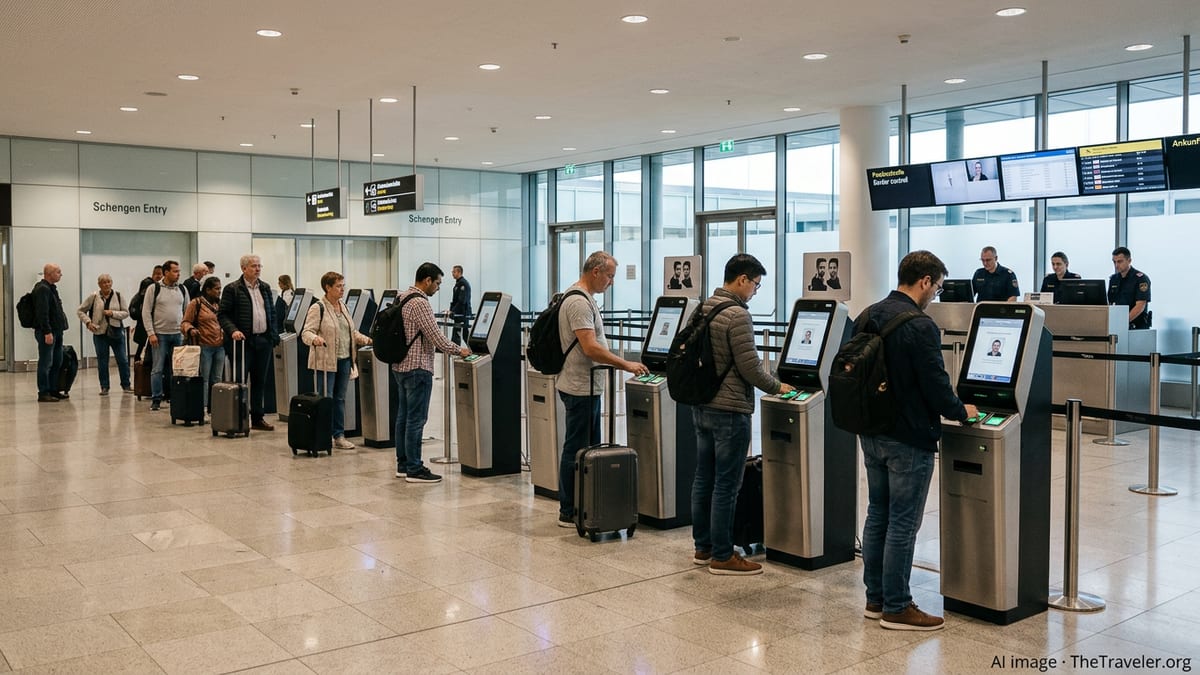
New biometric border rules collide with peak travel season
The EU’s Entry/Exit System, known as EES, introduces fingerprinting and facial image capture for non-EU nationals entering and leaving the Schengen area. The scheme, designed to modernize border management and track overstays, began phased implementation last autumn and is being expanded across major airports as the main European holiday season begins.
Ryanair’s latest statements highlight concerns that the infrastructure supporting the new checks is lagging behind passenger demand. Publicly available information shows that EES registration can take around a minute or more per traveler during the first enrollment, significantly longer than a manual passport stamp. Airport reports indicate that the extra processing time is already compounding queues where staffing or equipment is limited.
Industry coverage notes that EES has been repeatedly delayed in recent years because of technical and coordination challenges. Now, with the system entering wider use just as school holidays start in multiple EU countries, airlines and airports are warning that the timing risks amplifying bottlenecks at passport control.
Ryanair argues that rolling out the most time-consuming elements of EES during the busiest weeks of the year is creating avoidable disruption for families and leisure travelers who rely on tight connection times and early-morning departures.
Carrier names airports where delays are already building
Published reports indicate that Ryanair has singled out several high-traffic hubs where EES-related bottlenecks are already being felt at border control. Coverage of the carrier’s warnings points to airports serving major sun destinations and city-break routes popular with summer holidaymakers from Ireland, the United Kingdom and across the EU.
According to recent travel industry reporting, passengers at some of these airports have faced queues stretching well beyond the traditional 30 to 45 minutes at peak times. In isolated cases, media coverage has described travelers missing departures after being held in lines at new biometric kiosks and manual secondary checks.
Ryanair’s statements emphasize that border procedures are managed by national authorities, but contend that insufficient preparation at certain locations is now feeding through into flight disruption. The airline has urged customers to arrive earlier than usual and to complete online formalities in advance where possible, while reiterating that passport control capacity and staffing fall outside its direct control.
Travel advisories from consumer outlets echo those concerns, suggesting that passengers transiting through the busiest Mediterranean and hub airports should allow extra time for departure and arrival formalities until EES processes become more routine.
Calls grow for postponement of full EES rollout
In recent weeks, Ryanair has stepped up public pressure on several European governments, arguing that they should defer full EES implementation until after the summer peak. Company statements directed at authorities in France and Germany, among others, contend that a short postponement to September would give airports more time to install equipment, test procedures and train staff.
Aviation trade bodies and airport operators have also raised concerns. According to published coverage, some industry representatives are now asking Brussels and national capitals to temporarily ease or phase in the most time-intensive elements of the system, citing reports of queues of an hour or more at particular border posts.
EU institutions maintain that EES is essential for strengthening external border management and replacing paper passport stamps with a centralized digital register. Officials quoted in public briefings argue that early problems can be resolved through additional staffing and better organization, and that average processing times will fall as travelers are enrolled and border guards gain experience with the technology.
Nonetheless, the growing list of complaints from airlines, airports and travelers suggests that the balance between security objectives and operational reality is still being tested in live conditions rather than controlled trials.
What travelers can expect at EU borders this summer
For passengers, the most visible change is the move from a quick stamp to a more structured check involving biometric capture for non-EU nationals who are not covered by free-movement rules. First-time EES registration typically requires travelers to provide fingerprints and a facial image, in addition to standard passport verification and questions about the purpose and duration of stay.
Once enrolled, subsequent crossings should in theory be faster, relying on identity verification against stored records. However, reports from several European airports suggest that differing local procedures, varied equipment availability and inconsistent staffing levels are leading to uneven traveler experiences. Some border points report relatively smooth flows, while others have seen sudden surges and extended waits when multiple flights arrive simultaneously.
Consumer-facing travel outlets advise that non-EU visitors should factor in extra time at departure and arrival airports, especially in the early weeks of local EES deployment. Families traveling with children, passengers with tight connections and those flying around early morning and late evening peaks may be particularly exposed to delays if lines build unexpectedly.
While airlines are adjusting boarding times and reminding customers to arrive early, they continue to stress that they cannot control the pace of border checks, raising the prospect of disputes when passengers miss flights because they are delayed in immigration queues rather than security screening or at the gate.
Industry braces for a testing summer at Europe’s borders
The clash between a complex new border system and surging demand for leisure travel is emerging as one of the key operational challenges for Europe’s aviation sector this summer. Ryanair, Europe’s largest low-cost carrier by passenger numbers, has framed the risk in stark terms, warning of “queue chaos” and a potential “nightmare” for families heading to and from the continent’s holiday hotspots.
Airport organizations, ground-handling firms and other airlines are likewise monitoring early data from the first months of broader EES use. Publicly available assessments from some EU bodies suggest that most airports are coping, but also acknowledge outliers where infrastructure or staffing is struggling to keep pace with demand.
Travel analysts note that EES is being introduced against a backdrop of other pressures, including occasional air traffic control staffing shortages and industrial action in several countries. Even if each factor is manageable in isolation, the combination could produce flashpoints of disruption at certain hubs on peak days.
For now, the message from across the industry is one of caution. With school holidays under way and millions of passengers planning trips within and beyond Europe, calls from Ryanair and other aviation voices for a short delay to parts of the new system underline the stakes involved in reengineering the continent’s borders in real time.