


More news on this day
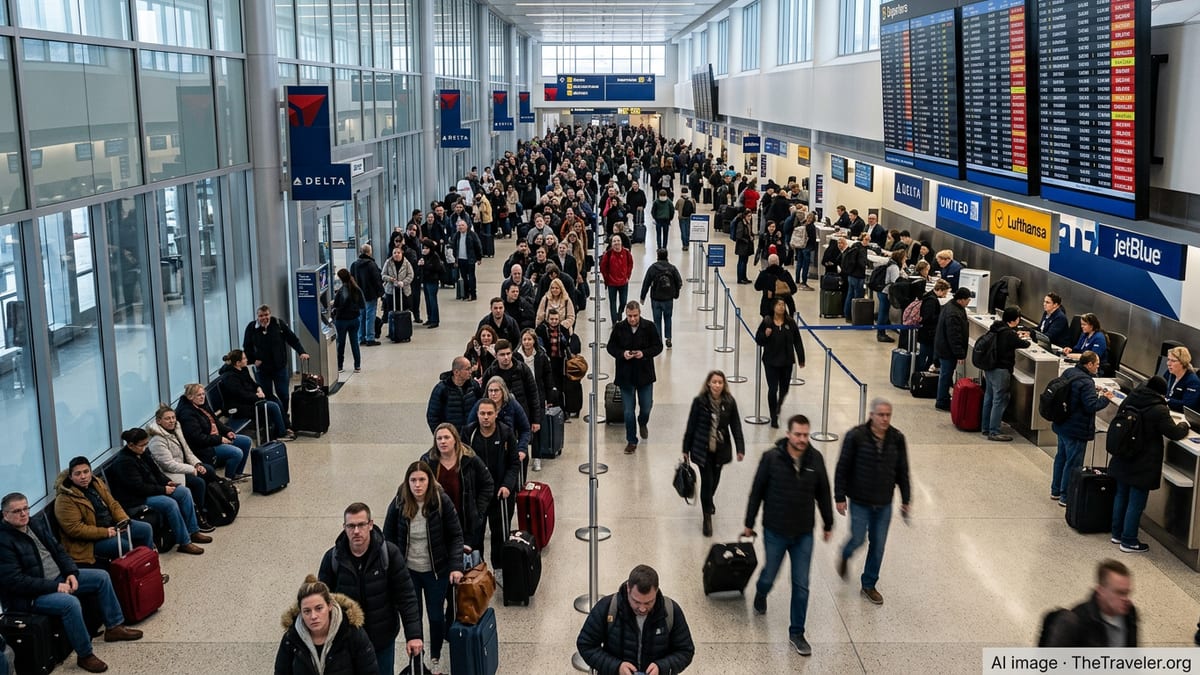
A record shattering 72.2 million Americans are expected to travel over the July Fourth week in 2026, creating severe strain across the United States aviation system as airlines, airports and air traffic control grapple with near peak demand, volatile summer weather and tighter operational margins.
Get the latest news straight to your inbox!
Record Demand Meets a Stretched Aviation Network
The Independence Day holiday window from June 27 to July 5 is on track to be the busiest on record for U.S. travel, according to multiple forecasts based on AAA projections. Estimates indicate that 72.2 million people will journey at least 50 miles from home during this period, edging past last year’s record and reinforcing how strongly demand has rebounded despite higher prices and lingering concerns about reliability.
Publicly available breakdowns of the AAA forecast show that road trips still dominate, with more than 60 million travelers expected to drive. Yet the sharpest pressure point for July Fourth week is centered on aviation, where roughly 5.8 to 5.9 million passengers are projected to fly on domestic routes alone. That figure is paired with millions more on trains, buses and cruises, all converging on the same major hubs and coastal gateways.
Industry data and federal forecasts indicate that U.S. air travel is not only above pre pandemic levels but operating with less slack in the system. Airlines have added capacity and reworked schedules, while airports face continued construction, staffing challenges and changing passenger flows linked to major events such as the 2026 FIFA World Cup matches in host cities like Philadelphia and Houston.
Travel analysts note that this combination leaves little buffer when thunderstorms, equipment issues or ground delays hit. With planes flying near full and spare crews limited, even modest disruptions at a handful of large hubs can ripple into what travelers experience as an “absolute meltdown,” marked by rolling delays, missed connections and overnight crowds sleeping in terminals.
Major Hubs Brace for Holiday Week Turbulence
From coast to coast, large airports have signaled that they expect some of the heaviest passenger flows in their histories during the July Fourth window. Forecasts from airport operators in New York and New Jersey show millions of travelers moving through major facilities such as John F. Kennedy International, Newark Liberty and LaGuardia over just a few days, approaching records set in previous peak years.
In Philadelphia, projections for the first week of July call for more than half a million passengers to transit the city’s main international airport, with July 4 itself marked as one of the single busiest days for departures and arrivals. Similar patterns are emerging at Orlando, Miami, Seattle and Anchorage, which AAA data highlights as among the top domestic destinations for the holiday.
Even mid continental hubs are signaling intense pressure. Local advisories around Denver International Airport, for example, anticipate hundreds of thousands of travelers through the terminal between June 26 and July 6, as the facility serves both holidaymakers and long haul connecting passengers. Operators are emphasizing early arrival times, expanded use of mobile check in and greater reliance on automated screening lanes where available.
At some airports, the surge in July Fourth travelers is colliding with special security and airspace restrictions. In the Washington region, notices from aviation authorities outline extended closures and tight operating windows near central D.C. for Independence Day events, diverting flights and compressing schedules at key times around July 3 and 4. Those constraints increase the possibility that even on clear weather days, passengers will face longer taxi times, airborne holding patterns and schedule reshuffles.
Weather, Staffing and Technology Raise Risk of a “Meltdown”
While the current July Fourth surge was widely anticipated, the risk of what travelers experience as “absolute travel chaos” stems from several intersecting factors beyond raw passenger numbers. Historical patterns show that strong convective storms along the East Coast and in the central United States frequently disrupt traffic in late June and early July, triggering ground stops and route changes that can last for hours.
In recent years, the aviation system has also been tested by staffing strains at airlines, airports and federal agencies. Public reporting and oversight documents have chronicled episodes in which shortages of pilots, flight attendants, mechanics or air traffic controllers contributed to long strings of cancellations at individual carriers. Separate analyses of past technology failures, including software related outages that grounded flights at multiple airlines, have underscored how dependent the system has become on complex digital infrastructure.
Transportation specialists point out that in a period like July Fourth 2026, these risks stack on top of one another. With planes and crews scheduled tightly to keep up with demand, there is less capacity to absorb a cascading delay. If severe weather slows traffic into a major hub such as Atlanta, Chicago or New York, the backlog quickly spreads across domestic networks. When this intersects with staffing shortfalls at security checkpoints or baggage operations, the experience for passengers can deteriorate rapidly into multi hour lines, missed holidays and improvised overnight stays.
Industry observers have noted that public expectations for on time performance remain high, even as the system operates closer to its limits. As a result, relatively predictable seasonal storms or computer glitches can feel like a historic meltdown when they hit during a record travel week, especially for travelers who are already paying more for tickets, fuel and last minute hotel rooms.
Airlines Add Capacity but Passengers Shoulder the Risk
Major U.S. carriers entered the July Fourth period with aggressive schedules geared toward capturing elevated demand. Publicly available planning figures indicate that American Airlines expects to carry more than 8 million customers over the broader holiday stretch, while United Airlines has projected millions of additional passengers systemwide. Many airlines are touting higher seat counts compared with 2025, but also cautioning flyers to prepare for tight connections and crowded cabins.
Data compiled by travel deal platforms and aviation analysts suggests that domestic airfares heading into the holiday are higher than a year ago on many routes, even as some international fares have moderated. This dynamic reflects a split market in which U.S. vacationers are still willing to pay for popular summer destinations, while longer haul trips are being reshaped by geopolitical tensions, fuel costs and shifting capacity decisions by foreign carriers.
For travelers, the practical effect is that the financial and emotional risk associated with disruption is rising. With flights often sold out, options for same day rebooking can be limited when thunderstorms, crew availability problems or ground holds take flights offline. Passengers who do not build in extra time before cruises, tours or international connections may find that a single missed leg cascades into lost reservations and out of pocket expenses that are difficult to recover.
Consumer advocates emphasize that while federal rules require airlines to provide refunds when a flight is canceled and the passenger chooses not to travel, compensation for long delays or incidental costs varies widely by carrier. During crowded peak periods like the July Fourth week, even those protections can be hard to access in practice when airport customer service lines stretch for hundreds of people and phone centers are overwhelmed.
How Travelers Can Navigate the July Fourth Crunch
Within this historic surge, industry guidance and expert analysis converge on a few strategies for passengers hoping to avoid the worst of the chaos. Historical booking patterns show that July 4 itself is often one of the least busy days to fly within the holiday window, with somewhat lighter loads compared with the peak departure dates immediately before and after. Early morning flights also tend to suffer fewer knock on delays than late day departures, since they launch before weather and congestion compound.
Airports and travel organizations are urging passengers to build substantial buffers into their plans. Recommendations range from arriving at least two to three hours early for domestic flights at major hubs to four hours or more for international departures, especially where ongoing construction or security enhancements are in place. Keeping carry on bags light enough to avoid last minute gate checking, pre selecting seats when possible and using airline apps for real time updates can reduce some friction.
Analysts also highlight the value of flexible itineraries during a period when the aviation system is operating at full stretch. Travelers who can shift to off peak days, accept longer layovers or route through less congested hubs may face fewer disruptions than those locked into Friday evening departures through the busiest airports. For those already en route when disruptions strike, having a backup plan that includes alternative airports, train options or overnight accommodations can help blunt the impact.
Despite widespread warnings about potential “meltdowns,” many flights during the July Fourth period are still expected to depart and arrive close to schedule. The challenge for the system is not moving millions of people, which it does daily, but doing so during a compressed, weather prone week with record demand and limited margin for error. For individual travelers, awareness of that reality and proactive planning may be the best defense against finding their own holiday trip caught up in the chaos.