


More news on this day
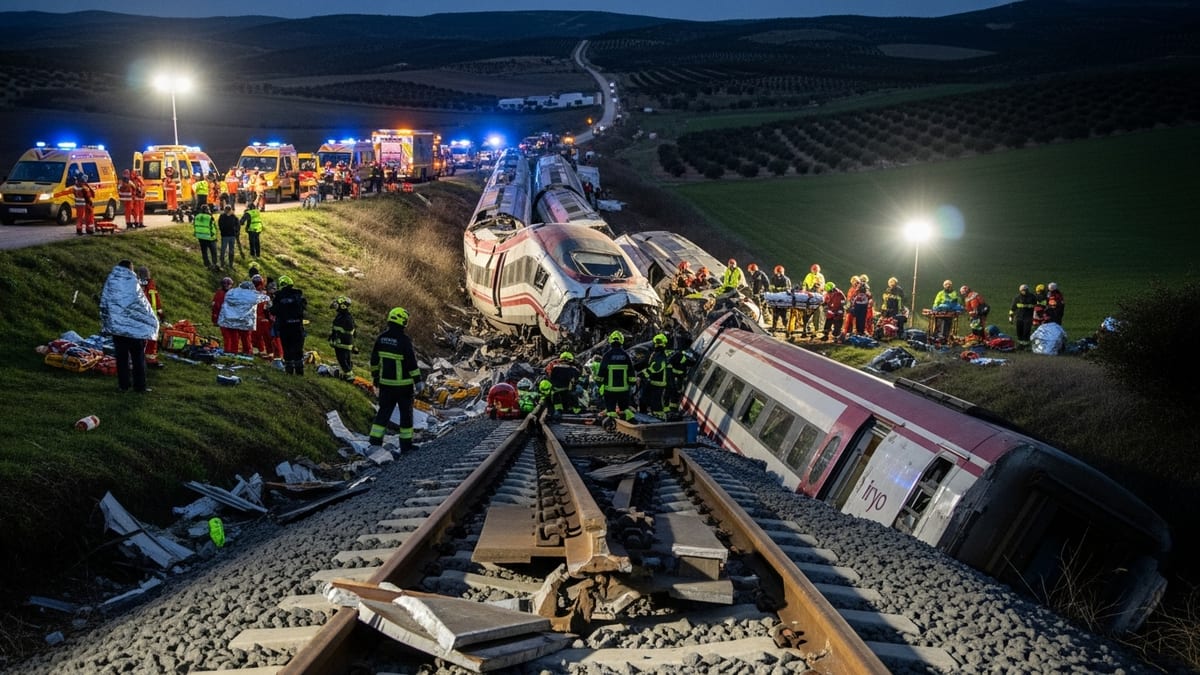
A newly released crash investigation has concluded that a recent train collision could likely have been avoided if the driver had activated an onboard emergency safety system, renewing scrutiny of how rail operators use technology designed to prevent high-impact accidents.
Get the latest news straight to your inbox!
Findings highlight missed use of emergency protection
The official report into the crash, published this week by rail safety investigators, concludes that the driver failed to deploy an available emergency protection system in the final moments before impact. According to publicly available material, the train continued at a speed that left little margin for error once danger became apparent.
The investigation reconstructs the sequence of events leading up to the collision, noting that the train passed warning signals and entered an area where slower speeds and heightened vigilance were required. The emergency system on board was designed to apply full braking and, in some configurations, intervene even if the driver was slow to react. The report states that these safeguards were not fully used.
Analysts note that the case sits within a long pattern of rail accidents worldwide in which safety technologies were present but not engaged in time. While many railways now rely on layers of automation, most systems still assume that drivers will trigger emergency functions when they recognize a serious threat.
How the emergency system was supposed to work
Rail operators typically equip modern trains with a hierarchy of defences, ranging from audible alarms and reminder systems to automatic braking that overrides human error. In this incident, the train’s emergency function was intended to provide maximum braking when a collision risk was identified, either by the driver or by onboard electronics linked to the signaling network.
The investigation material suggests that the system available to the driver could have brought the train to a stop earlier or reduced its speed enough to lessen the severity of the impact. Similar technology, including variations of automatic train protection and positive train control, has been credited in other cases with preventing trains from running signals or entering dangerous stretches of track at excessive speed.
Experts point out that such systems are most effective when paired with clear procedures, repeated drills and strong safety culture. If drivers are hesitant to use emergency braking for fear of disruption, or if they are not fully confident in how systems behave, crucial seconds can be lost at precisely the wrong moment.
Investigators point to human factors and training gaps
The report devotes significant attention to human factors, suggesting that distraction, workload or uncertainty about the route may have contributed to the driver’s delayed response. Publicly available coverage cites investigators who see parallels with earlier crashes in which crews misread signals, assumed they had more time to react or underestimated how quickly conditions were deteriorating.
In several recent rail investigations globally, safety boards have highlighted how crews sometimes rely on routine and habit, especially on well-known routes. When an unexpected change is introduced, such as a temporary speed restriction, an altered switch position or new signaling pattern, drivers can misinterpret the situation unless training and communication are exceptionally clear.
Travel-safety specialists say the latest report underlines the need for recurrent training that emphasizes when and how to use emergency systems without hesitation. Scenario-based exercises, simulation of rare but high-risk situations and clear company policies that support decisive action can make it more likely that drivers will trigger full braking when the unexpected occurs.
Technology gaps and calls for stronger automatic safeguards
The crash has also renewed discussion about whether rail networks should rely less on human intervention at critical moments. In past accidents, inquiries have concluded that fully automatic protection systems would have slowed or stopped trains before collisions, particularly where trains have passed signals at danger or entered restricted zones at excessive speed.
Advocates for more automation argue that systems capable of continuously monitoring train position and speed relative to signals and track conditions can step in when drivers are distracted or misjudge the situation. In several regions, regulators and investigators have previously recommended wider deployment of such technology on passenger routes and at busy junctions.
However, upgrades are expensive and often complex to integrate into mixed-traffic corridors where freight and passenger services share tracks. Industry analysts note that, as a result, many networks still depend heavily on administrative controls, local rules and individual decision-making rather than universal automatic enforcement of speed and signal compliance.
Implications for passengers and future rail operations
For travelers, the latest findings are a reminder that rail safety rests on a layered approach: infrastructure maintenance, modern signaling, robust training and effective emergency systems all play a part in reducing risk. When any one layer is not fully used, the margin of safety can shrink rapidly.
Following publication of the report, observers expect operators and regulators to review whether similar emergency functions on other routes are clearly documented, well understood and routinely tested in practice. Some railways have already responded to past incidents by introducing automatic braking tied to signal aspects, enhanced monitoring of driver alertness and stricter rules on in-cab distraction.
The case is likely to feed into broader debates about rail modernization, particularly on lines used by long-distance and commuter services. As passenger numbers rebound in many regions and governments promote rail as a lower-emission alternative to driving or short-haul flying, pressure is growing to ensure that the technology designed to protect trains is not only installed but also used decisively when it matters most.