


South Jersey is often treated as an afterthought, a flat stretch of highway between New York and the Jersey Shore. Spend a few days here, though, and a very different place emerges: a region of wild pinelands and blackwater rivers, Victorian seaside resorts and neon boardwalks, diners and farm stands, cranberry bogs and marshes where ospreys hunt. From the vast Pine Barrens in the interior to the tightly packed beach towns along the Atlantic, South Jersey feels distinct not only from North Jersey, but from almost anywhere else on the East Coast.
Get the latest updates straight to your inbox!
The Pine Barrens: A Wilderness Hiding in Plain Sight
Stretching across more than a million acres, the New Jersey Pine Barrens occupy much of South Jersey’s interior and feel worlds away from the turnpike and casinos many travelers associate with the state. At the heart of this sandy, pine‑covered wilderness is Wharton State Forest, New Jersey’s largest state forest, where pitch pines and scrub oaks grow out of nutrient‑poor soil and slow, tea‑colored rivers like the Mullica and Batsto wind quietly toward the coast. Drive just 30 to 40 minutes inland from Atlantic City or the Camden waterfront and you can be unloading a kayak at Atsion Lake or Batsto Lake, hearing nothing but wind in the trees and the splash of paddles.
What makes the Pine Barrens unique is less the scenery itself than the sense of surprise it creates. Travelers who grew up with stereotypes of New Jersey as refineries and traffic often stand on the sandy bank of the Batsto River and do a double‑take at the stillness and the dark, cedar‑stained water. In summer, outfitters in nearby towns rent canoes and kayaks and will shuttle you to classic runs like the eight‑mile trip down the Mullica River, where you thread between sandbars and pass cedar swamps that are home to rare orchids and carnivorous plants. Even in high season, it is common to paddle for an hour without seeing another boat.
The Pine Barrens are also a living laboratory for how people interact with a fragile ecosystem. Much of the region is protected as the Pinelands National Reserve, which was the first National Reserve in the United States and represents one of the country’s most ambitious land‑use planning efforts. Development is tightly controlled, so you can drive from glassy new subdivisions in Marlton or Medford straight into miles of unpaved sand roads where four‑wheel‑drive vehicles and hikers share narrow tracks. For visitors, that means you can base yourself in a comfortable hotel near the Atlantic City Expressway and still spend your days hiking on the Batona Trail or birdwatching near Pakim Pond.
There is also an unmistakable sense of local lore here. Campers trade stories of the Jersey Devil, the legendary creature said to haunt these woods, while more grounded travelers swap tips on lesser‑known swimming holes and quiet campgrounds like Lower Forge or Mullica River, both accessible only by foot or boat. Whether you come for the ghost stories or the solitude, the Pine Barrens give South Jersey a wilderness identity that surprises many first‑time visitors.
Historic Villages and Ghost Towns of the Interior
Hidden inside the pines are remnants of a very different South Jersey: the company towns and ironworks that once powered early American industry. Batsto Village, now a meticulously preserved historic site within Wharton State Forest, is the most striking example. Founded in the 18th century as a bog‑iron operation, Batsto supplied iron goods and munitions during the Revolutionary War and later shifted to glassmaking and then agriculture. Today, travelers can walk past the old general store, sawmill, and workers’ houses, and climb the hill to the Batsto mansion, which overlooks the lake.
On a typical weekend, you might see families buying ice cream at the small museum shop before heading out on one of the signposted trails that loop through the surrounding forest. Volunteer docents often lead guided tours that explain how ore was pulled from local bogs and how businessmen like Joseph Wharton transformed the village in the late 19th century. Seasonal events, from craft fairs to holiday open houses, turn Batsto into a gathering place for South Jersey residents who treat it as a shared back yard and a reminder of the region’s working‑class roots.
Beyond Batsto, the interior of South Jersey is dotted with quieter ghost towns and semi‑abandoned villages that appeal to more adventurous travelers. Places like Ong’s Hat, Friendship, and Harrisville leave only faint traces: a crumbling foundation, a forgotten cemetery, the outline of an old cranberry bog now reclaimed by the forest. Exploring them safely requires good maps and respect for private property, but they offer a tangible sense of how boom‑and‑bust industries like iron, glass, and timber shaped the Pine Barrens and then disappeared.
Many visitors pair a half‑day at Batsto or nearby Atsion Mansion with a stop in a small inland town like Hammonton, known today for its Italian bakeries and blueberry farms. Grabbing a cannoli on Hammonton’s Bellevue Avenue after a morning hike connects the dots between the Pine Barrens’ industrial past and the agricultural communities that followed.
Blueberries, Cranberries, and Farm‑to‑Table Back Roads
South Jersey’s sandy soil is not ideal for most crops, but it is perfect for blueberries and cranberries, two fruits that are now deeply woven into the region’s identity. The first cultivated highbush blueberries in the world were developed in the early 20th century at farms on the edge of the Pine Barrens, and to this day, the area around Hammonton markets itself as the “Blueberry Capital of the World.” In June and July, roadside stands along routes like 206 and 30 stack pints of fresh berries for a few dollars apiece, often picked that morning.
Visitors driving between Philadelphia and Atlantic City frequently detour to local farm markets to buy blueberries by the flat, along with sweet corn, Jersey tomatoes, and peach pies. In small family‑run spots, it is common to see handwritten signs taped to coolers advertising homemade blueberry jam or cranberry relish. Many of these stands operate on an honor‑system cash box during quieter hours, a reminder that despite the proximity to large casinos and shore resorts, South Jersey’s interior remains fundamentally rural.
Cranberry culture is quieter but just as important. In autumn, cranberry bogs near the Pine Barrens are flooded for harvest, creating surreal scenes of red berries floating in shallow lakes framed by pines. Some growers offer limited tours or viewing opportunities on peak weekends, particularly in Burlington and Ocean counties, where visitors can watch workers in waders corralling berries toward conveyors. Travelers planning a fall foliage trip that includes the Pine Barrens can often pair a hike with a drive past working bogs to see this distinctive agricultural landscape in action.
This farm heritage filters into local dining as well. Inland diners and family restaurants frequently spotlight seasonal produce: blueberry pancakes in June, cranberry baked goods around Thanksgiving, and tomato‑heavy specials all summer. For a traveler who has spent the day paddling or hiking, sitting down at a vinyl‑booth diner in towns like Egg Harbor City or Hammonton for a plate of blueberry‑topped French toast feels like a distinctly South Jersey reward.
Shore Towns with Distinct Personalities
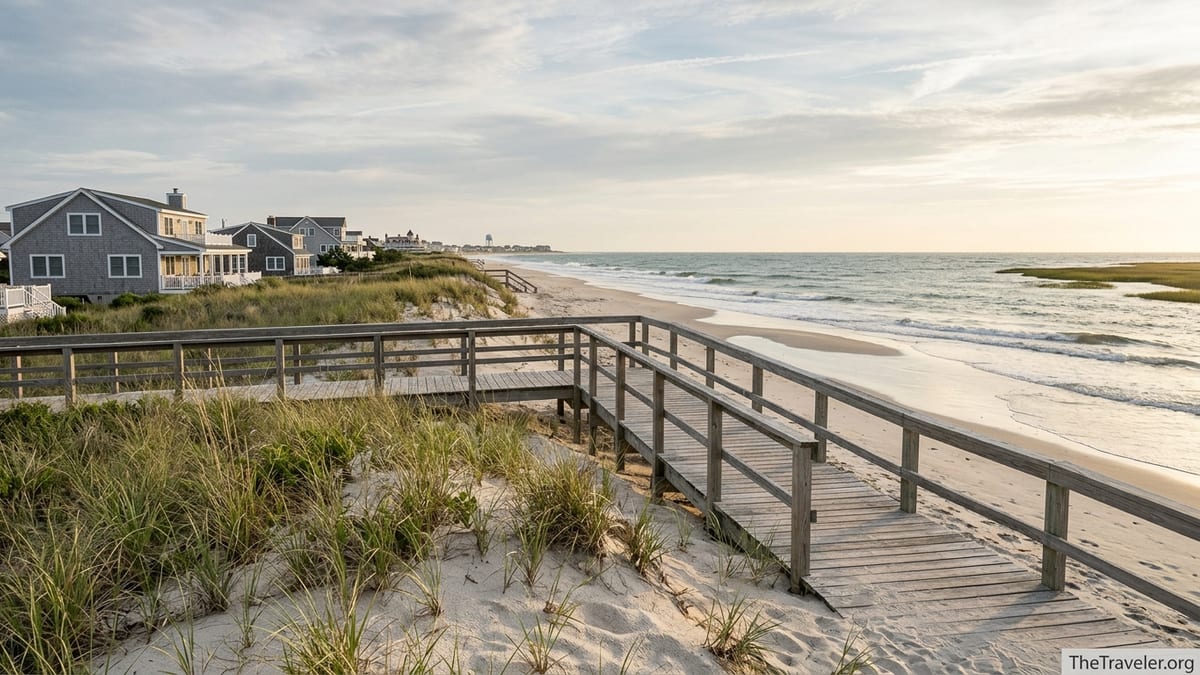
If the Pine Barrens give South Jersey its wild heart, the coastal towns along the Atlantic refine its public image. Yet even along the relatively compact stretch between Ocean City and Cape May, each shore town has a remarkably different personality. Ocean City promotes itself as a classic, family‑oriented resort with a dry status that keeps nightlife low‑key. Its boardwalk, lined with amusement rides, pizza shops, and famous fudge and saltwater taffy chains, is crowded on summer evenings with multigenerational families pushing strollers or renting surreys.
Wildwood, a short drive to the south, could not feel more different. Here the boardwalk is wider, the atmosphere louder, and the aesthetic pure mid‑century Americana. The Wildwoods are known for their “Doo Wop” motels, a collection of neon‑signed, Googie‑style lodgings from the 1950s and 1960s that attract architecture buffs as much as bargain‑seeking beachgoers. Summer weekends can feel like a never‑ending festival, with classic car shows, music events, and fireworks visible up and down the shoreline. Travelers who enjoy carnival rides, water parks, and late‑night boardwalk food find Wildwood a good base.
Farther south, Cape May shifts the mood again. This is one of the country’s oldest seaside resorts, and its streets are lined with meticulously restored Victorian houses painted in pale blues, pinks, and creams. Many have been converted into bed‑and‑breakfasts where guests wake to porch views and homemade scones. The Washington Street pedestrian mall, with its boutiques and cafes, invites slow wandering, while the nearby Cape May Lighthouse and bird observatory draw nature enthusiasts. It is common for visitors to split a long weekend between livelier Wildwood and more refined Cape May, using the short drive between them as an excuse to sample roadside seafood shacks and ice cream stands.
On Seven Mile Island, Avalon and Stone Harbor share one ribbon of land but have subtly different vibes. Avalon, on the northern end, has a long, gently curving beachfront and a small boardwalk that is more about jogging and quiet ocean views than rides or arcades. Stone Harbor, to the south, feels a bit more compact and upscale, with boutiques, galleries, and a popular wetland area where boardwalks lead out into the marsh. Together they embody the low‑key, affluent side of the Jersey Shore, where visitors rent beach houses for a week or more and spend their days biking, playing paddleball, and lingering over seafood dinners on outdoor patios.
Boardwalk Culture, Diners, and the Taste of South Jersey
Beyond scenery, South Jersey is defined by how people eat and gather. Boardwalk culture is central to this. In Wildwood or Ocean City, summer visitors queue for hand‑cut fries doused in vinegar, freshly spun cotton candy, funnel cakes dusted with sugar, and the region’s trademark: pizza by the slice served on thin, foldable crust. Late at night, the scent of sausage‑and‑pepper sandwiches and grilled cheesesteaks drifts across the planks as teenagers and families alike line up at favored stands, often paying in cash and swapping opinions about which slice joint is truly superior.
Off the beach, diners are an essential part of the South Jersey experience. Towns like Vineland, Glassboro, and Deptford have chrome‑and‑neon diners where laminated menus run to dozens of pages and servers top off coffee without asking. It is here that visitors will encounter another regional staple: the pork roll, egg, and cheese sandwich, usually served on a hard roll or bagel and sometimes simply called “Taylor ham” inland. Breakfast specials often come in under the price of a typical fast‑casual meal, and locals might argue for a particular spot as having the best pork roll in the county.
Convenience stores are their own subculture. Wawa, founded in Pennsylvania but deeply embedded in South Jersey life, is more than a place to get gasoline. Travelers quickly learn that ordering a hoagie from a touch‑screen kiosk and grabbing a coffee at any hour of the day is part of the regional rhythm, especially on the way to the beach or the pines. In many towns, you will also see Heritage’s Dairy Stores, a smaller chain that locals praise for breakfast sandwiches and ice cream. The friendly debates over whether Wawa or Heritage’s makes a better hoagie are part of the fun for visitors who lean into the local food scene.
Seafood, naturally, is another defining flavor of coastal South Jersey. In Cape May County, roadside stands and casual restaurants sell fresh fluke, scallops, and local clams, often battered and fried or grilled simply with lemon and butter. It is common for families renting a house in Avalon or Sea Isle City to stop by a local fish market on the way home from the beach, picking up a couple of pounds of shrimp or a dozen clams to steam on the deck. Paired with corn and tomatoes bought from an inland farm stand, it becomes a meal that captures the region’s land‑and‑sea connection in a way no upscale restaurant can match.
Small‑Town Main Streets and the Philly Connection
Another feature that makes South Jersey distinct is how its small towns balance local character with proximity to a major city. Communities like Collingswood, Haddonfield, and Pitman sit on or near the PATCO and rail lines that connect directly to Philadelphia, turning them into commuter hubs with surprisingly vibrant downtowns. On a Friday night, Collingswood’s Haddon Avenue hums with diners heading into BYO restaurants and cafes, while independent bookstores and vintage shops stay open late. Street festivals, farmers markets, and Second Saturday art events are common in warm months, giving visitors an easy way to plug into local life.
These walkable towns feel very different from the beach resorts yet are inseparable from South Jersey’s overall identity. In Haddonfield, for example, brick sidewalks lead past well‑preserved colonial‑era buildings, and visitors can pop into an ice cream parlor after browsing boutiques. Pitman centers around a classic small‑town theater and a grid of streets where porches are close to the sidewalk and neighbors chat in the evening. None of these places are major tourist destinations on their own, but they offer a welcome change of pace for travelers who are spending a week at the shore and want an inland day trip.
South Jersey’s connection to Philadelphia also shows up in its sports loyalties and cultural references. Bars in shore towns fill with fans in Eagles and Phillies jerseys, and conversations at diners often revolve around last night’s game or the latest news from the city. At the same time, the region maintains its own habits and speech patterns, from calling sandwiches “hoagies” to affectionate arguments about whether the shore begins in Atlantic County or only once you cross into Cape May County. For visitors, leaning into these micro‑identities is part of understanding what makes South Jersey feel like its own small country within two larger metropolitan shadows.
The transportation link to Philadelphia and, farther north, to New York also makes South Jersey surprisingly accessible. Budget‑minded travelers often stay slightly inland, in towns like Egg Harbor Township or Mays Landing, where mid‑range hotel rooms are more affordable than oceanfront properties, then drive to the beach or the pines during the day. This pattern keeps interior towns busy with visitors who might not otherwise stop, spreading the economic and cultural benefits of tourism beyond the immediate coastline.
The Takeaway
South Jersey’s uniqueness lies in the way its seemingly contradictory elements coexist. A million‑acre pineland reserve sits within an hour of neon‑lit casinos; Victorian bed‑and‑breakfasts stand a short drive from 1950s‑style motels; blueberry fields and cranberry bogs back up against highway interchanges and outlet malls. For travelers, that diversity is a strength. In a single long weekend you can kayak a quiet blackwater river before breakfast, eat a diner pork roll sandwich on the way to a bustling boardwalk, and finish the day watching sunset from a Victorian porch in Cape May.
What holds it all together is a strong sense of local pride. Whether it is a Hammonton farmer extolling the year’s blueberry crop, a Wildwood motel owner preserving a neon sign, or a Collingswood chef highlighting Jersey tomatoes on a chalkboard menu, South Jersey residents tend to celebrate what makes their corner of the region special. For visitors willing to look beyond clichés about highways and reality‑TV beaches, the reward is a surprisingly complex and soulful destination where wilderness, working towns, and historic resorts all feel connected.
Planning a trip here is less about checking off a single landmark and more about sampling a cross‑section: a day in the pines, a stroll on at least one boardwalk, a meal at a diner, a stop at a farm stand, a walkable inland main street. Put those pieces together, and South Jersey emerges as a place that is both distinctly New Jersey and entirely its own.
FAQ
Q1. When is the best time of year to visit South Jersey?
The most popular time is late June through August for beach weather and boardwalks, but May, September, and early October offer warm days, fewer crowds, and lower prices. Fall is also ideal for Pine Barrens hikes and seeing cranberry harvests.
Q2. How many days do I need to experience both the Pine Barrens and the shore?
A long weekend of three to four days is enough to sample both. You can spend one full day paddling or hiking in Wharton State Forest, one or two days exploring shore towns like Wildwood and Cape May, and use travel days for small‑town stops and farm stands.
Q3. Do I need a car to get around South Jersey?
A car makes travel much easier, especially for reaching trailheads, small inland towns, and quieter beaches. Limited buses and seasonal shuttles serve some shore areas, but most visitors find that renting a car for at least part of the trip offers far more flexibility.
Q4. Is it safe to explore the Pine Barrens on my own?
Yes, as long as you prepare properly. Stay on marked trails, carry a map or downloaded GPS, bring plenty of water, and avoid driving deep sand roads without a suitable vehicle. Let someone know your plans, and start with popular areas like Batsto Village or Atsion if you are new to the region.
Q5. Which South Jersey shore town is best for families with young kids?
Ocean City and The Wildwoods are particularly family‑friendly. Ocean City is dry and quieter at night, with a classic boardwalk and guarded beaches, while Wildwood offers more rides and attractions but a livelier overall scene. Many families split time between the two.
Q6. Where can I see cranberry bogs or blueberry farms?
Blueberry farms are common around Hammonton, and many have roadside stands in summer. Cranberry bogs are found near the Pine Barrens, especially in Burlington and Ocean counties. While not all are open to visitors, autumn drives on back roads often reveal flooded bogs during harvest time.
Q7. Are South Jersey’s beaches free, or do I need beach tags?
Policies vary by town. Wildwood’s beaches are famously free, while many others, including Ocean City, Avalon, and Stone Harbor, require daily or weekly beach tags in summer. These are typically sold at beach entrances and municipal kiosks.
Q8. What should I eat to get an authentic taste of South Jersey?
Try a pork roll, egg, and cheese sandwich at a local diner, a Wawa or Heritage’s hoagie on the way to the beach, fresh blueberry or cranberry baked goods from a farm stand, and pizza or funnel cake on a boardwalk. Along the coast, local fluke, scallops, and clams are also highlights.
Q9. Can I combine a South Jersey trip with a visit to Philadelphia?
Absolutely. Many visitors fly into Philadelphia, spend a day or two exploring the city, then drive 60 to 90 minutes to South Jersey’s shore towns or the Pine Barrens. Towns like Collingswood and Haddonfield work well as bases for day trips to both the city and the beach.
Q10. Is South Jersey a good destination outside of summer?
Yes. Spring brings mild weather and blooming forests, fall offers foliage and harvest events, and winter can be peaceful and budget‑friendly, especially in Cape May and the inland small towns. Some boardwalk attractions close in the off‑season, but many restaurants and shops remain open year‑round.