


More news on this day
Delta Air Lines is confronting a fresh operational crisis at its largest hub after a Federal Aviation Administration ground stop triggered the cancellation of more than half of the carrier’s scheduled flights, leaving passengers facing cascading delays, missed connections and overnight stays in packed terminals.
Get the latest news straight to your inbox!
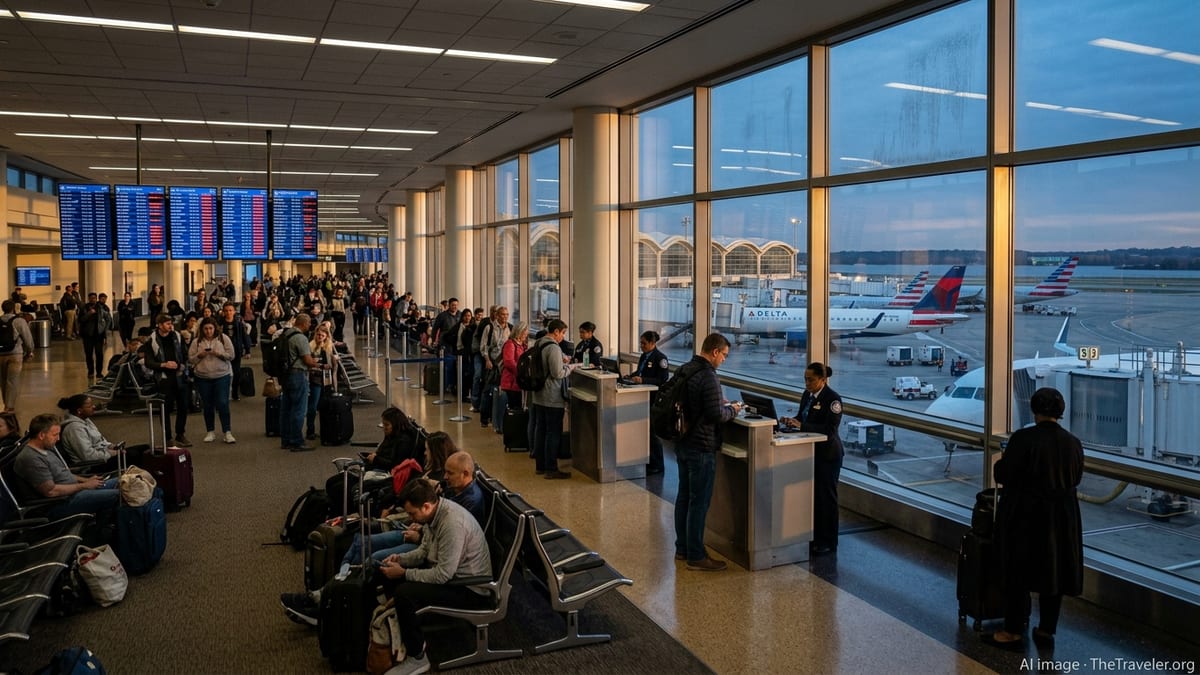
Ground Stop Paralyzes Operations at Delta’s Largest Hub
Published coverage indicates that the latest disruption centers on Hartsfield-Jackson Atlanta International Airport, Delta’s primary hub and one of the world’s busiest passenger airports. The FAA ground stop temporarily halted departures, limiting movements to aircraft already in the air and severely restricting the airline’s ability to keep its tightly timed hub-and-spoke network running.
Reports show that once departures were frozen, aircraft, crews and passengers rapidly fell out of position. Airlines can usually absorb short disruptions within their schedules, but a prolonged stop during peak travel periods tends to trigger widespread knock-on effects. In this case, available information points to more than half of Delta’s scheduled flights at the hub being canceled or significantly delayed, effectively paralyzing large parts of the carrier’s domestic network for much of the day.
According to multiple news and aviation tracking reports, cancellations and rolling delays spread beyond Atlanta to other Delta hubs and focus cities as aircraft expected to arrive simply never did. Routes connecting through Atlanta were particularly affected, with some travelers seeing multiple rebookings unravel as subsequent flights were also scrubbed.
Passengers Face Long Lines, Limited Options and Overnight Stays
Social media posts, local broadcast coverage and passenger accounts describe crowded concourses, long customer-service lines and areas of the terminal turned into makeshift overnight waiting rooms. With so many flights canceled from a single hub, rebooking options quickly narrowed, especially for travelers heading to smaller cities that rely heavily on Delta’s connecting network through Atlanta.
Travelers reported waiting in lines stretching across concourses for assistance with rebooking and vouchers, while others tried to manage changes themselves using mobile apps that were intermittently overwhelmed by heavy demand. Hotel rooms near the airport were reported to be in short supply, forcing many passengers to remain in the terminal when later flights were unavailable.
Professional travelers and frequent flyers highlighted how vulnerable they were to hub-specific disruptions, noting that passengers starting or ending their journeys in Atlanta had more alternatives by road or rail, while those connecting onward to other regions of the United States or abroad had fewer practical options beyond waiting for the operation to stabilize.
How FAA Ground Stops Ripple Across Airline Networks
Ground stops are a tool used by the FAA to manage safety and air traffic flow during periods of severe weather, equipment failures, or other operational or security concerns. Publicly available FAA guidance explains that when a ground stop is in effect, flights destined for a particular airport or region may be held at their origin, preventing additional traffic from entering already constrained airspace or airport facilities.
When a major hub such as Atlanta is subject to a ground stop, the effect on a hub-and-spoke airline can be dramatic. Aircraft cannot depart on schedule, arriving flights may be rerouted or slowed, and crews often time out of their legally permitted duty windows. As aircraft and crews fall out of their planned rotations, the number of downstream flights that can be operated safely and legally shrinks quickly, forcing airlines to cancel or consolidate services even after the ground stop is lifted.
Aviation analysts frequently note that hub-based networks are efficient during normal operations but can be brittle when a central node experiences major disruption. The current situation at Delta’s primary hub reflects this vulnerability, with one concentrated interruption radiating out along the carrier’s broader domestic and international network.
Delta’s Broader Operational Strains Under Scrutiny
The latest wave of cancellations arrives against a backdrop of growing scrutiny of Delta’s operational resilience. Over the past several peak travel periods, the airline has faced criticism from travelers and industry observers for recurring disruptions linked to severe weather, technology failures and staffing imbalances, all of which have exposed stress points in its scheduling and recovery strategies.
Publicly available reporting on prior disruptions has highlighted how crew availability, tight turn times and high aircraft utilization leave limited margin for error when unexpected events occur. When a hub suffers a lengthy ground stop, these factors can combine to slow recovery, extend delays into subsequent days and increase the overall number of cancellations.
Travel industry commentators are watching how quickly Delta can restore a normal schedule at its main hub and across its network in the coming days. The pace of recovery, and the degree to which further cancellations are needed to reset the operation, will likely influence how regulators, investors and frequent travelers assess the airline’s preparedness for future high-impact events.
What Stranded Travelers Can Do Right Now
For passengers caught up in the latest disruptions, consumer advocates typically recommend acting quickly and using multiple channels to seek assistance. When a large share of an airline’s schedule collapses at once, the earliest travelers to secure rebooked seats, hotel rooms or alternative routings often have the most options.
Travel experts suggest checking flight status frequently through airline apps and airport displays, as schedules can change rapidly during recovery periods. Where feasible, passengers may look at departures from nearby airports served by Delta or other carriers, or consider ground transportation for shorter journeys when it becomes clear that same-day flights are unlikely.
Publicly available guidance from the U.S. Department of Transportation notes that when a flight is canceled, passengers are generally entitled to a refund if they choose not to travel, even on nonrefundable tickets. In practice, many travelers opt for rebooking rather than refunds during mass disruptions, but knowing available rights and documenting expenses can be important if passengers seek reimbursement later under airline policies or evolving federal rules.