


More news on this day
US embassies across the Middle East are urging American citizens to be ready to leave on short notice, as heightened tensions with Iran raise the risk of sudden airspace closures, missile strikes and wider regional unrest.
Get the latest news straight to your inbox!
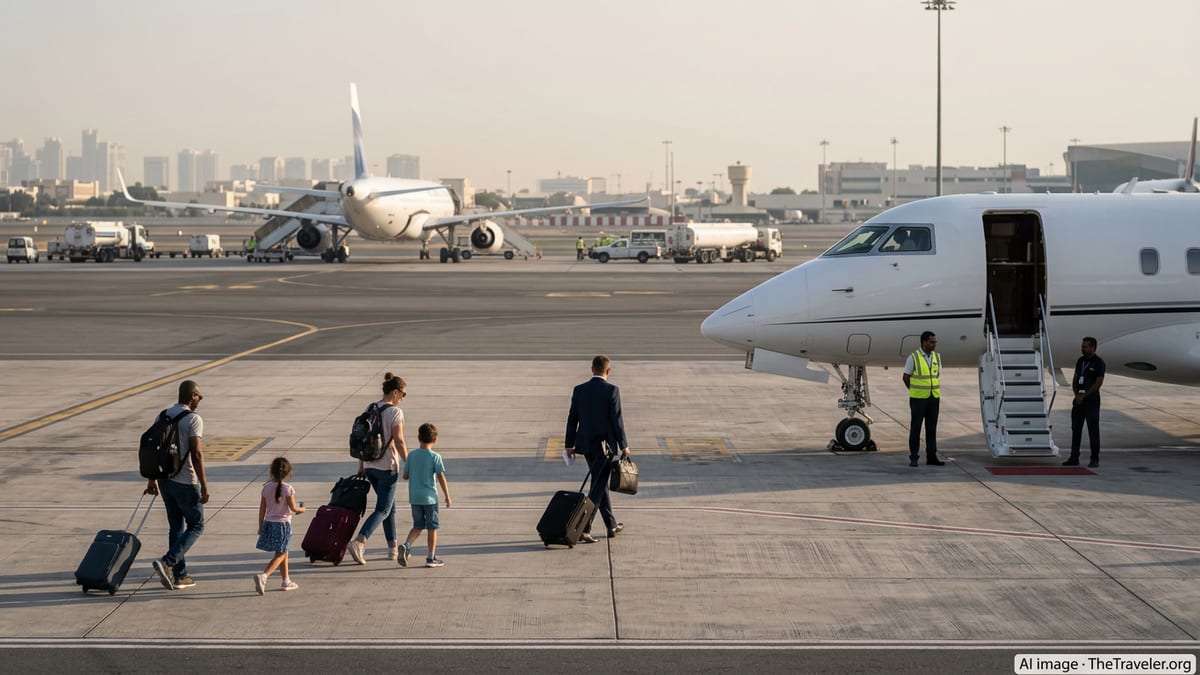
Embassy alerts highlight new phase of regional tension
The latest alerts, circulated by multiple US embassies and consulates on August 1, signal a shift from general caution to explicit preparation for departure. Security messages in Gulf states such as the United Arab Emirates, Saudi Arabia, Qatar and Bahrain, as well as missions in Israel, Jordan, Kuwait and Lebanon, advise Americans to review their personal evacuation plans and to be prepared for commercial flight cancellations with little or no warning.
Publicly available advisories describe a volatile security environment shaped by ongoing conflict involving Iran, Israel and US forces, including periodic missile and drone exchanges and threats against diplomatic and military sites. Recent coverage by international outlets notes that Washington has warned of possible further strikes on Iranian targets, while Iranian officials and allied groups in the region have hinted at retaliation that could affect air traffic and critical infrastructure.
Travel warnings for much of the region were already at elevated levels earlier this year, but the latest language is more pointed. Instead of simply recommending that Americans reconsider travel, several alerts now encourage those who can leave to seriously weigh that option, and urge those who remain to ensure passports, residency permits and key documents are valid and immediately accessible.
The renewed messaging comes after months of fighting in and around Iran and neighboring countries, as well as earlier ordered departures of some US diplomatic staff from locations including Saudi Arabia, Turkey and Lebanon. Analysts note that these steps together indicate a sustained period of instability rather than a short, contained flare-up.
What “prepare to depart” means for travelers and expatriates
For the tens of thousands of Americans living, working or traveling in the Middle East, the phrase “prepare to depart” has practical implications that go far beyond routine travel advice. Consular information emphasizes that individuals are responsible for their own exit arrangements and should not assume that government-organized evacuations will be available, especially if commercial airspace closes or fighting intensifies.
Travel risk specialists recommend that Americans currently in the region map out at least two viable routes out of their host country, ideally on different carriers or via different hubs, and that they monitor airline notifications closely. They also advise maintaining a financial buffer for last-minute ticket purchases or overland alternatives through neighboring states where borders remain open.
Those who choose to stay are being urged to prepare for intermittent disruptions, including temporary airport shutdowns, curfews, fuel shortages and internet slowdowns. Security notices encourage residents to stock a modest reserve of essential supplies, maintain charged communication devices and agree on check-in plans with family and employers in case phone networks are overloaded following a major incident.
Families with children, older adults or individuals with medical needs face particular challenges. Travel planners suggest that such households evaluate the availability of healthcare and medications if supply chains are affected, and that they keep medical records and prescriptions organized in case they need to relocate quickly to a different country.
Regional air travel faces mounting uncertainty
Air travel across the Middle East has already experienced waves of disruption since the outbreak of hostilities involving Iran earlier this year. Civil aviation authorities have periodically restricted flight paths over parts of the Gulf, Iraq and western Iran, while some international airlines have rerouted or suspended services amid concerns about potential missile or drone activity along major corridors.
The latest US embassy alerts explicitly warn that Americans should plan for “flight cancellations, periodic airspace closures and other travel disruptions,” language that reflects an elevated risk to civilian aviation. Aviation analysts point out that even limited military action against radar stations, power infrastructure or fuel facilities can have outsized effects on airport operations far from any frontline.
Passengers connecting through major hubs in Dubai, Doha, Abu Dhabi and Riyadh may face cascading delays if regional traffic is suddenly re-routed or if airspace closures force aircraft to take longer paths around sensitive areas. For travelers seeking to leave conflict-adjacent states such as Iraq, Lebanon or Jordan, reduced schedules could mean fewer available seats and rapidly rising fares when demand spikes.
Given this backdrop, travel experts are advising Americans with flexible plans to depart earlier rather than wait for conditions to deteriorate. Those who must travel into the region for essential reasons are being urged to book fully changeable tickets, allow generous layover times and stay prepared for last-minute itinerary changes.
Longer pattern of elevated alerts across the Middle East
The current wave of “prepare to depart” notices follows a broader pattern of stepped-up US travel advisories linked to the unfolding Iran conflict. Earlier in the year, the State Department raised many Middle East destinations to its highest risk categories and, for a period, urged Americans to leave several countries outright while commercial flights were still available.
Policy analyses and congressional correspondence have examined whether previous evacuations during earlier phases of the confrontation came too late for some diplomats and civilians, particularly when airspace closures and surging demand quickly overwhelmed commercial capacity. Those debates are shaping the more cautious tone of today’s alerts, which underline that departures are easier to arrange before a crisis peaks.
Think-tank assessments note that the large US civilian footprint in Gulf states and regional business hubs presents a complex challenge. Many Americans are long-term residents who may be reluctant to uproot families or abandon jobs and investments based on warnings that, in some cases, may not translate into direct attacks in their specific city.
At the same time, security analysts highlight that the scale of the current US military buildup and the scope of reported Iranian threats set this period apart from earlier episodes of tension. That reality is likely driving embassies to frame recent messages in unusually direct language about the need to have exit plans ready and travel documents in order.
What this means for future travel to the region
For prospective visitors from the United States considering trips to the Middle East later in 2026, the latest alerts serve as a reminder that conditions may change rapidly in response to developments in the Iran confrontation. While many destinations continue to function with relative normality on a day-to-day basis, the risk of sudden disruption remains higher than in pre-crisis years.
Industry observers expect that tour operators and corporate travel managers will continue to adjust itineraries, favoring destinations and seasons perceived as less exposed to spillover from the conflict. Some carriers are likely to maintain flexible booking policies and route variations until there is clearer evidence of a durable de-escalation.
Travel planners advise that anyone contemplating new bookings for the coming months study the latest State Department country advisories as well as recent embassy security alerts for their intended destination. They also suggest working with providers that offer robust rebooking support and clear contingency policies in the event that airspace closures or sanctions trigger sweeping schedule changes.
For now, US embassies are signaling that Americans in the Middle East should approach travel with a heightened focus on preparedness. That means treating exit plans and up-to-date documents as essential trip components, rather than afterthoughts, in a region where the trajectory of tensions with Iran remains uncertain.