


More news on this day
Rail operations in Regina faced disruption after two locomotives and 13 freight cars derailed during a yard movement, drawing attention once again to safety practices in busy Canadian rail hubs.
Get the latest news straight to your inbox!
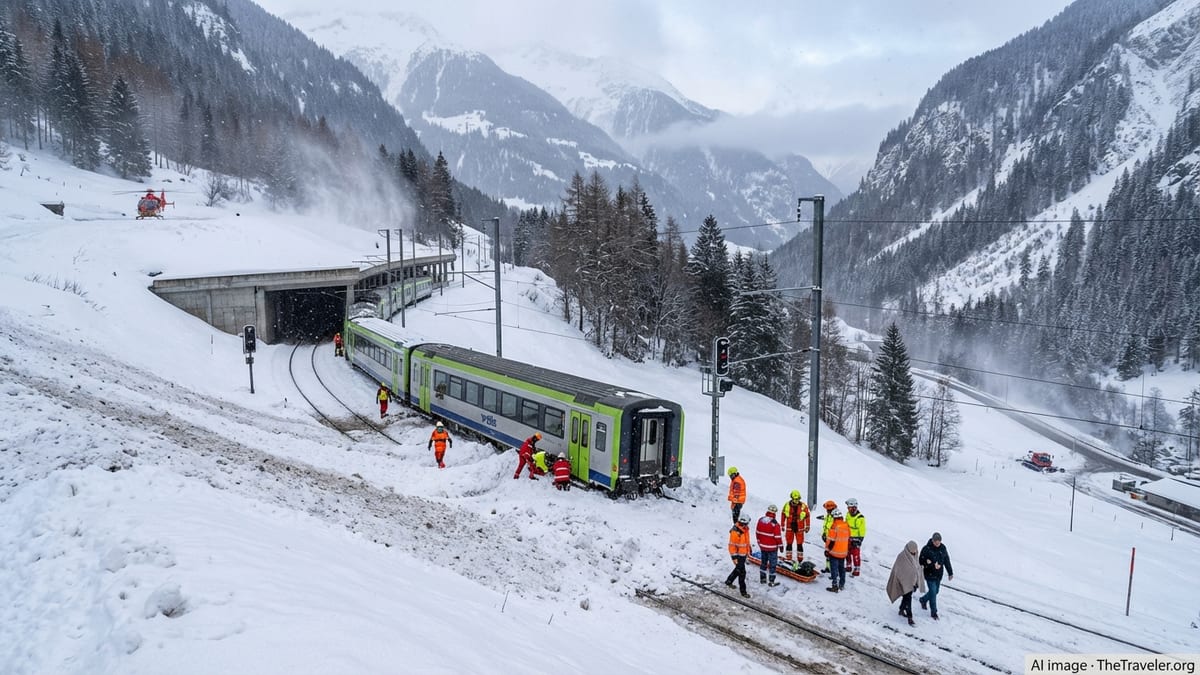
Locomotives and cars leave the tracks in Regina yard
Publicly available information indicates that a yard assignment involving two locomotives and a cut of freight cars derailed within a Regina rail facility during switching activities. Early descriptions of the occurrence state that the locomotives were handling a string of cars inside the yard limits when several units left the rails, ultimately involving two locomotives and 13 cars in the derailment.
Initial reports suggest the incident happened within an industrial area of Regina, away from public crossings, which limited immediate impact on road traffic. There were no early indications of serious injuries among rail personnel, and preliminary descriptions do not reference any evacuation orders.
The occurrence fits a pattern seen in other Canadian yard incidents where relatively low-speed movements still result in significant rolling stock damage. While mainline derailments often draw national attention, rail safety specialists frequently note that complex yard operations, with constant switching and close-clearance track layouts, carry their own set of risks.
In this case, rail activity through the affected tracks was temporarily halted while crews worked to assess damage, re-rail equipment and inspect track infrastructure. Yard operations were reportedly adjusted to route other movements around the site to keep freight flowing through the city.
No dangerous goods release reported
Available coverage of the Regina derailment indicates that the derailed consist was made up primarily of conventional freight cars, with no public reports of a significant dangerous goods release. That factor appears to have reduced the need for large-scale emergency measures compared with past Canadian derailments that involved hazardous commodities.
Across Canada, earlier investigations into yard and terminal derailments have repeatedly documented the added complexity when hazardous materials are involved, even at slow speeds. In Regina, early information points to a more limited environmental impact, although standard post-incident checks of soil, ballast and drainage in the affected tracks would be expected as part of the clean-up process.
The absence of a major dangerous goods release does not remove the requirement for technical investigation. Canadian safety investigators typically examine wheel and rail condition, track geometry, handling of switches and the sequence of train-handling decisions to determine how a yard movement escalated into a derailment.
For nearby businesses and residents, the immediate concern often centers on odours, smoke or visible spills. In this case, publicly available information does not describe such effects, suggesting that containment took place within railway property and largely within the limits of the yard.
Operational disruption for freight corridors through Regina
Regina is an important node in Canada’s prairie rail network, linking grain, potash, consumer goods and intermodal traffic to corridors running west toward the Pacific ports and east toward central Canada and the United States. A yard derailment involving two locomotives and 13 cars can therefore reverberate beyond the city, even if the physical footprint of the incident is confined to a limited number of tracks.
Travel and logistics reports indicate that rail carriers typically respond to such events by holding trains short of the affected terminal, reassigning locomotives, and adjusting crew calls. In some cases, local industries may experience temporary delays in receiving or shipping railcars while damaged track and switches are inspected and cleared.
For long-distance freight flows, the immediate consequence tends to be schedule irregularity rather than total suspension. Trains that use Regina as a staging point may depart late or arrive out of sequence while the yard absorbs the operational shock of a derailment. Over several days, planners often re-balance locomotive and crew assignments to restore normal patterns.
The impact on passenger or tourism-related rail traffic in Saskatchewan appears limited, as the occurrence took place inside a freight yard rather than on a shared main line segment commonly used by passenger services.
Focus on yard safety and switching practices
Published investigations into past Canadian yard derailments highlight several recurring themes that are likely to draw attention in the Regina case. These include train-handling practices during switching, the condition and alignment of yard switches, car securement procedures, and the forces transmitted through long cuts of mixed freight cars at low but variable speeds.
In earlier reports into other yard collisions and derailments, Canadian safety authorities have described how sudden slack action, improper marshalling of heavy and light cars, or incomplete securement of standing cuts can contribute to cars overriding one another or climbing the rail. Those findings have led to recommendations on training, procedures and, in some cases, yard track design.
The Regina occurrence is expected to be evaluated against this backdrop. Railways operating in Canada have increasingly relied on simulation tools, data from locomotive event recorders and video from yard cameras to reconstruct the dynamics of derailments and refine their operating rules. Observers will be watching to see whether similar analytical approaches are applied here, particularly with two locomotives and a substantial cut of 13 cars involved.
For workers in rail yards, the event is a reminder of the persistent risks present during routine tasks such as coupling, kicking cars, lining switches and building trains. Industry guidance has emphasized communication between crew members, clear job briefings before complex moves and strict adherence to securement rules whenever equipment is left standing on a grade.
Implications for communities along busy prairie rail corridors
Although this derailment unfolded inside a Regina rail yard, it resonates with communities along prairie rail lines that host frequent freight movements. Residents in many towns and cities across Saskatchewan, Manitoba and Alberta have become increasingly attentive to the safety record of trains that pass close to homes, schools and commercial districts.
Yard incidents can influence that perception even when they do not produce major environmental or health impacts. For many observers, the sight of derailed locomotives and damaged cars within city limits reinforces questions about aging infrastructure, the volume of hazardous materials transported by rail and the adequacy of existing emergency response planning.
Rail operators and regulators in Canada have, in recent years, placed additional focus on track inspection regimes, securement rules and speed management, particularly in and around urban areas. Events like the Regina yard derailment may add further impetus to that trend, prompting renewed public discussion of how best to balance the economic importance of rail with community expectations for safety.
For travelers and businesses that rely on rail-linked supply chains, the key issues will be how quickly the yard returns to full capacity and whether any longer-term restrictions on traffic emerge from the investigation. As repairs progress and findings are released, Regina’s role as a regional freight hub is likely to remain under close observation.