


More news on this day
Travelers moving through Riyadh’s King Khalid International Airport (RUH) faced a wave of flight cancellations and delays over the weekend, after flight-tracking data showed a short disruption that rippled across airline schedules and terminal operations.
Get the latest news straight to your inbox!
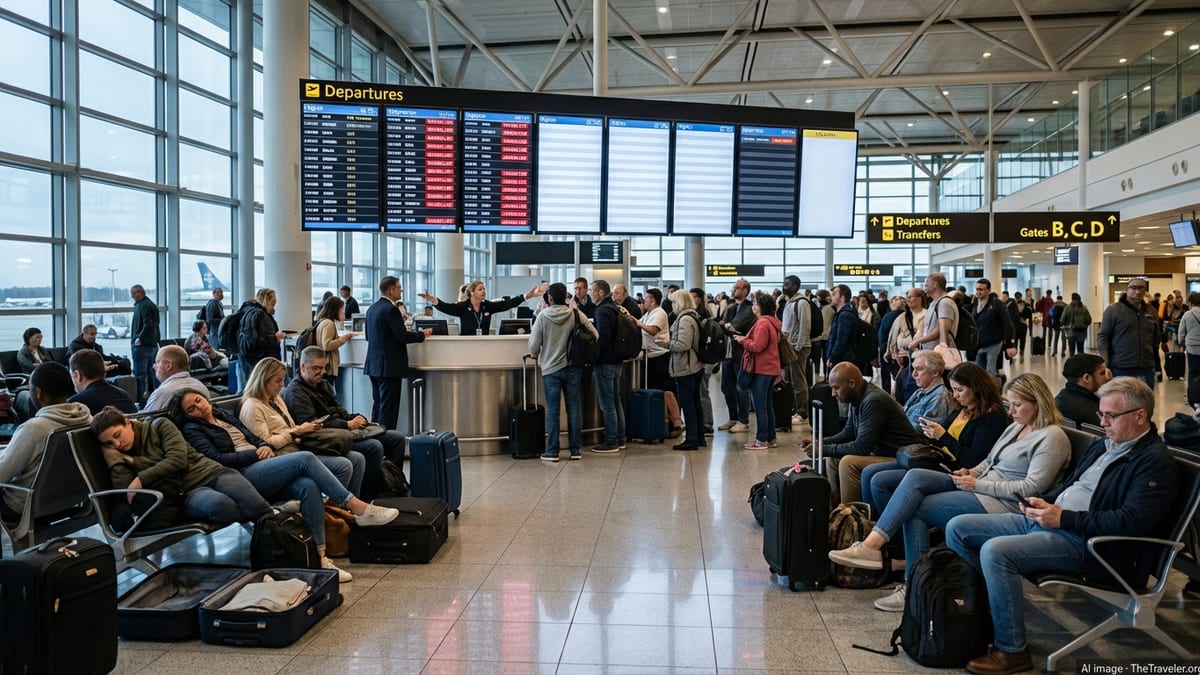
What happened at Riyadh’s King Khalid International Airport
Published coverage and flight-tracking dashboards showed elevated disruption at RUH on Saturday, September 19, 2026, with significant delays and a smaller number of cancellations. The spike followed reports of smoke and flames observed near the airport area, which circulated widely across regional and international media.
Flight-tracking summaries indicated that airport operations were interrupted for a limited period before gradually returning, though backlogs continued to affect departures and arrivals for hours afterward. By Sunday, September 20, live disruption indicators had eased from the peak conditions seen the day prior, but delays remained noticeable as airlines and air traffic flows worked through accumulated schedule impacts.
Separately, broader regional security coverage over the same period included reports of air-raid alerts and attempted attacks being discussed in public reporting, adding to traveler uncertainty and increasing the importance of verifying flight status close to departure time.
How many flights were delayed or canceled
Flight-tracking data published on September 20 indicated that, during the Saturday disruption window, several flights were canceled and hundreds were delayed. One widely shared compilation of tracking data described four canceled departures and five canceled arrivals, alongside 187 delayed departures and 92 delayed arrivals during the period when operations were temporarily affected.
Live departure boards later showed improving conditions but continued congestion. On Sunday, Flightradar24’s live metrics for RUH displayed an average delay in the range of roughly half an hour at points in the day, with a high share of departures running late even as the airport’s overall disruption index fell into a lower band than Saturday’s maximum alert level.
Looking beyond the single-day spike, third-party monthly tracking summaries for September 2026 (month to date) also reflected a small but notable number of cancellations at RUH, with the majority associated with one carrier. While such aggregations are not official tallies, they can help travelers understand whether disruptions are isolated or recurring on particular routes.
What travelers should do right now if flying via RUH
Because flight conditions can shift quickly, travelers were best served by checking status through primary channels and then cross-checking through independent tracking tools. For passengers on Saudi carriers and regional low-cost airlines, airline flight-status pages can provide the most current departure time and gate updates once a flight is actively being handled.
At the airport level, RUH’s official airport site offers flight tracking functions and passenger guidance for departures, arrivals, and transfers. Travelers connecting through Riyadh should re-check their next flight after landing, since tight connections can be undermined by inbound delays even if the onward segment is operating normally.
Passengers impacted by cancellations should focus first on rebooking and rerouting options offered by the airline, then assess whether their fare rules, travel insurance policy, or credit-card benefits may cover additional costs such as hotels or meals. Travelers on itineraries involving international segments may also want to confirm whether any applicable consumer-protection regime applies to their ticket, since rules differ substantially by departure country and carrier.
Which airlines and routes may see the most knock-on effects
Riyadh is a major hub for domestic trunk routes and international services across the Gulf, South Asia, Europe, and East Africa, so even a short operational pause can create rolling delays. Flights scheduled close together on high-frequency routes can become compressed, with later departures inheriting the delay of earlier aircraft rotations.
Publicly available, non-official performance summaries have suggested that some carriers and route pairs can be more disruption-prone than others in the short term, especially on domestic sectors that depend on aircraft making multiple daily turns. Travelers on those routes may see changes like delayed boarding, gate swaps, aircraft substitutions, or retimed departures as airlines protect onward connectivity.
For passengers, the practical takeaway is to treat same-day domestic add-ons and self-constructed itineraries with extra caution during disruption periods. When flights are not on a single ticket, missed connections can become the traveler’s responsibility even if the delay that caused the miss was outside their control.
What to watch for over the next 24 to 48 hours
Even after a disruption ends, recovery can take time because aircraft and crews may be out of position, and inbound flights may arrive late from other airports affected by re-routings or congestion. Travelers departing Riyadh in the next day or two should watch for schedule adjustments, including delayed pushback times posted shortly before boarding.
Conditions can also change due to airspace management, temporary restrictions, or operational constraints that are communicated through aviation notices and reflected in real-time flight tracking. For travelers, the most reliable approach is simple: confirm your flight status repeatedly on the day of travel, arrive with extra time for re-accommodation lines, and keep documentation of expenses if a disruption materially changes your trip.