


More news on this day
The United States has tightened travel guidance for parts of the Middle East as renewed fighting between Saudi Arabia and Yemen’s Iran-aligned Houthi movement raises fears of spillover, disrupted air routes, and security risks for travelers across the region.
Get the latest news straight to your inbox!
What the U.S. warning covers and why it escalated now
Published coverage and publicly available U.S. government travel guidance show a renewed emphasis on regional risk in late September 2026, driven by a spike in cross-border missile and drone activity, threats to ports and energy infrastructure, and the possibility of rapid escalation around the Red Sea and Gulf.
Recent reporting has described attempted Houthi strikes toward Saudi territory, including targeting the capital and Red Sea-linked infrastructure, while humanitarian conditions inside Yemen have deteriorated as people flee violence and transport bottlenecks worsen.
While U.S. travel advisories are country-specific and can differ by region within a country, the broader message in current U.S. travel messaging is consistent: travelers should review the latest country pages before departure, expect fast-moving changes, and avoid areas where armed conflict, terrorism risks, or civil aviation disruptions are most likely.
The 10 countries travelers are being urged to review most closely
In the context of Saudi-Houthi hostilities and wider regional tensions, U.S. travel guidance most directly affects travelers considering itineraries across the immediate conflict zone and its neighboring corridors. The 10 nations most central to current risk planning in this situation are Saudi Arabia, Yemen, Oman, the United Arab Emirates, Qatar, Bahrain, Kuwait, Iraq, Jordan, and Iran, based on geography, air and sea routing, and the way regional disruptions can cascade.
Saudi Arabia and Yemen sit at the heart of the conflict dynamic, with Yemen facing long-running instability and Saudi Arabia facing periodic cross-border strikes and heightened security posture. Oman borders Yemen and often becomes relevant for overland diversions, logistics, and route changes when travel into Yemen becomes impossible or inadvisable.
Across the Gulf, travelers commonly transit through the United Arab Emirates, Qatar, Bahrain, and Kuwait. Even when day-to-day tourism in major hubs continues, regional aviation advisories, temporary route changes, and elevated security alerts can affect airport operations, flight paths, and travel insurance assumptions. Iraq and Iran remain high-risk destinations in many scenarios due to security and diplomatic constraints, while Jordan is frequently used as a gateway for the region and can be affected by sudden shifts in regional security conditions.
What this means for flights, airports, and cruise or ferry routes
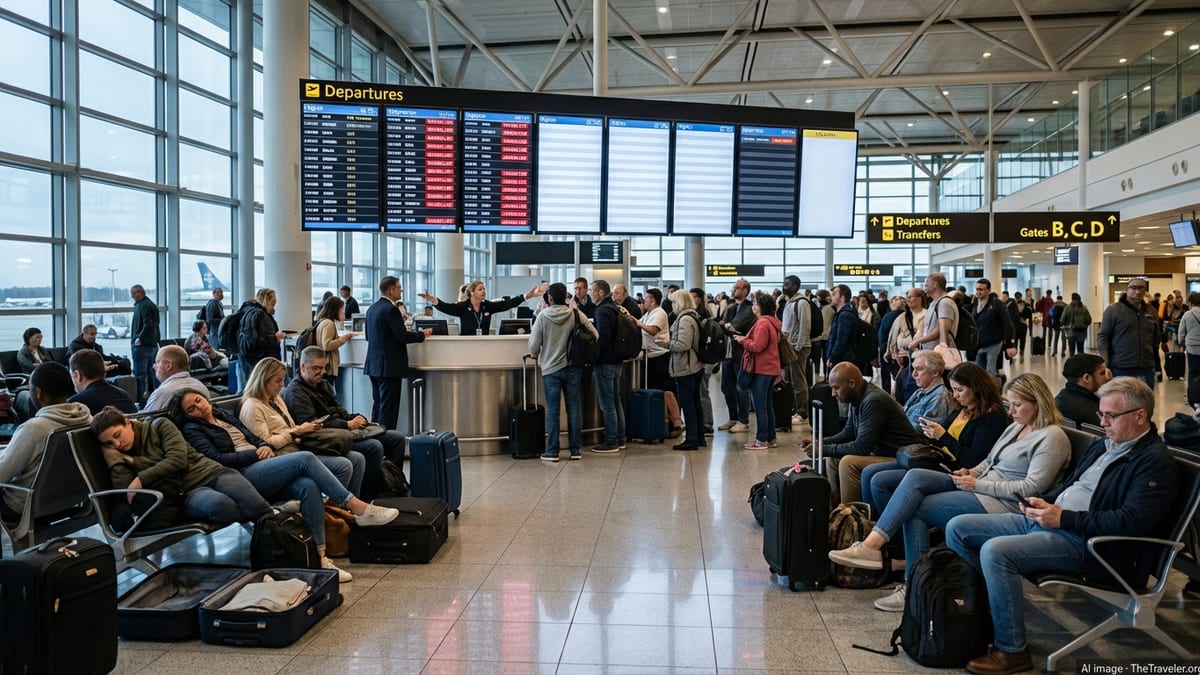
For most travelers, the most immediate impact is not a closed border but uncertainty: rerouted flights, longer travel times, and heightened screening in and around major hubs. In periods of regional tension, airlines may adjust flight paths to reduce exposure to conflict-adjacent airspace, and those changes can produce last-minute schedule updates or longer connections.
Maritime risk is also a factor. Publicly available international shipping safety statements and U.S. maritime security guidance have continued to highlight the Red Sea, the Bab el-Mandeb Strait, and nearby waterways as areas where commercial vessels have faced threats tied to Houthi activity. Even leisure travelers can feel downstream effects when cruise operators, repositioning ships, or ferry services adjust routes, reduce calls, or change timing to manage risk.
Travelers with multi-country itineraries should anticipate that disruptions can propagate across the map: a security incident near a port or a spike in missile or drone activity can trigger tighter airport procedures, temporary restrictions, or airline operational decisions well beyond the immediate impact area.
Practical steps for U.S. citizens planning travel in the region
Travelers should check the U.S. State Department’s current advisory level for each destination and read any location-specific security alerts for the city or region they plan to visit. Conditions can vary sharply inside a single country, and some advisories include areas that are strongly discouraged even if other areas remain open to travel.
It is also prudent to build flexibility into itineraries. That can include choosing changeable fares where possible, avoiding tight connections in key transit hubs, and keeping contingency routing options in mind if airspace restrictions or airport delays emerge. For travelers heading to Saudi Arabia in particular, current U.S. guidance highlights risks including missile and drone threats, terrorism concerns, and the possibility of attacks occurring with little warning.
For Yemen, publicly available U.S. guidance has long emphasized that U.S. consular services are extremely limited or unavailable inside the country, which changes what assistance is realistically possible in an emergency. Travelers should factor that into decisions on whether to postpone travel and how to structure any essential movement through neighboring countries.
What to watch next as the Saudi-Houthi conflict evolves
The trajectory of Saudi-Houthi hostilities remains a central indicator for travelers, especially those transiting the Red Sea region or relying on Gulf aviation hubs. Published coverage in mid-to-late September 2026 has pointed to intensifying activity, including attempted long-range strikes and warnings tied to maritime and port security.
Travelers should also watch for updates affecting regional freedom of navigation and any new advisories related to civil aviation risk. Even when incidents are geographically concentrated, travel guidance often changes quickly when there is a perceived risk of broader escalation.
For now, the most reliable approach is to treat travel to and through the region as dynamic: confirm flight status repeatedly in the days before departure, monitor official advisory updates for each stop on the itinerary, and be prepared to delay or reroute if conditions change on short notice.