


More news on this day
Rome is rapidly joining Paris, Lisbon and Prague at the top of North American travelers’ wish lists, as new long-haul routes, relaxed entry rules, booming cruise traffic and an upgraded luxury hotel scene converge to create one of Europe’s most competitive city breaks for visitors from Canada, the United States and Mexico.
Get the latest news straight to your inbox!
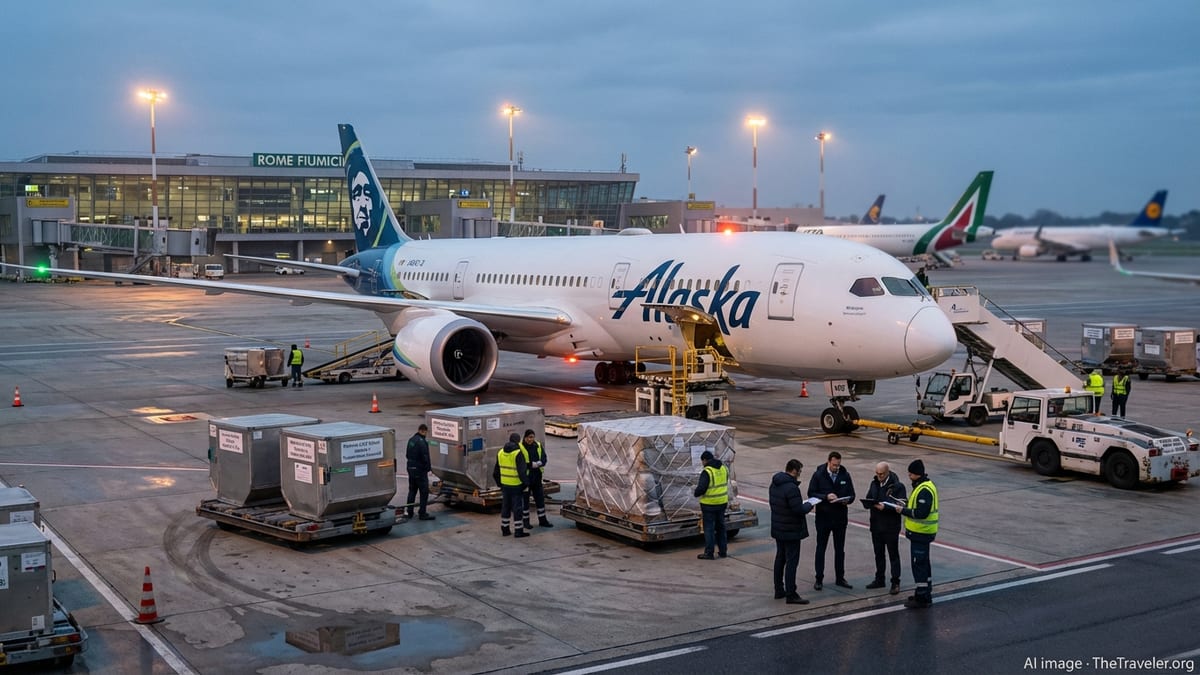
Transatlantic Flight Capacity to Rome Climbs Sharply
Rome Fiumicino, Italy’s main international gateway, is in the midst of a significant long-haul expansion that is reshaping how North Americans reach the Italian capital. Airlines serving Canada, the United States and Mexico are adding capacity and new routes into the late 2020s, positioning Rome alongside Paris, Lisbon and Prague as a primary European entry point for the region’s travelers.
Publicly available route data show that carriers such as Air Canada, Air Transat and ITA Airways now operate multiple daily flights between Rome and Canadian hubs, including Toronto and Montreal, with year-round operations increasingly favored over purely seasonal schedules. Similar growth is visible from major US gateways, where legacy and European carriers have restored or expanded services to Rome, and from Mexico City, which is linked by daily non-stop service operated by Aeromexico.
Rome’s connectivity is set to deepen further. ITA Airways has announced a strategic long-haul growth plan through 2030, including additional North American destinations and increased widebody capacity, while low-cost and hybrid airlines continue to grow their presence at Fiumicino. Industry analysts note that this mirrors trends seen in Paris and Lisbon, where dense transatlantic networks have underpinned record visitor numbers from North America.
For travelers in Canada, the United States and Mexico, the practical impact is more competition, more direct options and, in many cases, improved connection opportunities into secondary Italian cities via Rome. Travel forecasters suggest that this enhanced air access is arriving just as some Canadians and Americans look beyond domestic and US trips, redirecting demand toward Europe and the Mediterranean.
Visa and Entry Rules: What North Americans Need to Know
Alongside the flight build-out, visa and border policy remains a critical factor shaping demand. For now, citizens of Canada, the United States and Mexico continue to enjoy short-stay, visa-free access to Italy and the wider Schengen Area for tourism, typically up to 90 days within a 180-day period, provided they meet standard entry requirements.
The coming introduction of the European Travel Information and Authorisation System, known as ETIAS, has generated wide discussion among travelers planning European trips for the second half of this decade. ETIAS is designed as a pre-travel electronic authorization for visitors from visa-exempt countries, including Canada, the United States and Mexico, and will be required for short stays once fully implemented.
European authorities have repeatedly delayed the start date for ETIAS. Current public information indicates that the system is not yet in operation and is not expected to affect trips in the first half of 2026. Travelers booking Rome trips for 2026 are therefore being advised in consumer coverage to check official European Union channels closer to departure, as the exact launch window and grace periods may still evolve.
Until ETIAS comes into force, the primary changes visitors may encounter relate to the phased rollout of the Entry/Exit System, which aims to digitize border checks for non-EU nationals entering the Schengen Area. For most tourists arriving in Rome by air, this is expected to translate into more automated border controls over time rather than a fundamental change in eligibility to visit.
Rome’s Cruise Gateway Matches Paris, Lisbon and Prague in Visitor Pull
Rome’s travel surge is not limited to its airport. The nearby port of Civitavecchia, commonly marketed as “Rome’s cruise port,” has emerged as one of the Mediterranean’s busiest embarkation points, rivaling the cruise-driven tourism booms that have supported Lisbon’s and, to a lesser extent, Prague’s visitor economies.
Recent port statistics and cruise industry reports indicate that Civitavecchia has secured an expanded roster of homeported ships from major global cruise lines, many of them targeting North American travelers on Mediterranean itineraries. Rome’s proximity to marquee coastal stops such as Naples, Sicily, the Amalfi Coast and Greek islands enhances its appeal as both a starting and finishing point for longer voyages.
For travelers from Canada, the United States and Mexico, this means more options to pair a city stay in Rome with a cruise, often on the same ticket. Fly-cruise packages commonly route passengers into Fiumicino, where growing transatlantic capacity aligns with coach and rail transfers to the port. Industry observers note that this bundled approach has become increasingly popular, similar to patterns seen in Lisbon, which has leveraged its Atlantic port to capture long-haul city-and-cruise stays.
However, the cruise influx is also drawing attention to capacity and sustainability questions. Local media and policy discussions in Rome have echoed debates already familiar in Paris and Prague, as residents weigh the economic benefits of high-spending cruise guests against pressures on historic districts and infrastructure during peak season.
Luxury Hotels and Resorts Target High-Spend North American Guests
Parallel to the surge in airlift and cruise arrivals, Rome’s high-end hospitality sector is experiencing a strong investment cycle. International luxury brands and boutique operators have opened or refurbished flagship properties in and around the historic center, as well as in the countryside of Lazio, in a bid to capture growing demand from affluent visitors.
Recent hotel industry analyses highlight Rome as a standout European market for new luxury keys, alongside Paris and Lisbon. Global groups have unveiled renovated palazzi, branded residences and high-service boutique hotels, often with rooftop dining, destination spas and curated cultural experiences tailored for North American tastes. These developments align with a broader continental trend in which high-spend travelers from Canada and the United States are driving revenue growth even where overall visitor numbers may be stabilizing.
For guests arriving from Mexico and other Latin American markets, Rome is increasingly positioned as a premium stop on multi-country European itineraries. Travel advisors note that luxury rail journeys, private villa stays and bespoke wine and food tours in Lazio and neighboring regions are now frequently bundled with time in Rome, mirroring patterns long established for Paris and, more recently, Lisbon.
This upmarket pivot is visible in rate performance as well. Market data cited in hospitality reports show Rome’s top-tier hotels achieving higher average daily rates and occupancy in recent peak seasons, supported in part by North American demand returning to or surpassing pre-2020 levels. The combination of upgraded hardware and strong brand recognition is expected to keep the city competitive in the luxury city-break segment.
How Rome Compares With Paris, Lisbon and Prague for North Americans
Travel and tourism statistics for 2024 and 2025 show that Paris, Lisbon and Prague all registered strong recoveries in international arrivals, with North America playing a key role. Paris reported record spending figures and a renewed influx of US visitors, Lisbon benefited from record-breaking international tourism to Portugal, and Prague logged substantial growth in overnight stays, including a significant share from the United States.
Rome’s trajectory is increasingly aligned with these peers. Although each city has distinct seasonality and source-market mixes, they share common drivers: expanded transatlantic air capacity, relaxed or predictable short-stay entry regimes for North Americans, diversified accommodation stock and strong marketing as culture-rich, walkable capitals.
Where Rome is beginning to stand out is in its combination of aviation and cruise connectivity. Unlike Prague, which relies primarily on air access, and unlike Lisbon, which functions mainly as a coastal gateway, Rome offers a major hub airport, a busy cruise port within reach and rapid connections to the rest of Italy’s tourist hotspots. For travelers from Canada, the United States and Mexico, this blend creates opportunities to design multi-modal holidays anchored around the Italian capital.
As airlines, hoteliers and cruise operators finalize schedules and inventory for 2026 and beyond, available information suggests that Rome will continue to rise in prominence among North American travelers, joining Paris, Lisbon and Prague as a default choice for first-time and repeat visitors seeking European culture, food and luxury experiences.