


More news on this day
Asia’s aviation network is facing another punishing wave of disruption as Indonesia, China, India, and Malaysia grapple with dozens of suspended flights and more than two hundred major delays, leaving thousands of passengers stranded in congested terminals and struggling to rebook disrupted journeys.
Get the latest news straight to your inbox!
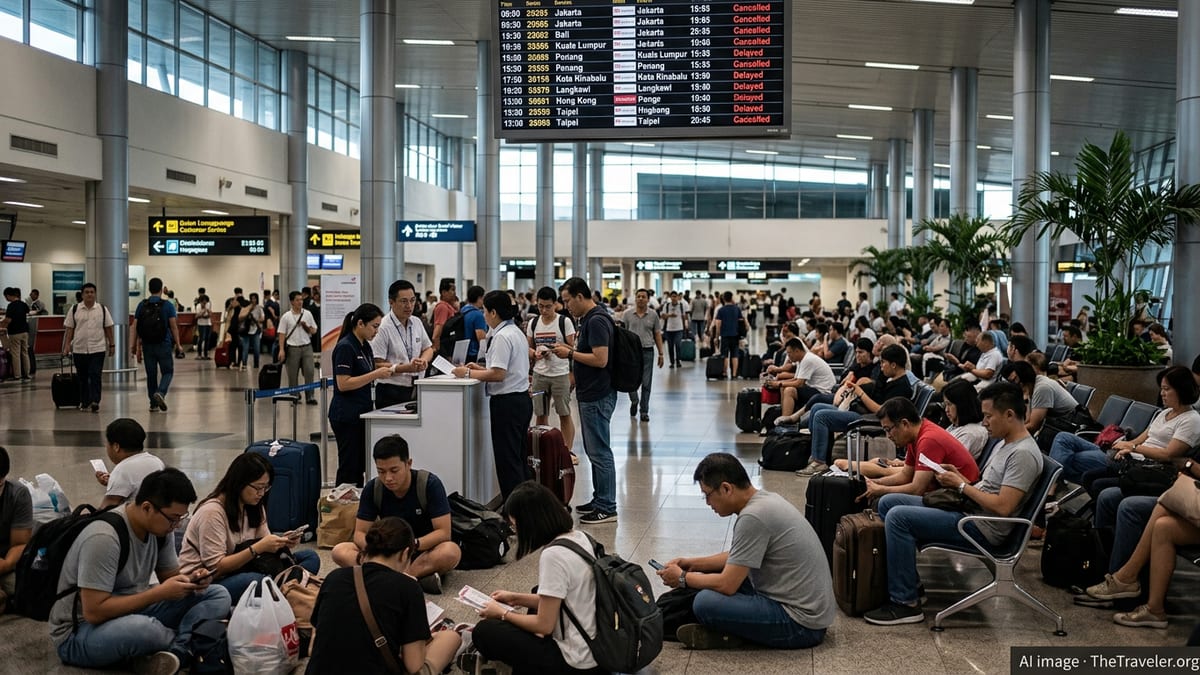
Layered Crises Converge On Key Asian Hubs
Recent data from aviation trackers and regional news outlets indicates that a fresh cluster of disruptions has hit major airports in Jakarta, Bali, Shanghai, Guangzhou, Delhi, Mumbai, Kuala Lumpur, and other secondary hubs. In total, reports point to at least 66 flight suspensions and more than 200 significant delays affecting routes within Asia and on long haul links to Europe and the Middle East.
The latest turbulence builds on months of strain triggered by Middle East airspace restrictions, fuel price shocks, severe weather systems, and occasional airport technology outages. Analysts note that these pressures are now converging on already busy summer and election travel periods in parts of Asia, eroding schedule resilience and magnifying the impact of each operational hiccup.
According to published coverage, international and domestic carriers based in China, India, Indonesia, and Malaysia have been forced to trim frequencies, reroute services, or suspend select city pairs entirely. The result for travelers is a patchwork of last minute cancellations, rolling delays, and aircraft swaps that can cascade through networks for days.
While headline numbers of cancellations remain lower than the worst disruption spikes seen earlier in 2026, the concentration of problems at a handful of major hubs means congestion and uncertainty for passengers can feel just as severe, particularly where rebooking options are limited.
Where The Disruptions Are Hitting Travelers Hardest
In Indonesia, publicly available information points to schedule cuts and delays focused on Jakarta’s Soekarno Hatta International Airport and Bali’s Ngurah Rai International Airport. Weather-related constraints, staffing challenges, and knock on effects from rerouted Europe Asia traffic have combined to stretch turnaround times and limit spare capacity on popular domestic and regional routes.
China’s vast aviation system has also been under pressure. Earlier technology outages and regional weather systems around Shanghai and other coastal hubs created significant backlogs, and current reports suggest that some carriers continue to operate with tight buffers. When disruption strikes, it can rapidly spill across east coast airports, affecting flights to Southeast Asia and India as well as domestic services.
India has faced particular challenges in recent months as its largest private airlines adjusted to regulatory changes, high demand, and network rebalancing. Previous waves of cancellations and delays at Delhi and Mumbai left large numbers of passengers stranded, and current disruptions appear to be concentrated on busy trunk routes and international services that connect via Gulf and Southeast Asian hubs.
In Malaysia, a mix of fuel cost pressures and capacity reshuffles has led carriers to pare back some domestic and regional links, especially from Kuala Lumpur. Industry reporting describes reductions on certain secondary routes and thinner schedules to parts of China and India, which means any additional delay or cancellation can have an outsized impact on travelers who have fewer alternative flights to choose from on the same day.
Routes And Connections Most At Risk Right Now
The most vulnerable itineraries at present are multi leg journeys that rely on tight connections through one or more of the affected hubs. Passengers traveling between Southeast Asia and Europe or North America, particularly those who would normally connect via Middle East or Chinese gateways, are facing longer routings, reduced frequencies, and an elevated risk of missed onward flights.
Regional links between Indonesia, Malaysia, southern China, and the Indian subcontinent are also under strain. Reports highlight disruptions on leisure heavy corridors such as Bali to major Australian cities, Kuala Lumpur to eastern China, and India to Southeast Asian resort destinations, where strong seasonal demand leaves little slack in the system.
Within India and Indonesia, some domestic routes have seen temporary suspensions or sharp reductions in daily frequencies as airlines focus limited aircraft and crew resources on core city pairs. Travelers booked on thinner routes are more likely to encounter same day cancellations and may be rebooked onto flights that depart many hours later or even the following day.
Experts tracking schedule data suggest that early morning and late night operations are proving particularly fragile, as any crew or aircraft arriving late from an earlier leg can quickly push departures outside allowable duty windows. For travelers, that increases the importance of monitoring the first segments of multi flight itineraries, because a delay at the start of the day can unravel connections many hours later.
How Airports And Airlines Are Managing The Backlog
Airports in Jakarta, Shanghai, Delhi, Mumbai, and Kuala Lumpur have moved to adjust operations to cope with surging crowds and rolling delays. Publicly available updates describe extended check in hours for some long haul departures, additional staff deployed at security and immigration during peak disruption periods, and the use of overflow waiting areas to disperse passengers from congested gate zones.
Airlines in the affected markets are also reshaping schedules in an effort to stabilize operations. Several carriers have trimmed flight programs for the coming weeks, cutting lower demand frequencies to free aircraft and crews for routes where demand and connectivity pressures are highest. Industry commentators view these capacity reductions as a short term measure that may help restore punctuality but could also keep fares elevated on the busiest corridors.
Some airlines based in India, China, Indonesia, and Malaysia have announced flexible rebooking policies for passengers whose flights are canceled or significantly delayed, including changes without penalty within a limited window and, in some cases, meal or hotel vouchers when disruptions stretch overnight. These measures vary widely by carrier and by the cause of the disruption, so travelers are urged to check individual airline advisories closely.
Recovery efforts are complicated by continuing uncertainties in neighboring regions, including airspace constraints that force longer routings and higher fuel burn. Industry data shows that as long as detours remain in place and jet fuel prices stay volatile, airlines across Asia will have less room to rebuild full schedules, making a rapid return to pre disruption reliability unlikely.
What Travelers Can Do As Disruptions Continue
For passengers planning journeys through Indonesia, China, India, or Malaysia in the coming days, travel specialists recommend building in extra time, flexibility, and preparation. Checking flight status repeatedly in the 24 hours before departure, using both airline apps and airport information channels, can provide early warning of problems and more time to request alternative options.
Where possible, booking longer connection windows at major hubs can reduce the risk of missed onward flights. Travelers may also want to prioritize itineraries that keep all segments on a single ticket with one airline group, as this typically improves rebooking options if a disruption occurs on an early leg.
Passengers already at the airport during disruptions are encouraged by consumer advocates to document delays carefully, retain boarding passes and receipts, and review local passenger rights frameworks. While compensation regimes in Asia differ from those in Europe and parts of North America, many airlines provide assistance such as meals, hotel stays, and complimentary changes when disruptions are within the carrier’s control.
Given that operational challenges and knock on effects from earlier crises are expected to linger, analysts suggest that travelers view the current period as one of elevated but manageable risk. With careful planning, realistic connection times, and an understanding of carrier policies, most passengers should still be able to complete their trips, even if journeys through key Asian hubs take longer and feel less predictable than in previous years.