


More news on this day
Rory McIlroy is set to begin his latest title push at the Abu Dhabi Championship this week, just as a wave of updated government travel advisories puts a fresh spotlight on trips to the United Arab Emirates and the wider Middle East.
Get the latest news straight to your inbox!
Star-studded playoff opener proceeds amid security concerns
The Abu Dhabi Championship, a key playoff stop on the DP World Tour schedule, runs from 5 to 8 November 2026, with McIlroy among the headline names in a field that also includes Jon Rahm and other leading contenders for the season-long Race to Dubai title. Tour documentation lists the event as the first playoff tournament before the season finale in Dubai the following week, underscoring its importance for rankings and prize money.
McIlroy’s official schedule confirms his participation at the Abu Dhabi event over these dates, continuing his long association with the United Arab Emirates as a regular stop late in the golfing year. In the build-up, golf media coverage has highlighted his strong form heading into Abu Dhabi and the prospect of adding a long-sought victory in the emirate to his résumé after several near-misses in previous editions.
Reports ahead of the first round describe a strengthened security footprint around the championship venue, including enhanced screening and revised emergency procedures distributed to players, caddies and on-site staff. Tournament communications shared in specialist golf media outline that play would be halted and the course evacuated if local authorities issue a mobile phone alert during the event, signalling what organizers classify as a dangerous situation.
Despite those precautions, coverage of McIlroy’s pre-tournament comments indicates that the four-time major champion has publicly played down the personal risk of competing in Abu Dhabi this week, framing his decision to travel as consistent with his long-standing commitment to the Middle East swing of the schedule.
Travel alerts for UAE climb to higher caution levels
As McIlroy and his peers prepare to tee off, a series of updated travel advisories from multiple governments is reshaping the backdrop for international visitors to Abu Dhabi and Dubai. On 23 October 2026, the United States raised its advisory for the United Arab Emirates to Level 3, “Reconsider travel,” citing terrorism risks, threats from Iranian-backed groups and the potential for missile or drone attacks that could affect civilian infrastructure and air travel.
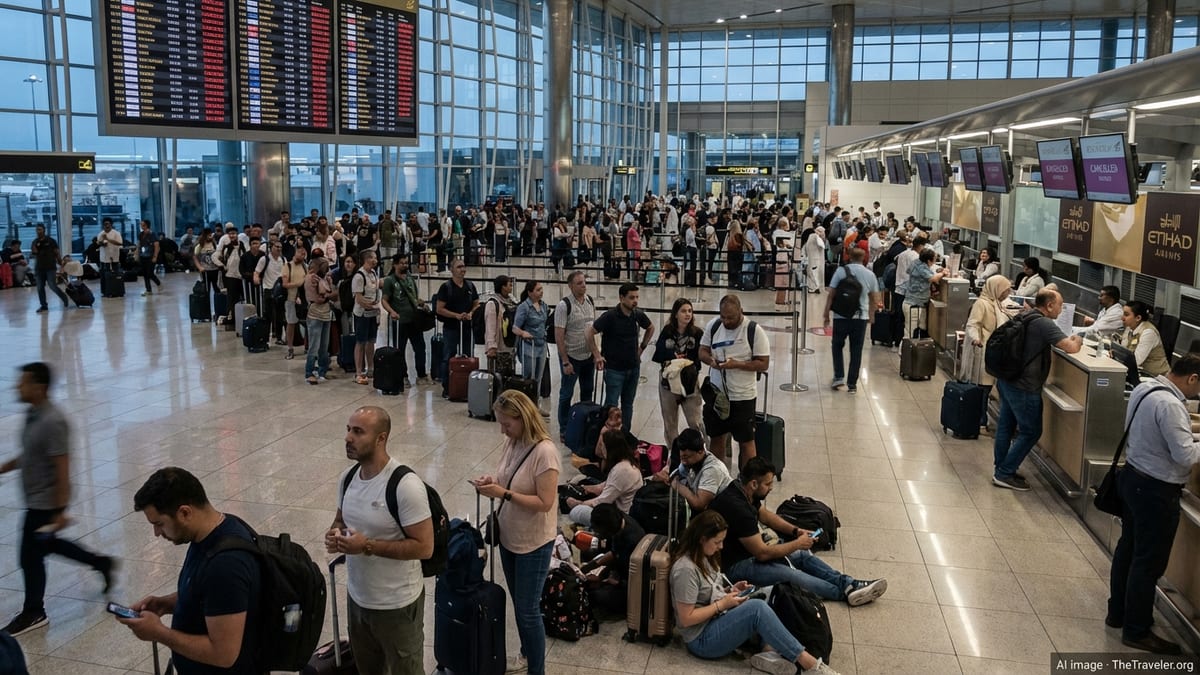
British guidance, updated in early November, continues to advise travellers to exercise increased caution in the UAE because of the regional security environment, while noting that commercial flights and tourism infrastructure are operating. The United Kingdom’s foreign travel advice points to Iran’s stated intention to target sites linked to the United States and Israel, and warns that conflicts in the wider Middle East could trigger sudden airspace closures or flight disruptions affecting hubs such as Abu Dhabi International Airport.
Canadian, Australian and New Zealand advisories have adopted similar tones in recent weeks, typically recommending a “high degree of caution” or “increased caution” for the UAE as a whole. These notices highlight the threat of terrorism, the risk of spillover from regional conflicts and the possibility of short-notice changes to airline routings or schedules. Some governments also specify areas where they advise against non-essential travel, including around certain military facilities.
Several advisories now explicitly reference the potential for mobile emergency alerts to be sent directly to phones in the UAE in both Arabic and English, asking visitors to follow all on-screen instructions immediately. Travellers are also encouraged to enrol in government notification systems, such as the United States’ Smart Traveler Enrollment Program, to receive email or SMS updates from embassies in Abu Dhabi and Dubai.
Regional conflict reshapes sports and tourism landscape
The heightened caution around travel to Abu Dhabi comes against the backdrop of ongoing conflict involving Iran, Israel and regional proxies, which has already impacted aviation and major public events. Earlier this year, the European Union Aviation Safety Agency issued an advisory warning airlines about operating in the airspace over Bahrain, Kuwait, Qatar and the United Arab Emirates, noting the elevated risk environment in parts of the Gulf.
Sports calendars have been directly affected. Recent months saw missile and drone attacks on Saudi Arabian infrastructure, including airports, prompting cancellations and postponements of events in that country and reinforcing concerns that high-profile gatherings could be potential targets. Some professional golfers and other athletes have opted to skip Middle East stops as a result, citing unease over the security climate and travel logistics.
In this context, the decision by the DP World Tour to proceed with the Abu Dhabi Championship and the following week’s tournament in Dubai has drawn close scrutiny. Coverage in sports business and golf outlets indicates that tour executives weighed security briefings and host-country assurances before confirming that the playoff events would go ahead as scheduled, with additional contingency plans embedded into operations.
Tourism flows into the UAE remain significant, however, and Abu Dhabi’s authorities continue to promote the emirate as a leading destination, pointing to strict local security measures and past success in hosting global sports showcases. The presence of figures like McIlroy, Rahm and other top-ranked players is seen by local organizers as a signal that elite events can still attract world-class fields despite geopolitical headwinds.
What the changing risk picture means for visiting fans
For golf fans considering a last-minute trip to watch McIlroy in Abu Dhabi, the altered security backdrop translates into a more complex planning exercise than in previous years. Travel experts and official advisories now emphasize the importance of checking government guidance from a traveller’s home country on a regular basis, as risk ratings and route recommendations have been updated several times since mid-2026.
Visitors are advised in public information materials to build extra flexibility into itineraries, including longer connection windows and refundable bookings where possible, given the chance of short-notice changes to flight paths or departure times. Travel insurance providers in several markets also flag that coverage for disruption related to regional conflict may vary between policies, underscoring the need to review exclusions before departure.
On the ground in Abu Dhabi, foreign ministries recommend that travellers monitor local media and official channels for security updates, remain alert in busy public places and be prepared to follow the instructions contained in any mobile emergency alerts issued by the UAE government. Large events such as golf tournaments, concerts and fan zones are more likely to feature bag checks, metal detectors and restricted entry points compared with previous years.
Stadium and venue operators in the emirate have responded by refining evacuation procedures, expanding secure transport options and coordinating closely with hotels and tour operators, according to information shared in recent event briefings. For spectators planning to follow McIlroy’s rounds, this is likely to mean earlier suggested arrival times at the course and occasional pauses in play if security protocols are triggered.
Balancing prestige, performance and perception
For McIlroy, Abu Dhabi has long occupied an important place in his late-season schedule, offering both world-ranking points and a familiar setting in which to pursue Race to Dubai honours. Despite never having lifted the trophy in the emirate, he has produced some of his lowest career rounds there and remains a central figure in how the event is marketed to global audiences.
Yet the 2026 edition of the championship unfolds in a markedly different environment from earlier years, with travel alerts, conflict-related aviation notices and revised emergency procedures all shaping the narrative. The contrast between a polished, televised tournament and the volatile regional context illustrates how international sports increasingly operate within overlapping layers of geopolitical risk management.
Organizers and local partners are betting that their enhanced security posture, combined with the drawing power of stars such as McIlroy, will reassure both players and fans. Whether that calculation proves correct will be measured not only in leaderboard drama and attendance figures, but also in how smoothly travel and on-site operations run over the four days of competition.
For now, as McIlroy steps onto the first tee, Abu Dhabi finds itself once again using top-tier golf to project normalcy and continuity, even as the wider Middle East prompts foreign ministries to raise their alert levels and travellers to think more carefully about every trip.