


More news on this day
Thousands of motorists and bus passengers headed across western Maharashtra for the Diwali holidays have been stranded along a key stretch of National Highway 48, as an ongoing agitation by sugarcane farmers demanding higher advance payments for their crop continues to choke traffic between Satara and Kolhapur.
Get the latest news straight to your inbox!
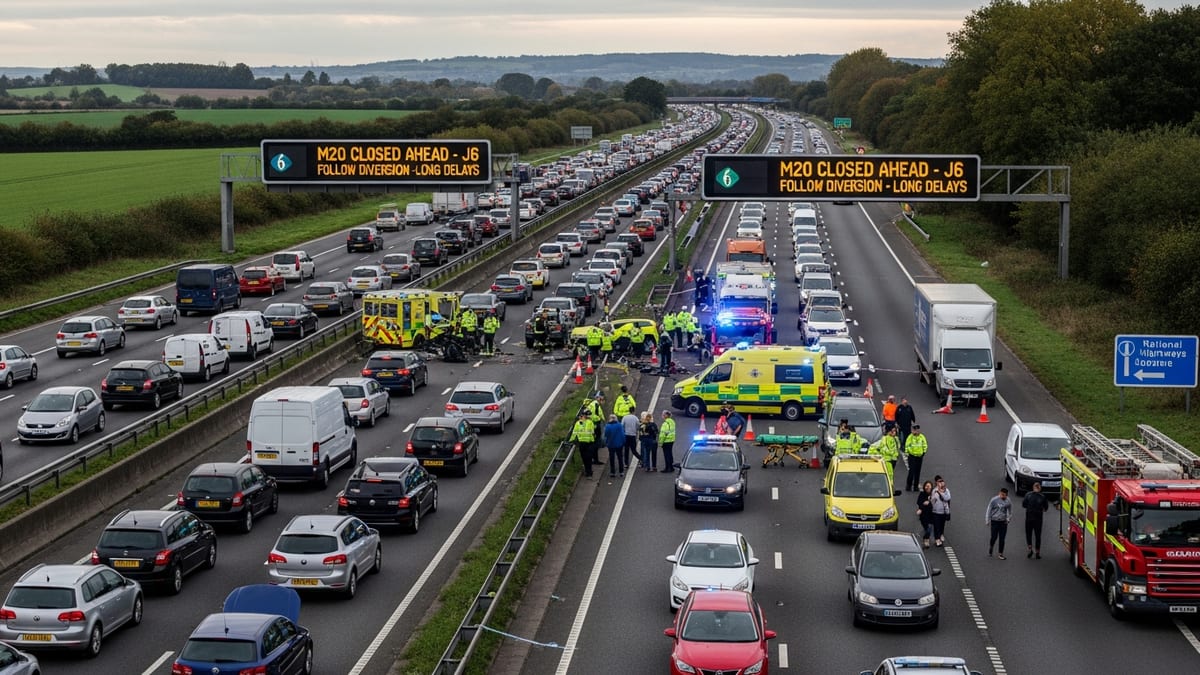
Highway blockade cripples a key west India corridor
Published coverage indicates that the Pune–Bengaluru National Highway has been partially blocked near the Kini toll plaza in Kolhapur district since Tuesday, creating a near-continuous tailback along an estimated 120 kilometer stretch between Nagthane in Satara district and Sangli Phata near Kolhapur. The protest, led by the Swabhimani Shetkari Sanghatana under former MP Raju Shetti, centers on a demand for an advance payment of 4,500 rupees per tonne of sugarcane in the current crushing season.
Reports from regional media on November 6 describe a third consecutive day of severe disruption, with long queues of cars, buses and trucks stranded on the carriageway in both directions. Holiday traffic for Diwali has compounded the impact, with families attempting to drive from Pune and Mumbai towards Kolhapur, Sangli, Belagavi and onward to Karnataka facing hours-long delays in slow-moving or completely halted traffic.
To ease pressure on NH-48, local administrations have routed vehicles onto interior roads via Rahimatpur, Satara city, Pusesavali, Palus, Ankali and Ashta. However, accounts from the area suggest that these smaller roads are struggling to absorb the diverted load of heavy trucks and long-distance buses, resulting in congestion spilling into town centers and rural junctions that would typically see far lighter traffic.
The situation has left many travelers stranded overnight at roadside lay-bys and fuel stations, with limited access to food, drinking water and restrooms. Photographs published by Indian outlets show lines of stationary trucks and private vehicles stretching for several kilometers, underscoring how a localized protest has effectively throttled a strategic road link between Maharashtra and southern India.
Bus cancellations and freight delays ripple through the region
The Maharashtra State Road Transport Corporation has been forced to slash services on the Pune–Kolhapur and Kolhapur–Sangli routes, with one major report from Pune citing around 100 to 130 trip cancellations over two days as of Friday. Buses that are still running are in many cases being sent on much longer rural diversions, increasing journey times and operating costs while reducing capacity in what is normally one of the busiest weeks of the year.
Available information from transport associations indicates that more than 1,500 trucks carrying essential commodities, including food grains, vegetables and industrial goods, have been stranded along the affected stretch. For long-haul truckers driving perishable cargo, delays at this scale risk spoilage and financial losses, and can also disrupt supply schedules for urban markets in Pune, Kolhapur, Sangli and beyond.
Early signs of impact are already visible in wholesale markets. Coverage from Pune’s Gultekdi market notes a drop in daily arrivals of certain fruits, with elaichi bananas reported to have fallen from around 30 tonnes to nearer 20 to 25 tonnes. Traders there have linked this lower inflow to the highway blockade, and publicly available price information shows the wholesale rate for these bananas rising into the 90 to 100 rupees per kilogram range, compared with about 70 to 80 rupees per kilogram after the Navaratri period.
Further supply disruptions are possible if the standoff continues. Farmer leaders have publicly warned that they could escalate protests to include blocking the movement of milk and fresh vegetables into Mumbai and Pune, two of India’s largest urban consumption centers, if their pricing demands are not addressed, raising the prospect of broader availability and price shocks for travelers and residents alike.
Farmers’ demands and a wider sugar sector standoff
The agitation on NH-48 is the most visible front in a wider dispute over sugarcane pricing in Maharashtra for the 2026–27 season. Farmers’ organizations argue that the existing Fair and Remunerative Price structure, which has been cited at about 3,650 rupees per tonne in recent analysis, does not adequately reflect higher production costs, as well as the returns sugar mills are gaining from sugar and ethanol sales. They are seeking a first instalment payment of 4,500 rupees per tonne, with some earlier meetings seeing demands go up to 5,500 rupees.
National business coverage indicates that only a small fraction of Maharashtra’s sugar mills have begun cane crushing so far this season, despite the usual November start, with many factories delaying operations amid uncertainty over how higher cane prices would affect their balance sheets. A central government committee has been formed to examine farmers’ grievances, and separate discussions are under way on raising the minimum selling price of sugar towards 50 rupees per kilogram, a level that industry representatives suggest would be necessary to sustainably support higher cane payments.
Farmer leaders involved in the current agitation have framed the NH-48 blockade as a last resort after what they describe as inadequate engagement from both sugar mill managements and state authorities on these pricing questions. Statements reported from the protest site emphasize that the blockade will continue until a written and enforceable formula on cane pricing is agreed, although subsequent regional reports on Friday point to intensive negotiations and the first outlines of a compromise emerging.
In parallel, local media in western Maharashtra note that the agitation has already had spillover effects in cane-growing districts such as Sangli, where some harvesting operations have reportedly slowed or halted as growers and labor contractors wait to see what price level is ultimately settled. With the region still recovering from recent climate and market shocks, the outcome of talks over the next several days is being closely watched by farm communities and mill operators alike.
What travelers on NH-48 need to know right now
For travelers planning journeys between Pune, Satara, Kolhapur, Sangli and onward to Belagavi and Bengaluru, reports up to Friday afternoon advise extreme caution and flexibility. The heaviest disruption is concentrated around the Kini toll plaza area in Kolhapur district, but long tailbacks have been observed on both sides of the highway, and interior diversions are also subject to delays as volumes spike on relatively narrow rural roads.
Local administrations and traffic police in Satara and Kolhapur districts have issued repeated advisories through the week asking private motorists to postpone non-essential travel along this corridor where possible, particularly overnight trips with children and older passengers. For those who must travel, regional coverage suggests that smaller private vehicles bound for Sangli are currently being directed through Satara city and via Rahimatpur, Pusesavali and Palus, while those headed towards Kolhapur are being encouraged to use alternative connectors towards Ashta, Bagani and Peth Vadgaon.
Travelers relying on state-run buses are being advised to check the latest status of MSRTC services on the day of travel, as schedules remain fluid and many intercity routes in the region are either cancelled, curtailed or diverted at short notice. Seats on the remaining services are reported to be in high demand due to Diwali, meaning that walk-in passengers at bus depots may have difficulty securing space without advance planning.
Given the combination of protest-related delays and seasonal traffic peaks, journey times are likely to be significantly longer than usual even on routes that remain open. Motorists are being urged, in publicly available advisories, to carry extra drinking water, basic snacks and essential medications, and to factor in additional fuel stops in case diversions add unplanned distance to their itineraries.
Prospects for relief and what comes next
By Friday evening, some Marathi-language outlets were reporting that farmer leaders and sugar factory representatives had reached broad agreement on a revised payment structure, including a first instalment figure below the initial 4,500 rupee demand but above earlier industry offers, along with additional payments linked to future sugar price movements. One detailed report described the protest as having lasted around 61 hours before the announced breakthrough, with indications that a wider shutdown called for the same day would be put on hold.
As of the latest updates available, formal written notifications and operational directions to fully reopen NH-48 had yet to be widely reported, and traffic on both the main highway and diversion routes remained slow in places as stranded vehicles attempted to clear. Analysts following the sector caution that, even if this specific blockade is lifted, negotiations over sugarcane pricing and sugar’s minimum selling price at the national level are likely to continue over the coming weeks.
For the traveling public, that means conditions on this crucial western corridor could change rapidly depending on how talks progress and whether further demonstrations are organized. Transport associations and farmer groups have both used highway blockades in the past to highlight grievances, and the prominence of NH-48 as a north–south spine makes it a recurring focal point for such actions.
Prospective travelers on the Pune–Bengaluru route are therefore being encouraged, in local traffic bulletins and media guidance, to treat official advisories and real-time traffic information as essential trip-planning tools in the near term. Until the underlying dispute over cane pricing reaches a more durable settlement, disruption on NH-48 and surrounding roads is likely to remain a live risk for anyone moving through western Maharashtra.