


More news on this day
France’s autumn protest movement surged again this week, drawing the largest crowds since September and coinciding with renewed violence in Paris and a reinforced United States travel warning urging visitors to exercise increased caution.
Get the latest news straight to your inbox!
Largest Nationwide Turnout Since September
Publicly available figures from France’s Interior Ministry indicate that about 575,000 people joined demonstrations across the country on Thursday, November 5, in what has been described in multiple news reports as the biggest single day of protests since the movement began in September. Government estimates cited by outlets including CNN and other international media placed roughly 65,000 to 70,000 people in Paris alone, with hundreds of additional rallies in cities such as Marseille, Lyon, Bordeaux and Lille.
The latest mobilization builds on a wave of youth-led protests that started in mid-September with a high school action over staff shortages near Paris and quickly broadened into a nationwide outcry over education conditions, wages and the rising cost of living. Coverage in French and international media notes that teachers, high school and university students, and major labor confederations marched together, alongside participants from the Yellow Vests movement that first gained prominence in 2018.
Reports from protest trackers and French press accounts describe a steady escalation through October, including a national day of action on October 17 that drew more than half a million people, as well as large weekend marches on the outer ring roads of Paris. Thursday’s coordinated actions across more than 190 locations, however, marked a new peak in turnout and focused global attention on the scope of France’s domestic unrest.
Fresh Violence on Paris Streets
Although many demonstrations remained peaceful for hours, several Paris marches ended in clashes. According to widely circulated footage and press reports, groups of masked or hooded individuals broke away from the main columns in the late afternoon, targeting shopfronts and public property. Banks, chain stores and bus shelters were among the sites reported damaged in central and eastern districts.
French and international outlets reported that police used tear gas and water cannon around parts of the capital after small groups threw projectiles and launched fireworks at security forces. Witness accounts gathered by media organizations describe peaceful marchers leaving the area amid thick clouds of gas, with some heading toward nearby parks on the city’s eastern edge to get away from the confrontations.
Interior Ministry statements cited in recent coverage highlight that thousands of officers and gendarmes were deployed nationwide, with reinforced numbers in Paris after earlier criticism over preparedness. A series of October nights saw looting and arson in Marseille, Lyon and other cities, prompting a more visible security posture around train stations, major intersections and high-traffic shopping streets before the latest marches.
US Travel Advisory Highlights Risk of Unrest
The latest round of demonstrations unfolded against the backdrop of a standing US Level 2 travel advisory for France, which urges travelers to exercise increased caution because of terrorism and civil unrest. The advisory, updated on October 21, 2026, on the State Department’s official website, notes that protests and strikes occur regularly in Paris and other cities and can disrupt transportation, government services and access to certain neighborhoods.
Publicly available guidance for US citizens explains that large gatherings in France can turn confrontational with little warning, even when they begin peacefully. The advisory points out that security forces may respond with measures such as roadblocks, tear gas and crowd-control lines, and encourages travelers to stay away from demonstrations, monitor local media and follow instructions from local officials once on the ground.
The advisory also reiterates longstanding concerns about the possibility of terrorist attacks in crowded public spaces, including transportation hubs, tourist sites and major events. While there is no indication in current reporting that the recent protest violence is linked to terrorism, the overlap between mass gatherings and broader security risks underlies the more cautious tone in recent travel guidance.
What Travelers Are Seeing on the Ground
Recent news coverage shows that visitors arriving in Paris, Marseille and Lyon are encountering a visible protest presence, especially on days when unions and student groups coordinate nationwide actions. In central Paris, some tourists interviewed by international broadcasters described shops boarding up windows in advance of marches and reported uncertainty over where it was safe to walk or which metro stations might be closed at short notice.
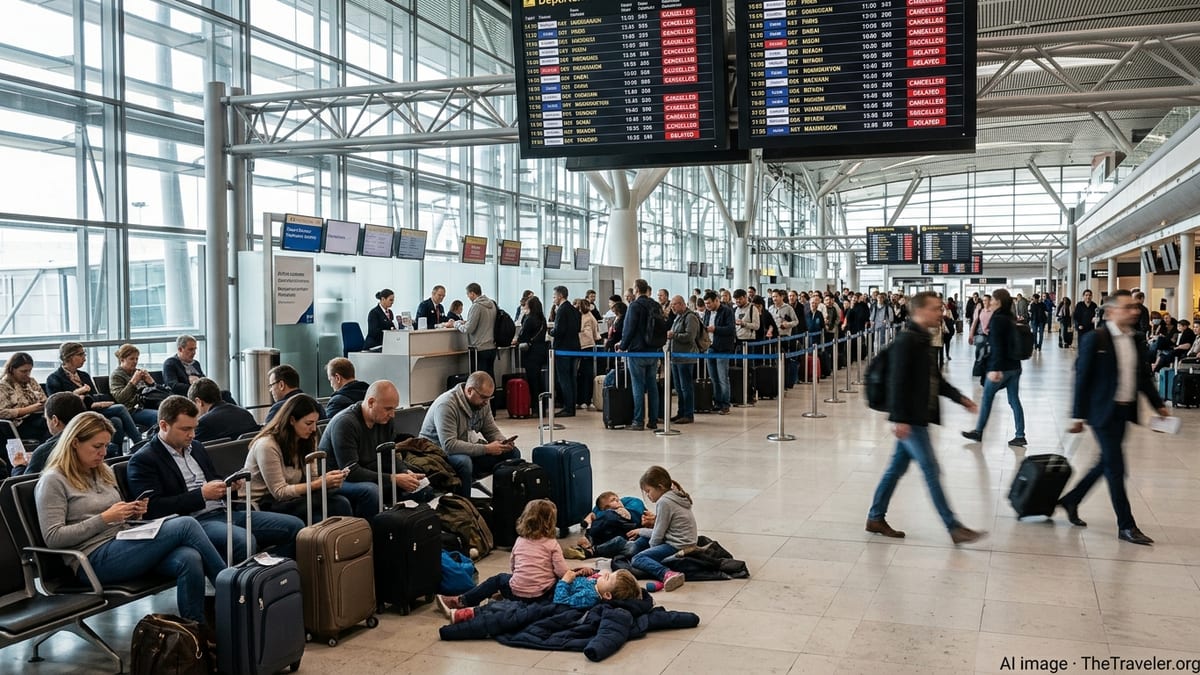
Public transport disruptions have been a recurring theme. Information from French transport operators and media reports indicates that on major protest days, travelers can face reduced metro, tram and commuter rail services, along with cancelled regional trains. In some instances, tram lines and bus routes have been temporarily halted or diverted to keep vehicles away from demonstration routes and flashpoint intersections.
Travel advisories issued by several governments, including the United States and Canada, now emphasize practical steps for visitors. These include checking rail and airport connections on the morning of travel, allowing additional time to reach train stations and airports, and staying flexible with itineraries in case key sights or neighborhoods are affected by marches or security cordons. Travelers are also being encouraged to keep copies of identification and travel documents and to verify that their accommodation is reachable by public transport or taxi on announced protest days.
Planning a Trip While Protests Continue
For travelers considering upcoming trips to France, publicly available guidance suggests focusing on preparation rather than cancellation. Tourism infrastructure remains operational across the country, and major attractions in Paris and regional cities have largely continued to welcome visitors between protest dates. However, the concentration of demonstrations in dense urban centers means that short-term disruptions are possible, particularly around administrative districts, transport hubs and symbolic squares.
Prospective visitors are advised by official foreign travel services to check protest calendars and local news before finalizing daily plans. Demonstrations are frequently announced in advance by unions and student organizations, and French authorities have been signaling large-scale days of action, such as the more than 200 marches forecast nationwide for this Thursday’s mobilization. Avoiding scheduled march routes and giving extra time to move between neighborhoods can significantly reduce the impact on a city break.
Security guidance also stresses situational awareness. Travelers are encouraged to leave areas where they observe large groups gathering, the sudden arrival of lines of police vehicles, or the use of tear gas or other crowd-control tactics. Carrying only essential valuables, staying away from boarded-up commercial streets late in the day, and keeping hotel staff informed about planned outings are among the precautions highlighted in current public advice.
As France navigates one of its most sustained protest waves in recent years, visitors are likely to continue confronting images of marches, banners and occasional clashes alongside the country’s familiar tourist landmarks. With large crowds on the streets and a reinforced US warning in place, travel specialists and government advisories alike are steering would-be visitors toward informed caution rather than alarm, urging them to stay alert, stay flexible and stay informed while the unrest runs its course.