


More news on this day
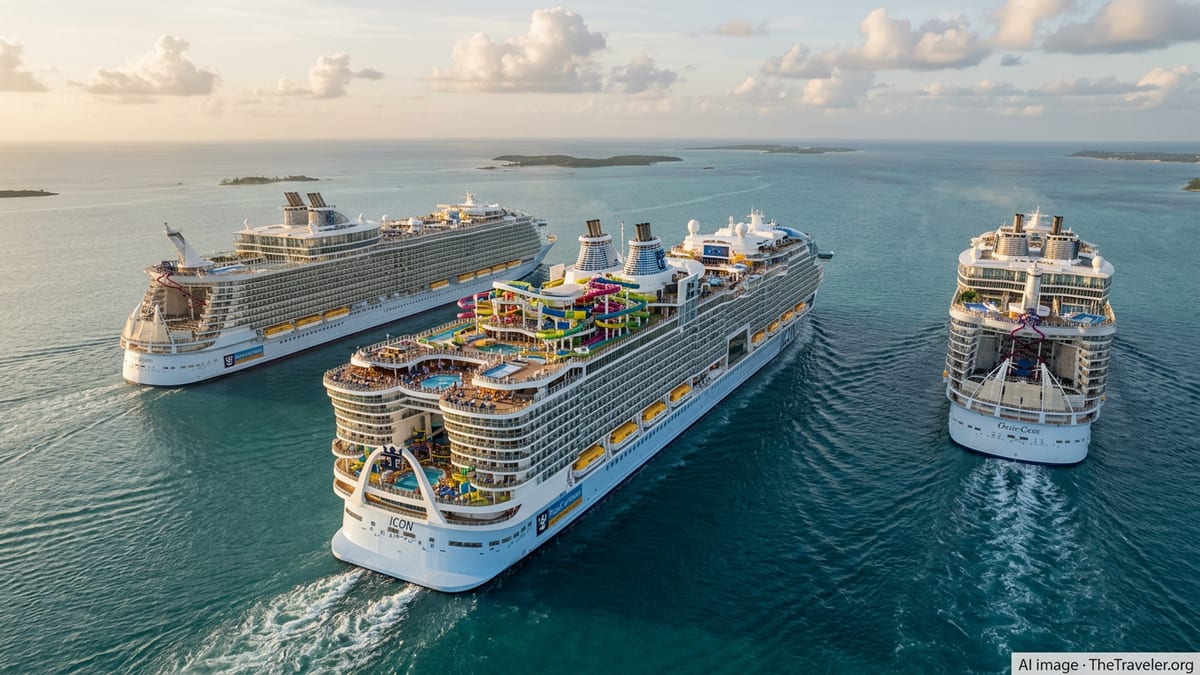
Far from the spotlight of onboard entertainment, cruise ships in the Royal Caribbean Group fleet are quietly doubling as mobile research platforms, collecting continuous streams of data that climate scientists and oceanographers are using to better understand a rapidly changing ocean.
Get the latest news straight to your inbox!
A global fleet turns into an observing network
Publicly available information shows that Royal Caribbean Group has, for more than two decades, equipped select ships with sophisticated instruments that monitor the atmosphere and upper ocean along regular cruise routes. The approach, developed through collaborations with research institutions, effectively turns high traffic tourism corridors into long term scientific observing lines.
These systems are part of a broader initiative often described as the OceanScope concept, in which commercial vessels host automated sensors that measure variables such as sea surface temperature, salinity, carbon dioxide, nutrients and aerosols as they travel between ports. Royal Caribbean Group’s large, frequently sailing ships are considered particularly valuable because they repeat the same tracks across seasons and years, building dense time series that research vessels could rarely afford to replicate.
According to corporate sustainability reports, the company began installing this technology in the early 2000s on ships such as Explorer of the Seas operating in the North Atlantic and Caribbean. Over time, similar packages have appeared on additional vessels across the fleet, enabling scientists to compare open ocean conditions with those near heavily visited coastlines and island chains.
While most passengers are unaware of the instruments operating behind the scenes, the resulting measurements flow into publicly accessible scientific databases where they are combined with readings from satellites, moored buoys and robotic floats to refine global climate models.
Feeding critical climate and carbon data
Reports from oceanographic partners indicate that data collected from Royal Caribbean Group ships contribute directly to research on ocean warming, acidification and the ocean carbon cycle. In particular, the instruments track surface carbon dioxide levels and related chemistry, helping researchers quantify how efficiently the ocean absorbs carbon from the atmosphere along major shipping and tourism routes.
These measurements complement information from the international Argo float network, which now includes thousands of autonomous profilers taking regular temperature and salinity readings down to about 2,000 meters. While Argo provides broad coverage offshore, cruise ship instruments are able to concentrate on busy corridors and coastal approaches where floats are harder to maintain and where tourism pressures, pollution and runoff can strongly influence water quality.
Continuous records from cruise ships also help scientists detect subtle year to year shifts in heat content and surface conditions that might otherwise be missed. Research summaries show that time series from vessels operating in the Caribbean, North Atlantic and subtropical gyres have been used to study marine heatwaves, changing current patterns and the influence of climate oscillations on regional environments.
Because the data are typically shared in near real time with international observing programs, they also improve seasonal forecasts and marine services that coastal communities, fisheries and shipping interests rely on for planning.
OceanScope and the rise of “ships of opportunity”
The scientific framework behind these efforts, known as OceanScope, has grown into a model for how the cruise sector and other commercial fleets can support ocean monitoring. According to technical reports on the concept, Royal Caribbean Group emerged as an early large scale participant by dedicating space, power and crew support for continuously operating laboratories on board specific ships.
OceanScope and similar programs fall under the broader category of “ships of opportunity,” a term used in oceanography for commercial or non research vessels that host automated sensors or occasionally deploy scientific gear. Tankers, ferries and container ships around the world now carry instruments that measure meteorological conditions, surface currents and carbon chemistry. Cruise ships add unique value because their routes often traverse remote tropical regions that are under sampled by traditional research expeditions but central to global climate and coral reef health.
Recent strategy documents for international ocean observing systems highlight these partnerships as cost effective ways to expand coverage at a time when demands on climate data are increasing. By piggybacking on vessels that are already operating for commercial reasons, scientists can gather more information with relatively modest additional investment compared with funding new dedicated research cruises.
Royal Caribbean Group’s participation is frequently cited in these materials as a proof of concept that long term collaboration between science and tourism operators is practical, even on some of the world’s largest passenger ships.
From raw measurements to real world insights
Once collected on board, the observational data from Royal Caribbean Group ships are transmitted via satellite to shore based processing centers. There, specialists calibrate the readings, check for quality issues and merge them with other sources before archiving the results in open access repositories used by climate modelers and operational forecasting centers.
Published summaries of the program’s scientific output indicate that more than a hundred peer reviewed papers and conference presentations have drawn on these ship based records. Topics range from tracking the buildup of heat in the upper ocean and estimating sea level rise contributions to examining how Saharan dust plumes and changing wind patterns affect the chemistry of the tropical Atlantic.
The data have also supported regional studies relevant to tourism and coastal management, such as monitoring harmful algal blooms, low oxygen events and coral bleaching conditions along popular cruise itineraries. In some cases, researchers have been able to compare environmental trends observed from the ships with reports from coastal communities and marine protected areas in nearby waters.
Because the measurements form part of the long running global observing system, they can be revisited as new questions arise, allowing scientists to reconstruct past events or test emerging climate theories against two decades of observations.
A test case for greener, data rich cruising
As the cruise industry faces increasing scrutiny over emissions, waste and congestion in fragile destinations, programs like those on Royal Caribbean Group ships are being watched as potential models for a more data rich and accountable form of ocean tourism. Environmental organizations and academic commentators note that while better observations do not by themselves reduce a ship’s footprint, they give regulators, researchers and companies clearer insight into the state of the waters that support the sector.
Sustainability reports from the company describe the scientific collaborations as part of a broader strategy to improve energy efficiency and support ocean stewardship, alongside investments in cleaner fuels, advanced wastewater treatment and port electrification where available. The observing systems fit into this narrative by documenting baseline conditions and tracking how factors such as warming, acidification and changing circulation patterns may affect coastal destinations in the coming decades.
Observers of the cruise market point out that other operators are beginning to explore similar partnerships, encouraged by international calls for more private sector involvement in the United Nations Decade of Ocean Science. Royal Caribbean Group’s early role demonstrates how a large leisure fleet, best known for waterparks and entertainment complexes, can also function as a quiet backbone of scientific infrastructure.
For travelers stepping aboard in search of sunshine and sea views, the added mission is largely invisible. Yet beneath the promenades and pool decks, racks of instruments continue to log each passing swell and gust, quietly feeding a global effort to understand and protect the ocean that makes modern cruising possible.