


More news on this day
Royal Caribbean is signalling confidence that it can avoid a race to the bottom on ticket prices, pointing to strong advance bookings, disciplined yield management and differentiated onboard spending as reasons it is not preparing for a cruise fare price war.
Get the latest news straight to your inbox!
Strong Bookings Support Higher Fares, Not Discounts
Publicly available financial commentary and industry coverage indicate that Royal Caribbean has entered 2026 with unusually strong booking trends. Reports on the company’s recent earnings calls show that a large share of 2025 inventory was already sold and that reservations for 2026 cruises are running ahead of historic patterns. That level of demand gives the company less incentive to cut base fares to fill ships.
Published summaries of Royal Caribbean’s guidance for investors describe a strategy built around “price integrity,” with executives emphasising that they prefer to maintain or grow yields rather than trade them away for short term volume. The company has highlighted that prices in core markets such as the Caribbean are higher than a year earlier, even as capacity grows. That stance indicates Royal Caribbean sees more risk in discounting than in holding the line on fares.
Travel industry analysis also notes that cruise prices across the sector have risen into 2026, helped by consumers who are still prioritising vacations despite broader economic uncertainty. For Royal Caribbean, that demand backdrop makes aggressive price cuts less likely, even if some competitors choose to deploy more frequent or deeper promotions to stimulate bookings.
Revenue Management and AI Tools Reduce Need for Deep Cuts
Royal Caribbean has been public about its investment in data driven revenue management systems, including expanded use of artificial intelligence to model demand and adjust pricing. Coverage of the company’s technology initiatives explains that these tools allow continuous fare changes across thousands of sailings, aiming to keep ships full while extracting the highest sustainable yield.
By tuning prices earlier in the booking cycle and reacting quickly to changes in demand, the company can rely on smaller, targeted adjustments instead of broad, last minute discounting. Commentary on the cruise sector describes this as a shift toward airline style revenue management, where advanced forecasting helps operators avoid sharp price drops close to departure.
In addition, Royal Caribbean increasingly uses limited time promotions, onboard credit offers and add on packages to influence consumer behaviour rather than simply cutting the ticket price. Public materials outlining current promotions show a mix of bundled benefits and loyalty incentives designed to stimulate bookings while preserving the headline fare structure. This approach provides more flexibility in a competitive environment than direct participation in a price war on base fares.
Onboard Spending Strategy Cushions Pricing Pressures
Royal Caribbean’s willingness to resist deep fare cuts is also tied to the way it earns revenue once passengers are on board. Investor oriented summaries of recent results underline that a growing share of spending now comes from pre purchased and onboard extras such as drink packages, specialty dining, internet access and shore excursions.
The company reports that a high proportion of guests now book these extras before they sail, supported by a heavily used mobile app and web portals. That pre cruise spending provides visibility into revenue per passenger and helps offset fluctuations in ticket prices if competitive pressures emerge.
Analysts covering the cruise sector have noted that this onboard revenue model can give large operators some room to hold base fares steady or raise them gradually, while focusing on upselling and cross selling once customers are committed to a trip. For Royal Caribbean, that dynamic helps explain why the company describes pricing as robust and appears less concerned about the need to match aggressive discounting by rivals.
Capacity Growth and New Ships Focus on Value, Not Cheap Fares
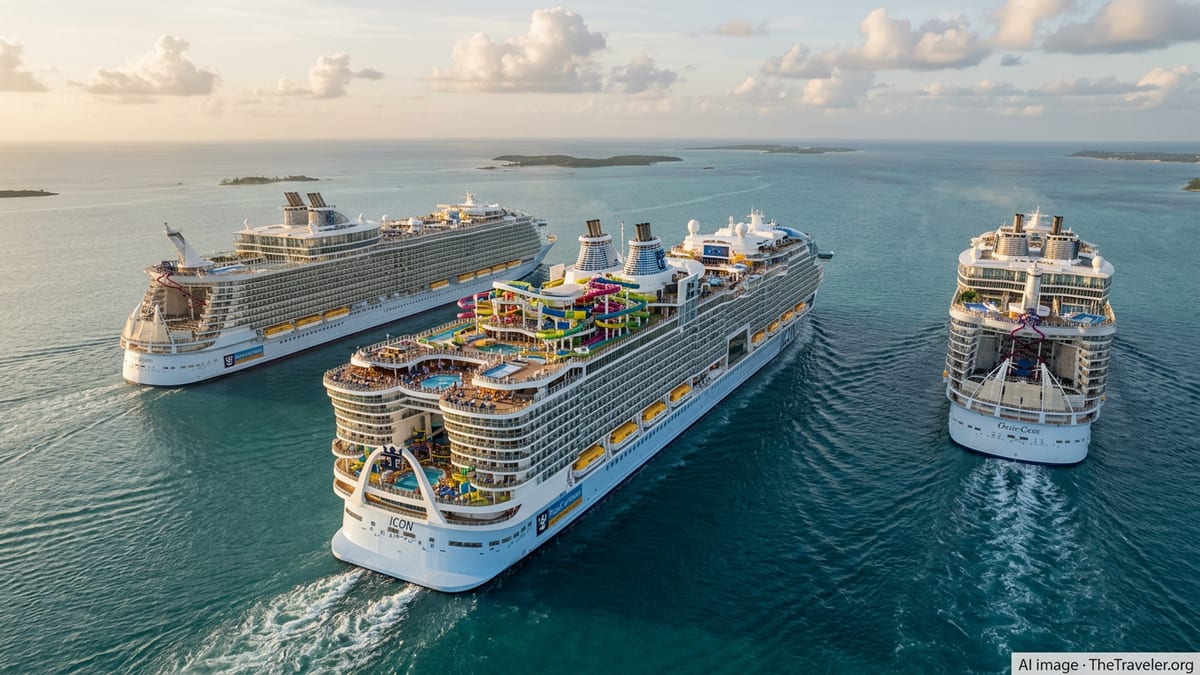
Royal Caribbean continues to bring new tonnage online, including large ships with expanded attractions and entertainment. Industry reports on the latest vessels highlight features such as advanced water parks, upgraded dining concepts and dedicated family spaces that the company positions as justifying higher prices relative to older ships and to some competitors.
By emphasising the value of these additions rather than the cheapest possible fare, Royal Caribbean is effectively betting that customers will continue to pay a premium for newer hardware and highly rated private destinations. Commentary from cruise analysts frequently cites the performance of the company’s private island experiences as evidence that guests are willing to spend more when they perceive a differentiated product.
This product led strategy may also insulate the company from some elements of any future price war. While some older ships or weaker itineraries in the wider market might rely on steep discounts to attract travellers, Royal Caribbean is steering marketing toward higher yielding sailings, packaged offerings and marquee destinations where it believes demand will remain less price sensitive.
Competitive Landscape Favors Discipline Over a Fare War
Despite rising capacity across the cruise industry, there are indications that Royal Caribbean expects rational behaviour from major peers. Conference coverage and sector commentary describe a shared focus among large operators on repairing balance sheets, reducing debt and sustaining profitability after the shutdown period earlier in the decade. Those priorities tend to discourage prolonged price wars that erode earnings.
Travel trade analysis points out that the cruise business operates with relatively transparent capacity and booking curves, meaning that deeply discounted prices on one brand can quickly be noticed by others and by investors. Royal Caribbean’s repeated emphasis on maintaining price integrity suggests it is signalling to the market that it prefers steady, yield focused growth, and expects competitors to think similarly.
For travellers, this stance implies that headline bargains may be more limited than in the past, even if periodic sales and targeted promotions continue. For Royal Caribbean, it helps explain why the company is publicly projecting confidence about its ability to navigate competitive pressures without engaging in a race to the bottom on cruise fares.