


Alejandro Velasco Astete International Airport in Cusco is one of Peru’s busiest and most weather-sensitive airports. At 3,310 meters above sea level and ringed by mountains, it offers stunning views but also some of the country’s most disruption-prone flying. For travelers trying to connect through Lima or make once-in-a-lifetime Machu Picchu plans, understanding how delays and cancellations work here is essential.
Get the latest updates straight to your inbox!
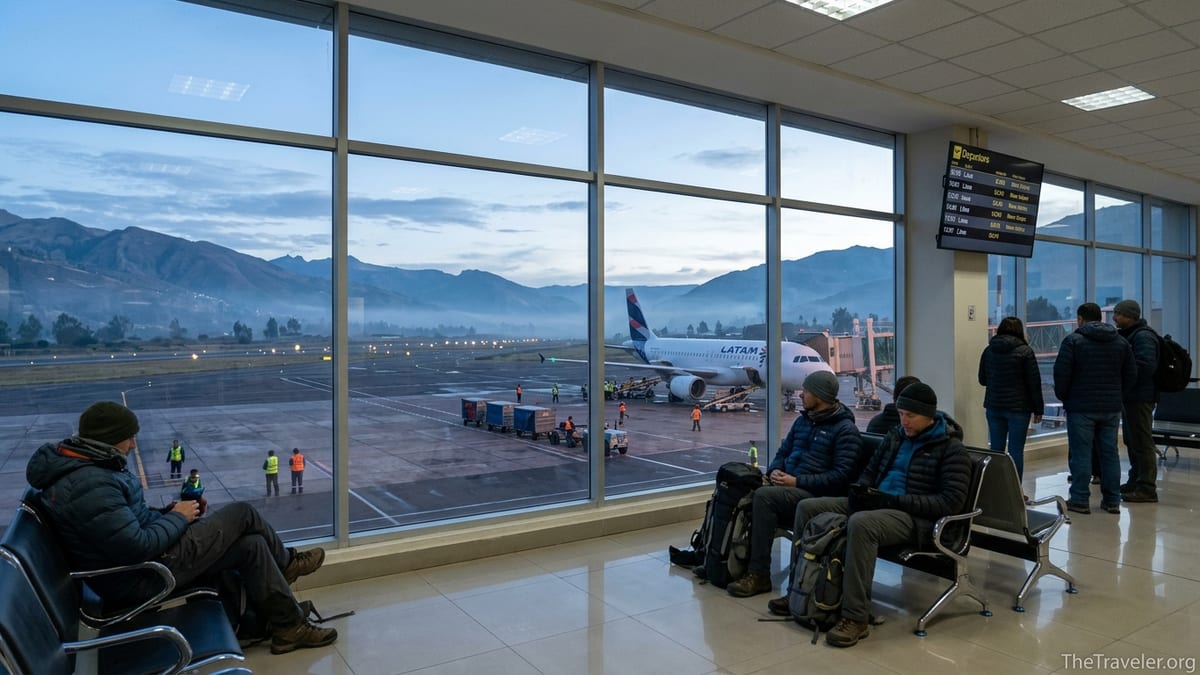
Understanding Cusco’s High-Altitude Airport and Its Weather Risks
Alejandro Velasco Astete International Airport serves Cusco, Peru’s main tourism gateway and the second-busiest airport in the country, handling several million passengers a year. It sits in a narrow Andean valley at around 3,310 meters (about 10,860 feet) above sea level, surrounded by steep terrain. This geography creates specific operational limits, especially for takeoffs and landings, and makes the airport more vulnerable to low visibility, crosswinds and afternoon storms than many coastal airports.
Because of the altitude, aircraft performance is reduced compared with sea-level airports. Pilots and airlines have stricter weight and wind limits when operating into Cusco, particularly in hotter conditions when “density altitude” increases. In practice, this can translate into last-minute weight restrictions, baggage offloads or, in some cases, cancellations if conditions fall outside approved safety margins. Travelers often first experience this on peak holiday mornings when a full Lima–Cusco flight is suddenly delayed while bags are offloaded to meet safety limits.
Weather patterns in Cusco also play a major role. From roughly November through March, afternoon showers and storms are common, and cloud build-up over the surrounding mountains can rapidly reduce visibility. Even in the dry season, morning fog or low cloud sometimes sits in the valley, preventing arrivals until it clears. Several airlines operating Lima–Cusco routes, including LATAM, Sky Airline and JetSMART, highlight that schedules into Cusco are more likely to experience weather delays than flights between Lima and Peru’s coastal cities.
Travelers should understand that these disruptions are primarily safety-driven. Cusco operates as a challenging terrain airport, and crews must observe conservative approach and takeoff procedures. When a thunderstorm cell parks near the approach path, or winds exceed crosswind limits on the single runway, operations can pause even if weather in Lima or at Machu Picchu appears fine. This is not an airline preference but an operational necessity.
Morning Flights, Afternoon Storms and the Best Time to Fly
Most airlines front-load their Lima–Cusco and Cusco–Lima schedules into the morning for a reason. Statistically, early flights suffer fewer knock-on delays because the aircraft begin their day in Lima or Cusco before the weather and air traffic build up. By late morning and afternoon, one delayed arrival can cascade into multiple late departures, particularly at a single-runway airport like Cusco.
In the rainy season, afternoon thunderstorms are a regular feature, commonly building after about 1:00 or 2:00 p.m. When a strong storm cell sits over the valley, air traffic control may temporarily suspend operations. In practical terms, a noon Lima departure to Cusco scheduled to land around 1:30 p.m. can end up circling or diverting if storms intensify. Travelers connecting on to Ollantaytambo or Poroy for trains frequently feel the impact of these afternoon storms.
For this reason, many local operators quietly recommend that travelers aim for flights landing in Cusco before late morning whenever possible, especially if they have a time-sensitive plan later that day. For example, a 6:00 a.m. departure from Lima that is scheduled into Cusco around 7:20 a.m. commonly has better on-time performance than a 1:00 p.m. flight landing after 2:30 p.m., when convective weather is more likely. Similarly, when leaving Cusco, a 9:00 a.m. flight back to Lima is less exposed to both afternoon weather and accumulated aircraft delays than a late-day departure.
Real-world experience from recent seasons also reflects this pattern. Travelers reporting on early morning Lima–Cusco flights typically mention standard delays of 15 to 45 minutes, often due to congestion at Lima’s domestic terminal, but fewer full cancellations. In contrast, afternoon flights during the wet season have seen occasional multi-hour holds or outright cancellations when storms or low visibility limit operations. Booking within that early window is one of the simplest ways to reduce the risk of serious disruption.
How Delays and Cancellations Typically Unfold in Cusco
When weather or operational limits are exceeded in Cusco, the first sign travelers see is often a status change on the departure boards in Lima or Cusco: “Retrasado,” “Demorado” or “Cancelled.” In marginal conditions, airlines may repeatedly push the departure time in 30–60 minute increments while waiting for an improvement. This can be frustrating, but it reflects the reality that conditions in a mountain valley can change quickly. A runway closed by fog at 8:00 a.m. may be fully operational at 10:00 a.m.
If conditions remain outside limits, flights can divert or return to Lima. For example, a mid-morning flight departing Lima for Cusco may reach the Cusco area and then hold while air traffic control evaluates visibility. If conditions do not improve, the aircraft can be rerouted back to Lima with passengers rebooked on later flights. This kind of disruption is particularly common during intense rainy-season events, as local aviation monitoring and traveler reports have shown.
Operational disruptions are not solely weather-related. Peru’s domestic market is dominated by a small number of carriers, and recent months have seen waves of schedule adjustments, last-minute aircraft changes and clusters of cancellations on key routes such as Lima–Cusco and Cusco–Arequipa. When these occur, passengers on the later flights of the day are often hit hardest, as aircraft and crew are out of position and there is less slack in the schedule to recover. A traveler on a late afternoon Cusco–Lima flight may find it cancelled after an earlier aircraft went out of service, with rebooking pushed to the next morning.
In practice, the response you receive when a flight is cancelled varies by airline and by circumstances. In Peru, authorities have ordered airlines in some past cases to refund passengers for unjustified delays, and carriers typically offer either rebooking, vouchers or refunds following significant cancellations. However, these remedies may not fully cover consequential costs such as missed Machu Picchu entry tickets or nonrefundable hotel nights in the Sacred Valley. Travelers should assume that while airlines will attempt to move them to the next available flight, they will probably need their own travel insurance or contingency fund for knock-on expenses.
Lima Connections: Building Safe Buffers Into Your Itinerary
Nearly all international travelers heading to Cusco connect through Lima’s Jorge Chávez International Airport. Whether you are arriving from the United States, Europe or elsewhere in South America, your Lima–Cusco segment is usually on a separate domestic ticket or at least a domestically treated leg. Even when it is issued on a single ticket by a major carrier, you are likely to clear immigration, collect bags and recheck for your Cusco flight. This process often takes longer than first-time visitors expect, especially at peak evening and early-morning banks of arrivals.
Recent traveler reports from Lima describe longer lines at check-in, security and baggage drop than in past years, particularly around the early-morning wave of domestic departures to Cusco and other Peruvian cities. Passengers arriving on overnight flights who booked tight connections of 90 minutes or less have found themselves sprinting through the terminal, and in some cases missing their Cusco flights despite arriving in Lima only 20 to 30 minutes behind schedule. Several have noted having to rebook same-day Cusco segments at their own expense when these minimum connection times proved unrealistic.
As a practical rule, most Peru specialists now advise at least a 3-hour buffer between scheduled international arrival and domestic departure in Lima, with 4 hours or more offering a safer margin if your international flight is prone to delays. For example, if your flight from Los Angeles is scheduled to land in Lima at 9:00 p.m., a Cusco departure no earlier than around 12:30 a.m. or the following early morning reduces the risk of misconnection. These buffers are particularly important if you are traveling in high season from June to August or around Easter and Christmas, when both terminals and airline operations see heavier loads.
On your return, connecting from Cusco through Lima to an international flight, similar logic applies. A Cusco–Lima domestic segment that arrives less than 2 to 3 hours before your long-haul departure leaves little room for a weather delay in Cusco, a go-around, or congestion in Lima. Several travelers have reported that a 2-hour Lima connection “worked” but felt tight, while others with under 2 hours missed their long-haul flights after a short delay leaving Cusco. If your long-haul ticket is expensive or inflexible, giving yourself a 4-hour or longer layover in Lima is often a wise trade-off.
Protecting Your Machu Picchu Plans: Train Timing and Buffers
Many of the costliest mistakes around Cusco delays involve onward connections to Machu Picchu by train. Trains to Machu Picchu operate either directly from stations near Cusco (San Pedro, Poroy, Wanchaq on bimodal services) or, more commonly, from Ollantaytambo in the Sacred Valley. PeruRail and Inca Rail both run multiple daily departures from Ollantaytambo to Machu Picchu Pueblo (Aguas Calientes), with journey times of roughly 1.5 to 2 hours. During peak season, midday and early-afternoon trains to Aguas Calientes often sell out days or weeks in advance.
A frequent planning error is to schedule a Cusco arrival and Machu Picchu train on the same day with only a narrow buffer. For instance, a traveler might land in Cusco at 9:00 a.m. and book an 11:15 a.m. train from Ollantaytambo, assuming a 90-minute road transfer will be sufficient. In real conditions, a modest 45-minute flight delay, a slow baggage delivery or roadworks on the route to the Sacred Valley can easily erase that margin. Accounts from recent seasons include travelers arriving at Ollantaytambo station just as their train doors closed, forced to buy last-minute replacement tickets at higher same-day prices if seats were available at all.
Trains directly from Cusco-area stations offer convenience but can be even less forgiving of delayed flights. Departure times from Poroy or San Pedro may be in the early morning or early afternoon, and if you miss your slot, later services that day can be fully booked. Travelers who organized a direct Cusco–Machu Picchu round trip on a promotional fare have reported paying several hundred USD more to switch trains and routes after weather in Cusco delayed their arrival.
The safest approach is to separate your flight day from your Machu Picchu day. Many travelers now plan to fly into Cusco in the morning, spend the rest of the day acclimatizing in Cusco or the Sacred Valley, and take a train to Machu Picchu the following day. If your schedule is tight and you must connect on the same day, aim for a minimum buffer of 5 to 6 hours between scheduled landing in Cusco and scheduled train departure from Ollantaytambo. That allows time for typical delays, baggage, a 1.5 to 2-hour road transfer, and a modest cushion for traffic or check-in queues at the station.
Practical Strategies to Reduce Stress and Financial Risk
While you cannot control weather or airline operations, you can design your itinerary to absorb disruption more gracefully. One of the most effective tactics is to build “safety nights” into your plan. For example, arriving in Cusco one full day before your Machu Picchu permit or hiking start date, and returning from the Sacred Valley to Cusco at least one day before your international departure from Lima. This structure gives you room to reshuffle activities if a flight or train is delayed or cancelled.
Another strategy is to choose flexible booking options even if they cost slightly more. Many domestic Peru fares offer changeable or refundable options for a modest surcharge. Travelers who selected these more flexible tickets have been able to switch to earlier or later flights around weather disruptions without losing the full value of their fare. Similarly, selecting train categories that allow changes, or paying for travel insurance that covers missed connections, can soften the financial blow of an unavoidable delay.
It also helps to avoid stacking multiple nonrefundable commitments on a single day in Cusco. For instance, scheduling a morning flight into Cusco, a midday train to Machu Picchu, a nonrefundable guided afternoon tour and a prepaid dinner reservation all on the same day leaves no margin for slippage. A more resilient plan might keep that first afternoon light, with only flexible or low-cost activities such as a casual walk in the Plaza de Armas or a visit to the San Pedro Market if you arrive on time.
Finally, maintain real-time awareness of your flights. Most Peruvian airlines offer mobile apps or SMS notifications, and local tour operators closely monitor changing schedules. Checking your flight status the night before and again on the morning of departure can alert you early to aircraft changes, gate moves or rolling delays. When disruption does occur, those who react quickly often secure the limited alternative seats before others in the same situation.
What Travelers Should Avoid When Flying Through Cusco
The most common mistake is over-optimistic scheduling. Avoid booking a tight Lima–Cusco connection, especially if your first leg is international and operates in the evening or overnight. A 60- to 90-minute scheduled connection might meet a booking engine’s minimums, but in today’s operating environment it leaves little margin for immigration queues, baggage delays or taxiing holdups on the runway. If the same site also sells you a Machu Picchu train for the same day, consider that a warning sign that the itinerary is technically possible but not practically smart.
Another pitfall is relying on the last flight or last train of the day for essential milestones. For example, planning to land on the final Cusco–Lima flight in time for a same-night international departure out of Lima, or booking the last train from Machu Picchu Pueblo back to Ollantaytambo to connect with a late-night drive to Cusco and an early-morning flight. If anything goes wrong, there may be no same-day alternatives, forcing unexpected hotel stays and rushed changes to onward flights.
Travelers should also avoid ignoring altitude and fatigue. Cusco’s elevation can leave visitors feeling short of breath, headachy or unusually tired within hours of arrival. Stacking early-morning flights, rushed connections, long drives and high-altitude walking in a single day increases the risk of altitude sickness symptoms, particularly if you have just flown in from sea level. A calmer arrival day not only provides buffer against delays but also helps your body adapt before you tackle early Machu Picchu entry times or longer hikes.
Lastly, avoid assuming that staff at every point in the chain will automatically coordinate your changes. Airline agents in Peru are often helpful within their own systems, but they may not be able to adjust your Machu Picchu entry time, notify your hotel in Aguas Calientes, or reschedule your private driver from Cusco to Ollantaytambo. Keeping confirmation details for each component at hand and being prepared to contact each provider directly if your schedule shifts will save time when minutes matter.
The Takeaway
Flying into Cusco’s Alejandro Velasco Astete International Airport is a memorable part of most trips to Machu Picchu and the Sacred Valley, but it comes with real operational and weather sensitivities. High altitude, a single runway and rapidly changing Andean conditions combine to create more frequent delays and occasional cancellations than in many lowland tourism hubs. Understanding these constraints helps set expectations and encourages more resilient planning.
By prioritizing morning flights, building generous buffers around Lima connections, separating flight days from Machu Picchu entry days, and avoiding last-flight or last-train dependencies, travelers can protect their trips from the worst impacts of disruption. Flexible tickets, travel insurance that covers missed connections and one or two strategic “safety nights” often cost less than the cumulative fees and stress triggered by a single missed train or long-haul connection.
Ultimately, Cusco rewards patience and thoughtful scheduling. Those who arrive with realistic expectations, a bit of extra time in their itineraries and a willingness to pivot if weather or operations demand it tend to remember not the delay messages on the departure board, but the first glimpse of the Andes from the aircraft window and the sunrise over Machu Picchu that followed.
FAQ
Q1. How often are flights to and from Cusco delayed?
Delays are common enough that travelers should expect at least minor timing changes, especially in the rainy season and on afternoon flights. Exact rates vary by airline and time of year, so it is safer to plan as if a delay of 30 to 90 minutes could occur on any given day.
Q2. Is it safer to fly to Cusco in the morning or afternoon?
Morning flights are generally more reliable. Aircraft are already in position, weather is often calmer and there is more room in the day to recover from disruptions. Afternoon flights are more exposed to storms and knock-on delays from earlier operations.
Q3. How much connection time should I allow in Lima for a Cusco flight?
For international to domestic connections, aim for 3 to 4 hours or more. For domestic to international on your way home, 3 hours is the bare minimum, with 4 hours offering a safer margin if your Cusco flight is delayed.
Q4. Can I schedule my Cusco arrival and Machu Picchu train on the same day?
It is possible but risky. If you must do so, plan at least 5 to 6 hours between scheduled landing in Cusco and your train departure from Ollantaytambo or a Cusco-area station, and choose flexible train tickets if available.
Q5. What happens if my flight is cancelled due to weather in Cusco?
Airlines typically rebook you on the next available flight or offer a refund or voucher, depending on fare rules. They may not cover indirect costs such as missed tours, Machu Picchu tickets or hotel nights, so travel insurance or contingency funds are important.
Q6. Are some airlines more reliable than others on the Lima–Cusco route?
Major carriers such as LATAM, Sky Airline and JetSMART all experience delays and cancellations, particularly when Cusco’s weather is unfavorable. Differences in reliability can shift over time, so recent traveler reviews and current-year performance are more useful than older reputations.
Q7. Should I book a direct train from Cusco or start from Ollantaytambo?
Direct Cusco departures are convenient but give less room to absorb flight delays. Starting from Ollantaytambo, with a road transfer from Cusco or the airport, usually provides more departure options and flexibility, especially if you schedule the train for the day after your arrival by air.
Q8. How does Cusco’s altitude affect flights and passengers?
For flights, high altitude reduces aircraft performance and can lead to weight restrictions or stricter limits on wind and temperature. For passengers, the 3,300-meter elevation can cause mild altitude symptoms, so building in an easy acclimatization day on arrival is wise.
Q9. Is it a good idea to book the last flight of the day out of Cusco?
Generally no, especially if you are connecting onto an international flight. If earlier flights are delayed or cancelled, the last flight has little room to recover, and you may end up overnighting in Cusco or Lima unexpectedly.
Q10. What kind of travel insurance is most useful for a Cusco and Machu Picchu trip?
Look for policies that cover trip interruption and missed connections, not just medical emergencies. Ideally, coverage should include nonrefundable tour costs, train tickets and additional transport or hotel expenses caused by documented flight delays or cancellations.