

More news on this day
Royal Caribbean’s seventh Oasis-class ship has reached a significant construction milestone in France, signaling continued confidence in the record-setting mega-ship class that helped redefine modern cruising.
Get the latest news straight to your inbox!
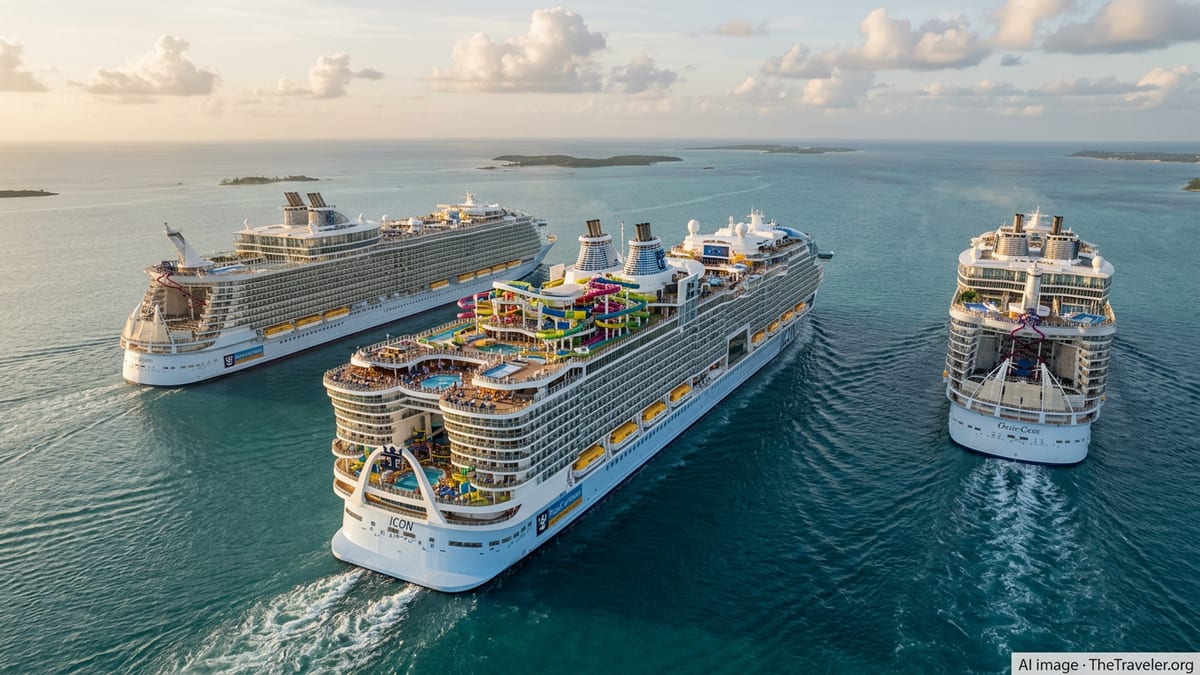
Keel-Laying Ceremony Signals Construction Push
Recent reports from the Chantiers de l’Atlantique shipyard in Saint-Nazaire, France, indicate that Royal Caribbean has celebrated the keel laying of its yet-unnamed seventh Oasis-class vessel. The traditional maritime ceremony, which involves setting a large steel block onto supporting blocks and placing coins beneath it for good fortune, is widely regarded as the formal start of a ship’s physical assembly.
Publicly available information shows that this milestone follows an earlier steel-cutting event that marked the beginning of the ship’s fabrication. With the keel now in place, the project moves from prefabricated sections toward full hull construction, a phase that typically accelerates visible progress and draws increased attention from both the cruise industry and prospective guests.
The newbuild is being constructed at the same French yard that delivered several earlier Oasis-class ships, reinforcing a long-running partnership between the shipbuilder and Royal Caribbean. Industry coverage notes that the yard has become a central player in the evolution of the world’s largest cruise vessels.
Seventh Entry in a Transformative Ship Class
The latest vessel will join an Oasis-class lineup that already includes Oasis of the Seas, Allure of the Seas, Harmony of the Seas, Symphony of the Seas, Wonder of the Seas and Utopia of the Seas. When Oasis of the Seas debuted in 2009, it introduced a neighborhood concept, expansive promenades and multi-deck entertainment zones that reshaped expectations for resort-style cruising.
Over time, each successive Oasis-class ship has layered on new amenities and design refinements, from upgraded waterparks and expanded dining to more varied accommodations. Utopia of the Seas, which entered service in 2024, was described in trade coverage as the largest Oasis-class ship to date and the first in the class to be powered by liquefied natural gas, a shift that aligns with broader industry efforts to reduce emissions.
The seventh Oasis-class ship is expected to build on that trajectory, with analysts anticipating further energy-efficiency gains, updated public spaces and technology enhancements that reflect lessons learned from both the Oasis and newer Icon classes. While full details have not yet been released, order information and fleet overviews suggest the new vessel will again sit near the top of the global size rankings when it debuts.
Balancing Oasis Heritage With the Rise of Icon Class
The milestone comes at a moment when Royal Caribbean’s newer Icon-class ships are attracting considerable attention for their size and onboard features. Icon of the Seas, which began sailing in 2024, surpassed the Oasis-class ships in gross tonnage and passenger capacity, and upcoming Icon-class vessels such as Star of the Seas and Legend of the Seas are expected to continue that trend.
Despite the spotlight on Icon, fleet plans tracked by industry observers show that Royal Caribbean is not turning away from the Oasis concept. Instead, the group is positioning Oasis-class ships as core products alongside the Icon-class, with each family targeting slightly different vacation styles and itineraries. Longer, multi-region voyages are increasingly linked to the Icon class, while Oasis ships are being used on both weeklong and shorter, more destination-focused routes.
Travel trade analysis suggests that continuing to invest in the Oasis platform allows Royal Caribbean to deploy very large ships to ports that have already upgraded infrastructure for this class, while reserving newer Icon-class units for marquee homeports and itineraries where demand for the latest hardware is highest.
Environmental and Technical Advances Expected
While full technical specifications for the seventh Oasis-class ship have not yet been widely published, existing documentation for Utopia of the Seas and recent shipyard announcements point to an emphasis on LNG propulsion and advanced energy systems. These include optimized hull designs, waste-heat recovery, and energy-saving technologies across hotel and entertainment operations.
Analysts note that adopting LNG on Oasis-class vessels represents a significant step in reducing certain emissions compared with traditional marine fuels. At the same time, cruise-industry commentary highlights that LNG is often viewed as a transition fuel, with shipyards and cruise lines exploring options such as fuel-ready designs that can accommodate alternative energy sources in the future.
Beyond propulsion, the newest Oasis-class ship is expected to incorporate updated digital systems, from onboard connectivity and guest-facing apps to back-of-house platforms that manage hotel operations and logistics. These innovations are increasingly seen as critical to managing the complexity of ships that can welcome more than 6,000 guests on a single sailing.
What the Milestone Means for Travelers
For cruisers, the keel-laying milestone provides an early signal that another large-scale option is on the horizon, likely targeting itineraries popular with families and groups seeking a resort-style experience at sea. Route details, onboard concepts and the ship’s eventual name are expected to emerge gradually as construction advances and the vessel approaches its delivery window, which fleet overviews currently place near the end of the decade.
Travel advisers and cruise specialists are watching closely, as the arrival of a seventh Oasis-class ship could prompt redeployments across the fleet, potentially bringing larger vessels to additional homeports in North America and Europe. This kind of reshuffling often creates new itinerary choices and pricing shifts, especially around the ship’s inaugural season.
With shipyard work now progressing beyond the initial steel blocks, the latest milestone reinforces that Royal Caribbean intends to maintain a dual strategy built around both Oasis and Icon classes. For travelers, that translates into a growing range of mega-ship options, each with distinct atmospheres, but all shaped by the arms race in size and amenities that Oasis-class vessels helped to start.