

More news on this day
A sharp rebound in cruise calls, record passenger volumes and fresh homeport commitments at Turkish ports are combining to set the stage for one of the busiest summer seasons Turkey’s cruise market has seen in more than a decade.
Get the latest news straight to your inbox!
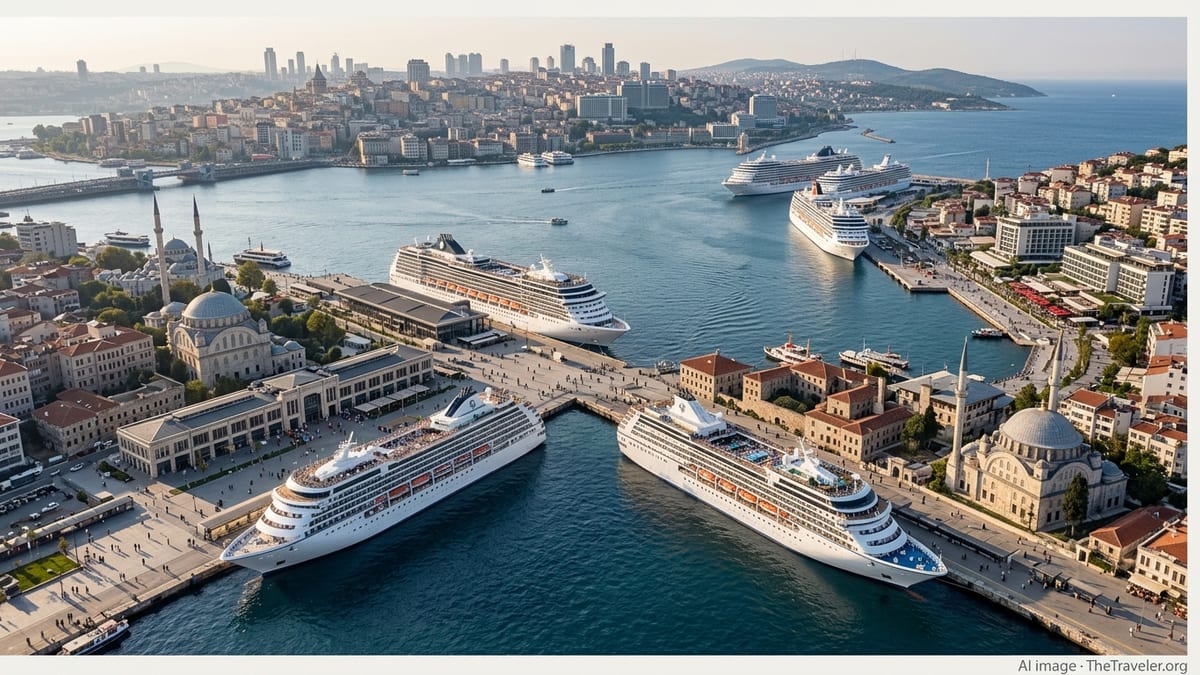
Record Passenger Volumes Put Turkey Back on the Cruise Map
Turkey’s cruise sector has moved from recovery to expansion, with national traffic surpassing pre-pandemic levels and signaling strong momentum into the peak 2026 summer months. Publicly available statistics compiled by Turkish media indicate that cruise passenger traffic at the country’s ports reached more than 2.1 million travelers in 2025, the highest figure in around twelve years and more than 13 percent above 2024 levels. The data positions Turkey as one of the most dynamic cruise destinations in the Eastern Mediterranean.
The upswing is broad-based but led by a handful of flagship ports. Reports highlight Kuşadası, Istanbul and Bodrum as key gateways, handling the majority of cruise calls and passenger movements. This concentration has helped operators build scale in shore operations and excursion offerings, strengthening Turkey’s appeal to global cruise brands planning their summer deployments.
Regional market data from organizations tracking Mediterranean cruise activity shows that 2024 already delivered solid growth in calls and passenger movements, creating a strong base for Turkey’s further gains. As cruise companies continue to redeploy capacity back into the Eastern Mediterranean, Turkish ports are increasingly appearing on itineraries that previously bypassed the country in favor of Greece or Italy.
Galataport Istanbul Emerges as an Eastern Mediterranean Homeport Hub
In Istanbul, Galataport has rapidly transitioned from a new waterfront redevelopment to a major homeport for regional cruising. Coverage in Turkish business and tourism outlets records a steep increase in cruise ship calls and passenger movements in 2024 and 2025, with total cruise traffic at Galataport rising to roughly 400,000 passengers in 2024 and then climbing further to close to 600,000 in 2025.
What is particularly notable for the coming summers is the surge in homeport, or turnaround, operations. According to information released by Galataport and summarized in local media, the number of passengers starting or ending their cruise in Istanbul more than doubled between 2024 and 2025, with homeport volumes rising from under 100,000 to well over 200,000 travelers. Industry observers view this as a key structural shift, anchoring more itineraries in Turkey rather than using the country solely as a transit stop.
Forward-looking projections shared around trade events and in port communications point to continued expansion. For the 2025 and 2026 seasons, Galataport has targeted ship calls in the mid-200 range and passenger volumes approaching or exceeding 600,000 annually. That level of activity effectively cements Istanbul as one of the primary cruise gateways in the Eastern Mediterranean, and it underpins expectations of crowded berths during the high summer months.
The homeport role also has knock-on effects for the broader tourism economy. With more passengers flying into Istanbul to embark or disembark, travel planners expect longer hotel stays, increased spending in the city’s historic districts and greater demand for overland tours linking Istanbul with other Turkish destinations before or after cruises.
Kuşadası Consolidates Its Lead with Record-Breaking Seasons
On the Aegean coast, Kuşadası has consolidated its position as Turkey’s busiest cruise port by passengers and calls. Statistics published by Ege Port Kuşadası show that the port handled more than 520 cruise calls and over 820,000 passengers in 2024. Updated figures for 2025 indicate a further step up, with calls surpassing 600 and passenger volumes nearing the one million mark, making Kuşadası one of the leading cruise gateways in the entire Eastern Mediterranean.
Industry publications report that Kuşadası has handled roughly half of Turkey’s total cruise traffic in some recent years, highlighting its strategic role for international cruise brands operating in the region. The port’s proximity to the ancient city of Ephesus continues to be a major draw, ensuring it features prominently on Greek Isles and Eastern Mediterranean itineraries marketed in North America and Europe.
To manage the growing volumes, operators have been investing in terminal upgrades, expanded retail and hospitality space, and operational enhancements aimed at quicker turnarounds. Trade press coverage notes recent refurbishments and capacity improvements designed to smooth passenger flows on peak summer days when multiple large vessels are alongside.
Based on the current booking patterns and deployments for 2026, cruise schedulers expect Kuşadası to remain near capacity on many summer dates, particularly when large international brands align their Greek and Turkish calls across the same weeks. This concentration is likely to keep buses, tour operators and waterfront promenades busy throughout the high season.
New Deployments and Itineraries Boost Coastal Destinations
Beyond the headline hubs, a wave of new deployments is spreading cruise activity to a wider set of Turkish coastal cities. One example attracting attention in trade media is the decision by Aroya Cruises to reposition its flagship vessel to the Eastern Mediterranean for summer operations. The ship’s itineraries include a mix of Turkish and Greek ports, with calls at destinations such as Bodrum, Marmaris, Kuşadası, İzmir and Fethiye alongside popular Greek islands.
These kinds of itineraries reflect a broader trend as cruise lines respond to strong demand for Eastern Mediterranean routes while also adapting to changes in the Red Sea and Eastern Mediterranean security environment. Operators are increasingly designing weeklong circuits that keep ships within relatively short sailing distances, using Turkish ports as either anchor points or recurring calls within a single cruise.
For secondary destinations like Bodrum and Marmaris, this shift is delivering more frequent calls and a higher profile among first-time visitors to Turkey. Local tourism boards and port operators, as described in regional coverage, have been working to refine shore excursion offerings, improve port access and promote seaside experiences that can compete with established Mediterranean hotspots.
Industry analysis suggests that as more ships adopt Turkey-focused or Turkey-inclusive itineraries, there will be sustained pressure on port infrastructure, ground transportation and popular cultural sites during the height of summer. At the same time, the diversification of ports of call spreads economic benefits along a wider stretch of the coast.
Regional Dynamics and Traveler Demand Point to a Busy Summer Ahead
The broader Mediterranean context is amplifying Turkey’s cruise momentum. Data compiled by industry bodies for 2024 shows that cruise calls at Mediterranean ports increased compared with the previous year, reflecting both capacity additions and the full normalization of post-pandemic travel. Eastern Mediterranean destinations, including Turkey and Greece, have benefited from this shift as travelers seek warm-weather itineraries that balance culture, beaches and relatively short-haul flights from Europe.
Analysts note that Turkey also offers pricing and value advantages relative to some Western Mediterranean or Northern Europe routes, an appeal that is resonating with both European and long-haul markets. Combined with the high visibility of Istanbul and Ephesus in global marketing campaigns, this has translated into strong booking trends for summer sailings calling at Turkish ports.
Looking ahead to the 2026 peak season, deployment announcements and port schedules already point to tight berth availability on certain days in Istanbul and Kuşadası, along with increased frequency of calls in Bodrum and other Aegean ports. Trade publications indicate that cruise lines are fine-tuning their schedules to maximize shore time in marquee Turkish destinations while maintaining efficient turnarounds.
For travelers considering an Eastern Mediterranean itinerary, the current momentum suggests that Turkey will remain central to the region’s cruise story. With record passenger numbers, expanding homeport operations and a growing web of coastal calls, the country’s cruise market is entering the summer on a strong upswing that appears set to continue into coming seasons.