


More news on this day
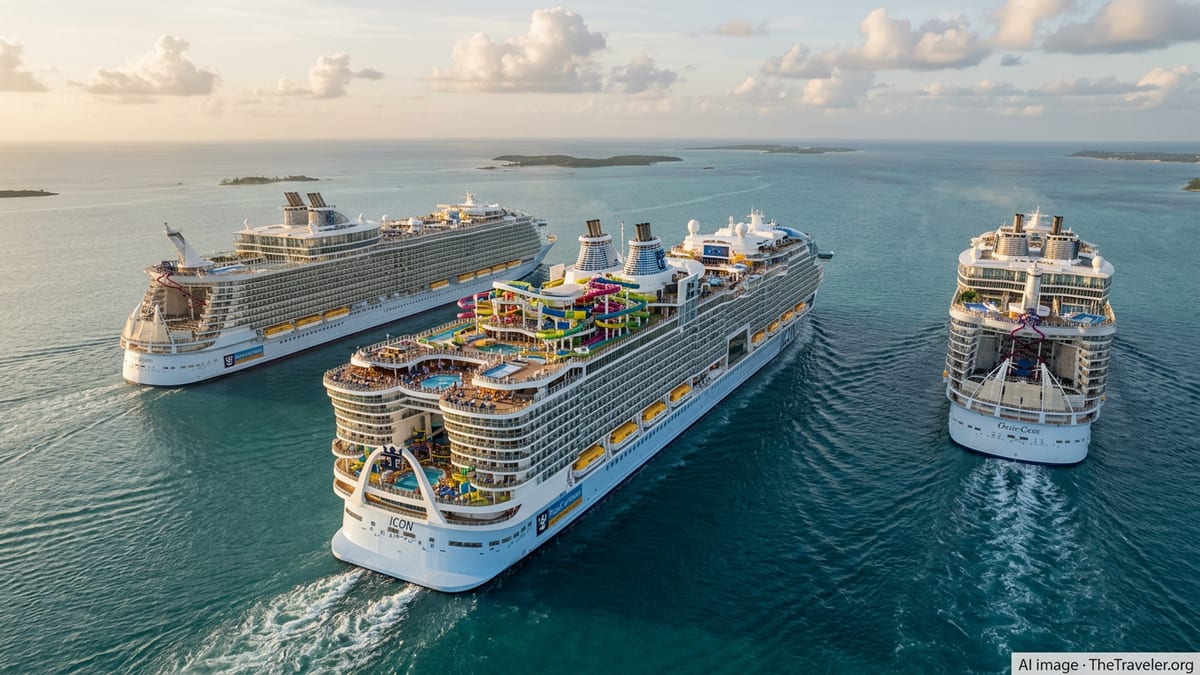
Royal Caribbean’s newest megaship, Legend of the Seas, has arrived in Malaga to begin its maiden season in Europe, marking a milestone moment as the Icon class enters Mediterranean waters for the first time.
Get the latest news straight to your inbox!
Malaga Takes Center Stage for Icon-Class European Debut
The port of Malaga has secured a headline role in Royal Caribbean’s latest expansion, serving as the European gateway for Legend of the Seas, the third vessel in the company’s Icon class. Publicly available information shows that the ship reached the Andalusian port at the end of June as part of its transition from the Caribbean to the Western Mediterranean, ahead of a formal debut on July sailings from Barcelona and Rome.
Reports from local and trade outlets describe Malaga’s call as one of the most significant cruise events of the year for the Costa del Sol, underlining the port’s growing capacity to handle the latest generation of large, LNG-powered ships. The visit has been framed as both a symbolic and operational milestone, placing Malaga firmly on the map of homeport and turnaround options for next-generation cruise hardware in the Western Mediterranean.
The departure of Legend of the Seas from Malaga on a short inaugural itinerary to Rome, with technical and leisure stops en route, has been accompanied by a shoreside celebration including an evening fireworks display over the bay. The spectacle, widely covered in Spanish regional media, was intended to send off the vessel’s first paying guests in Europe and to showcase Malaga’s waterfront to thousands of passengers and crew on board.
According to cruise-industry coverage, the Legend’s choice of Malaga as the starting point for its European chapter reflects a broader strategy among cruise lines to spread high-profile deployments across multiple Mediterranean hubs rather than concentrating them solely in Barcelona or Civitavecchia. For local tourism bodies, the call is viewed as a strong endorsement of investments in terminals, passenger services and city access over the past decade.
Inside Legend of the Seas: Icon-Class Scale and Amenities
Legend of the Seas closely follows its fleetmates Icon of the Seas and Star of the Seas in terms of scale, layout and onboard concept. Publicly available technical data indicates that the ship comes in at around 248,000 gross tons with capacity for more than 5,600 guests at double occupancy, placing it among the largest cruise vessels ever to sail in European waters.
The ship continues the Icon class’s resort-at-sea model, combining neighborhood-style districts with a heavy emphasis on family and multigenerational travel. Trade reports highlight the return of headline attractions such as the Category 6 waterpark, billed as one of the largest at sea, and the Crown’s Edge experience, a combination skywalk, ropes course and zip feature that swings participants beyond the ship’s hull over open water.
Accommodation has been designed to support longer family holidays, with a mix of suites, family cabins and interior and balcony staterooms intended to maximize occupancy while maintaining a sense of space. Industry coverage notes that Royal Caribbean has refined cabin layouts across the Icon class to increase flexibility for groups, including expanded family suites and upgraded high-end accommodations positioned to capture the top tier of the European cruise market.
On the sustainability front, Legend of the Seas is powered by liquefied natural gas and equipped with advanced waste management and energy-saving systems in line with the rest of the Icon lineup. While LNG is not a zero-emissions solution, cruise analysts point to the class as part of a broader fleetwide transition toward lower-emission propulsion technologies and more efficient hull designs, a key consideration as European ports tighten environmental requirements.
From Caribbean Crossings to Mediterranean Circuits
The arrival of Legend of the Seas in Malaga caps a transatlantic repositioning that has shifted the spotlight for the Icon class from the Caribbean, where Icon of the Seas and Star of the Seas launched, to the Mediterranean. Information compiled from Royal Caribbean announcements and industry news indicates that Legend’s first revenue voyages in Europe will focus on seven-night Western Mediterranean itineraries from Barcelona and Civitavecchia, beginning in early July.
These cruises are expected to include marquee ports in Spain, France and Italy, with a mix of coastal cities and island stops. The western itineraries place Legend in direct competition with other megaships from major brands but offer a differentiated product through the Icon class’s theme-park-style onboard experience and family-focused attractions.
After the summer in Europe, publicly available deployment schedules show that Legend of the Seas is slated to reposition to Fort Lauderdale in late autumn. From there, the ship is due to operate six- and eight-night cruises to the Western and Southern Caribbean, typically including calls at the company’s private destination in the Bahamas. This split-season model allows the brand to leverage strong summer demand in Europe while maintaining a year-round Icon presence in the Caribbean.
For Royal Caribbean, the move places the Icon class at the heart of its strategy to grow both capacity and onboard spending. Analysts tracking the brand note that the company is pairing these large newbuilds with high-profile homeports, betting that destination appeal in places such as Barcelona, Rome and now Malaga will amplify the ships’ pull for international guests.
Malaga’s Cruise Ambitions Receive a High-Profile Boost
Malaga’s role in the Legend of the Seas rollout fits into a longer-term strategy to consolidate its position as a key cruise gateway on Spain’s southern coast. Local tourism and port data over recent years show steady growth in passenger numbers, with the city marketing itself as a compact cultural hub offering easy access to the Costa del Sol, inland Andalusia and high-speed rail links to the rest of Spain.
The choice of Malaga for the Legend’s inaugural European departure has been described in regional coverage as a vote of confidence in the port’s dedicated cruise facilities, which include multiple terminals capable of handling the latest megaships. Infrastructure such as expanded berths, updated security and streamlined passenger flows has been highlighted as crucial to accommodating vessels of Icon-class dimensions.
City stakeholders are also emphasizing the economic impact of hosting one of the world’s largest cruise ships. Passenger and crew spending in the city center, excursions to nearby attractions and associated port services are expected to generate significant revenue for local businesses. At the same time, discussions continue around balancing cruise growth with sustainability, including managing visitor flows to avoid overcrowding in historic districts.
Observers note that Malaga’s collaboration with other Mediterranean ports on shore power initiatives, emissions controls and environmental reporting is likely to grow more important as larger, fuel-hungry ships like Legend of the Seas become more frequent visitors. The port’s experience with this high-profile call is expected to inform future decisions on berth allocation, terminal operations and destination marketing.
Icon Class Recalibrates Europe’s Megaship Landscape
The deployment of an Icon-class vessel in European waters marks an inflection point in the region’s cruise market. Until now, the biggest ships in Royal Caribbean’s fleet had typically debuted and spent their first years based year-round in the Caribbean. Legend of the Seas breaks that pattern by placing one of the brand’s flagship products in the Mediterranean during its initial season.
Cruise-industry analysts suggest this shift reflects both strong underlying demand for Mediterranean itineraries and increasing competition from rival brands that have already stationed some of their newest vessels in Europe. By introducing the Icon blueprint to Mediterranean routes, Royal Caribbean is expected to push competitors to further upgrade hardware and onboard offerings in the region.
The move may also reshape passenger expectations. With waterparks, multi-venue entertainment districts and extensive family facilities now sailing regular itineraries out of Barcelona and Rome, the bar is rising for what constitutes a premium mass-market cruise in Europe. Traditional selling points such as port variety and shore excursions remain important, but the ship itself is becoming a central part of the destination appeal.
For ports, the presence of Icon-class tonnage reinforces the need for continued investment in deep-water berths, terminal capacity and environmental infrastructure. As Legend of the Seas departs Malaga and begins its first round of Mediterranean voyages, many in the sector are watching to see how the combination of record-breaking ship size and European itineraries resonates with both first-time and repeat cruisers.