


More news on this day
Russia is accelerating plans to upgrade a historic north–south rail corridor that could one day allow travelers and cargo to move overland from India to Europe via Iran, the South Caucasus and the Russian heartland, signaling a potential shift in how people and goods move across Eurasia.
Get the latest news straight to your inbox!
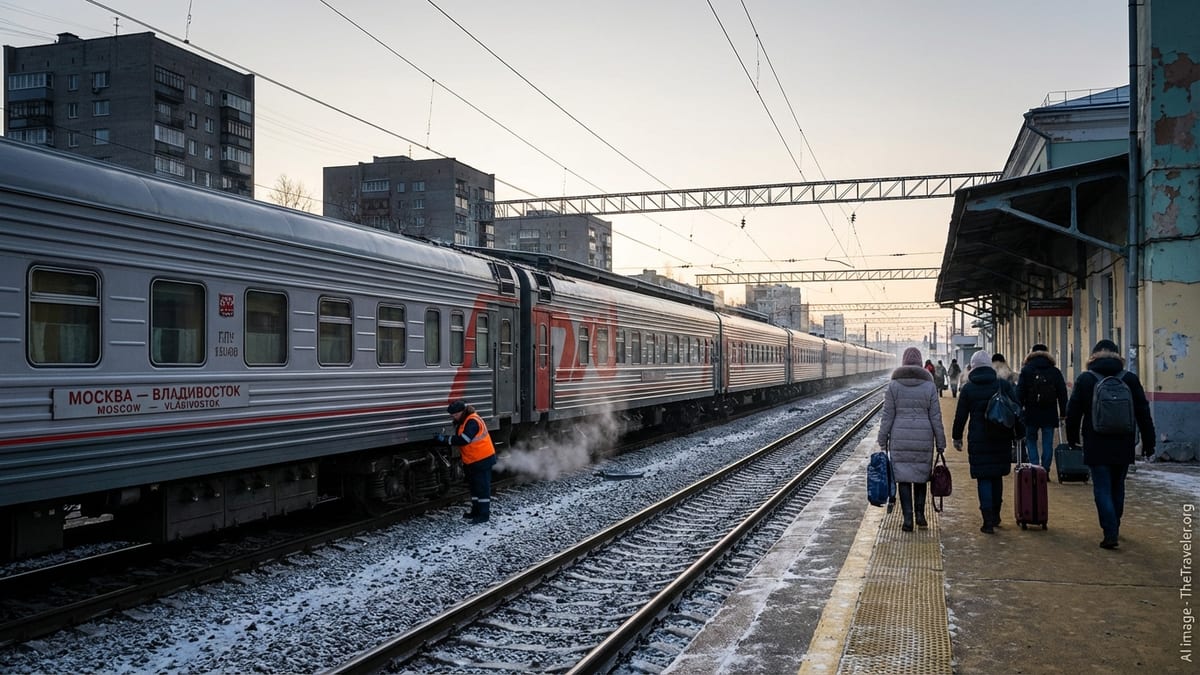
A Historic Trade Route Recast for a Sanctions-Era World
The backbone of Russia’s current connectivity push is the International North–South Transport Corridor, a 7,200‑kilometer multimodal network that has been discussed for more than two decades as a way to link Indian Ocean ports with northern Europe via Iran and Russia. Initially framed largely as a freight project, the corridor is being recast as a strategic lifeline as Moscow seeks alternatives to traditional westbound routes affected by sanctions and geopolitical tension.
Publicly available policy papers describe the corridor as central to Russia’s effort to use its geography as a transit hub between South Asia, the Gulf, the Caucasus, Central Asia and Europe. For India, the same network promises shorter transit times to Russia and the wider Eurasian market compared with conventional routes via the Suez Canal, as well as a platform for deeper engagement with Iran and the Caspian region.
Although the concept dates back to an intergovernmental agreement in 2000, trade studies and recent commentary indicate that only in the past few years have cargo volumes and investment along the corridor begun to grow steadily. That shift is tied to Russia’s reorientation toward Asian partners, renewed Iranian efforts to leverage its geography, and India’s search for diversified, land-linked access to Eurasia.
Closing the Rasht–Astara Gap on Iran’s Caspian Coast
The most closely watched development on the ground is the planned completion of the Rasht–Astara railway in northern Iran, widely described in open reports as the key missing link in the western branch of the North–South corridor. Once built, the 160‑plus kilometer line would stitch together Iran’s existing network with the Azerbaijani and Russian systems along the Caspian Sea shore.
Government communiqués and regional analyses highlight this stretch as the bottleneck that currently forces rail cargo to switch to road for part of the journey between the Persian Gulf and the Caucasus. The proposed railway would allow continuous steel-on-steel movement from ports in southern Iran to the Russian border, significantly improving reliability and capacity.
Technical studies note, however, that physical construction is only part of the challenge. Different rail gauges between the post‑Soviet networks and Iran, limited double‑tracking, and the need for modern signaling and logistics terminals mean that even after the Rasht–Astara line opens, further investment will be required before the route can handle the long‑advertised volumes or support regular passenger services.
From Freight Artery to Future Travel Corridor
For now the North–South network is primarily a freight proposition, with rail, road and sea legs designed for containers, bulk cargo and energy shipments. Yet transport planners and academic assessments increasingly describe the corridor in terms that include potential passenger flows, suggesting that once core infrastructure is in place, international rail services for travelers could follow.
In theory, a continuous chain of links would connect Indian ports to Bandar Abbas or Chabahar in Iran, continue by rail through Iran to the Caspian, cross into Azerbaijan or northern Iran’s Caspian hubs, and then enter Russia for onward journeys to Moscow, St Petersburg or even northern Europe. From a traveler’s perspective, that would resemble a stitched‑together successor to classic overland journeys, but on upgraded 21st‑century infrastructure.
Tourism analysts point to several ingredients that could make such a route attractive: the chance to combine city breaks across multiple cultures, reduced reliance on long‑haul flights, and the appeal of slow, scenic travel through regions that have been difficult to reach in recent decades. However, they also caution that the transition from heavy freight corridor to passenger‑friendly rail axis requires substantial investment in rolling stock, stations, border facilities and safety systems, along with consistent scheduling and visa regimes.
Opportunities and Obstacles for India’s Eurasian Reach
For India, the unfolding rail and port upgrades under the North–South framework dovetail with longer‑term ambitions to deepen economic integration with Eurasia while reducing exposure to maritime chokepoints. Academic work on the corridor argues that faster, more reliable access to markets in Russia, Central Asia and Europe could support Indian exports in sectors ranging from engineering goods to pharmaceuticals.
At the same time, political and logistical headwinds remain significant. The corridor depends on close coordination among India, Iran, Russia, Azerbaijan and other states, many of which are navigating their own sanction environments and competing infrastructure visions. Differences in customs procedures, rail standards, insurance coverage and payment systems all add friction that can erode the theoretical time and cost advantages.
Security perceptions along parts of the route, evolving Western policy toward Iranian and Russian infrastructure projects, and competition from other initiatives such as Middle Corridor rail links across Central Asia add further uncertainty. Analysts suggest that for India, carefully balancing these factors while still expanding overland options will be a delicate but potentially rewarding element of its wider connectivity strategy.
What a Trans‑Eurasian Rail Revival Could Mean for Travelers
Should the planned upgrades progress and cross‑border coordination improve, Russia’s evolving corridor strategy could ultimately change how travelers imagine moving between South Asia and Europe. Overland itineraries that once relied on multiple flights or fragmented bus journeys could, in time, incorporate long‑distance trains running through some of Eurasia’s least explored regions.
Industry observers note that any such transformation will unfold gradually. Freight services typically come first, followed by limited passenger operations, and only later by tourism‑oriented trains and packages. Yet the fact that governments and rail operators now frame the North–South axis as a central pillar of Eurasian connectivity suggests that, for future travelers, the idea of boarding a train that traces a path from India toward Russia and beyond is edging closer to reality.