


More news on this day
Russia’s government has pledged to prevent major disruption to domestic and international flights after Ukrainian President Volodymyr Zelensky warned airlines that growing drone activity makes Russian airspace increasingly dangerous for civilian aviation.
Get the latest news straight to your inbox!
Competing Messages on Safety in Russian Skies
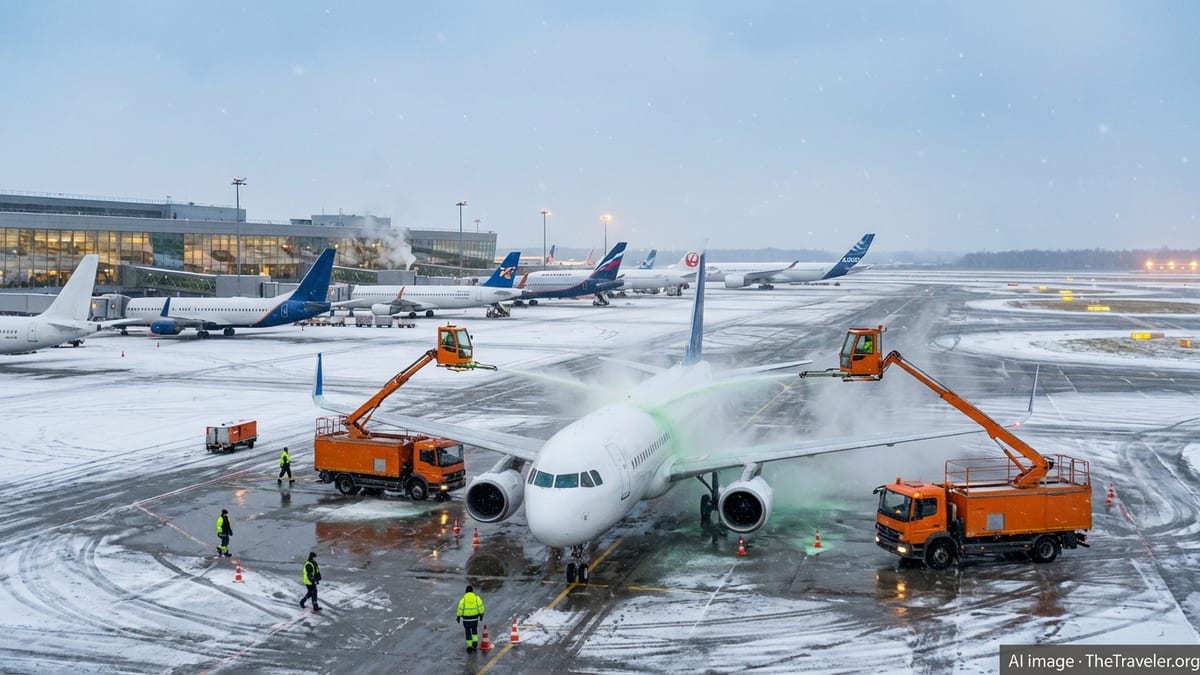
In early September 2026, Moscow moved to reassure travelers and carriers that Russian air traffic would continue largely as normal, even as Ukraine escalated its campaign of long-range drone strikes across Russian territory. According to published coverage, Transport Minister Andrei Nikitin said aviation regulators were continuously tightening flight safety and airport security rules and would not allow significant interruptions to civil aviation. Public statements from Russia’s air transport agency indicated that airports and ground infrastructure were operating “according to plan,” handling arrivals and departures, including those by foreign airlines.
The assurances followed a stark warning from President Volodymyr Zelensky, who told airlines, insurers and companies still using Russian airports that the country’s skies were becoming “completely unsafe.” He stressed that Ukraine does not seek to target civilian aircraft, but argued that the scale of Ukrainian drone operations over Russia means commercial flights face rising incidental risks. Reports indicate that Kyiv has now formally notified the International Civil Aviation Organization about what it describes as heightened safety concerns in Russian airspace.
The dueling messages reflect a widening disconnect over risk perceptions. Ukraine frames its notice as a precautionary measure aimed at avoiding a repeat of past tragedies in contested skies, while Russia portrays the same drone activity as a security challenge its systems can manage without shutting down routes or airports. For travelers and airlines, the result is a complex and fast-moving picture in which official assessments diverge and commercial decisions must weigh both operational continuity and worst-case scenarios.
Airlines Weigh Routes as Drone War Deepens
Ukraine’s warning lands at a time when Russian airspace, once a vital corridor for flights linking Europe with Asia, is already heavily constrained. Carriers from the European Union, the United States and several partner countries stopped flying over Russia soon after the full-scale invasion of Ukraine in 2022 due to sanctions and regulatory prohibitions. The skies are now largely used by airlines from China, Turkey, the United Arab Emirates and other Gulf and Asian states that continue to serve Russian destinations or use its airspace on selected long-haul routes.
According to international aviation coverage, some operators have begun to adjust schedules following Zelensky’s latest remarks. Industry reports mention flight cancellations and temporary suspensions on certain routes into Moscow after Ukraine publicly highlighted the dangers from drone operations and formally raised the issue with ICAO. Risk-analysis firms that monitor conflict zones have also circulated fresh guidance pointing to frequent unmanned aircraft activity near major Russian urban centers and critical infrastructure.
For airlines that still rely on Russian overflights, the economic incentives to maintain current routings remain substantial, particularly on Europe–Asia and Middle East–Asia sectors where detours can add hours of flight time and significant fuel costs. Yet managers and insurers must now factor in the possibility of drones, air-defense activity and unplanned closures of airports or airspace segments. Experts quoted in regional analyses note that, in the event of an incident, responsibility could fall heavily on carriers and the Russian side, raising potential legal and financial exposure.
Travelers Face Evolving Risk Calculus
For individual travelers, the latest exchange between Kyiv and Moscow adds another layer of uncertainty to decisions about flying to, from or over Russia. While most Western leisure and business passengers have already reoriented away from Russian gateways, a significant number of people continue to transit via Moscow, St. Petersburg and other hubs on airlines from the Middle East and Asia. Publicly available data show that Russian airports handled robust domestic volumes over the summer, indicating continued demand for internal travel despite the conflict.
Safety advisories, however, are shifting. Ukraine’s formal notification to ICAO is designed to feed into the information set national regulators, airlines and insurance underwriters use when assessing route risk. Travelers may not see immediate, uniform changes, but they can expect airlines to revisit contingency plans, including diversions to alternative airports and pre-emptive cancellations if drone attacks or air-defense alerts intensify near major hubs.
Travel analysts note that, unlike previous conflict zones where foreign carriers sometimes continued flying until after a high-profile incident, many global airlines had already vacated Russian skies by 2022. The present question is whether the remaining operators choose to follow Ukraine’s advice and gradually scale back exposure, or side with Russia’s view that safety measures and coordination with security forces are sufficient to keep flights operating.
Global Aviation Governance Under Strain
The dispute over Russian airspace is also testing how international aviation governance responds when a war spreads unpredictably across borders. ICAO itself does not close airspace; it provides guidance that states, regulators and companies use in their own decision-making. During the Russian invasion of Ukraine, European and North American regulators issued conflict-zone bulletins about the risk of misidentification or accidental targeting of aircraft over and near active fronts. Those earlier advisories contributed to the widespread rerouting of flights away from Ukrainian skies.
Ukraine’s latest communication builds on that precedent but applies it to Russian territory, arguing that the long-range drone war has erased the distinction between front lines and rear areas. Commentaries from aviation law and security specialists suggest that, while states remain sovereign over their airspace, persistent unmanned aircraft activity and missile defenses introduce new types of hazard that traditional regulations did not fully anticipate. That, in turn, places more responsibility on airlines and insurers to interpret fragmentary information and act conservatively where necessary.
For now, there is no single, globally accepted directive concerning Russian airspace, only a patchwork of national rules, carrier policies and corporate risk thresholds. As Ukraine signals that drone raids will continue and Russia insists that flights are safe and operations stable, the burden falls on industry decision-makers to chart a course that balances commercial viability with evolving security realities.
What It Means for Future Routes and Hubs
If airlines increasingly decide to avoid Russia despite Moscow’s reassurances, the shift could accelerate longer-term changes to global aviation geography first triggered by the 2022 invasion. Routes between Europe and North Asia have already pushed north or south around Russian territory, often via Central Asia or the Middle East. Additional withdrawals would further entrench alternative hubs such as Istanbul, Dubai and Doha as preferred waypoints for intercontinental journeys.
Conversely, should foreign carriers continue operating in and over Russia while drone activity rises, travelers may see more frequent, short-notice disruptions. These could include airport closures during drone alerts, re-routings in mid-flight, or stepped-up security procedures on the ground that lengthen connection times. Even without a headline-grabbing incident, intermittent disturbances may gradually erode passenger confidence in itineraries that depend on Russian airports.
For the broader travel sector, the episode underscores how quickly geopolitical and technological shifts can reshape perceived safe corridors in the sky. Both Ukraine’s warning and Russia’s response are aimed at larger audiences than their own citizens, seeking to frame the narrative for governments, airlines and the flying public. In the months ahead, booking data, route maps and insurance conditions are likely to provide the clearest indication of which version of that narrative is gaining traction among those who ultimately decide where planes fly.
Russia Says It Won’t Let Ukraine Disrupt Air Travel After Zelensky Warning
Zelenskyy warns Russian airspace will effectively be closing