


More news on this day
A Russian drone incursion into Moldovan airspace has delayed a flight carrying Ukrainian President Volodymyr Zelensky from Chisinau to Oslo, briefly closing the country’s skies and highlighting growing aviation risks along the war-affected frontier.
Get the latest news straight to your inbox!
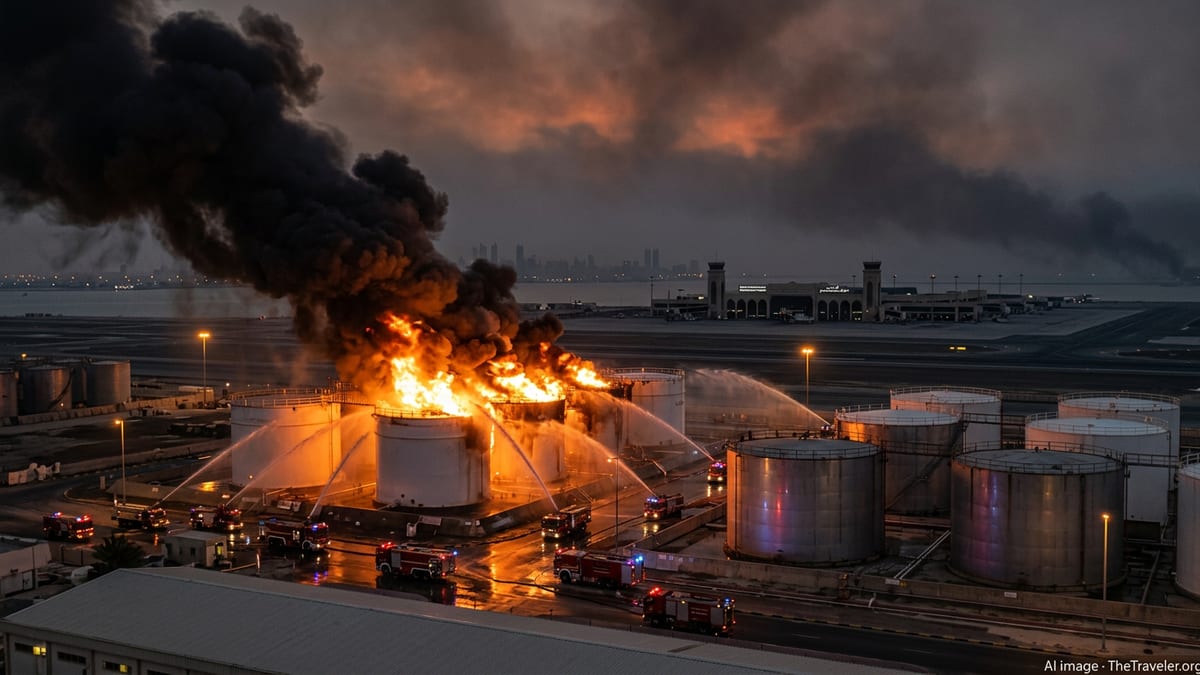
Airspace closure over Moldova halts presidential departure
Publicly available information indicates that Moldovan aviation authorities temporarily closed the country’s airspace on the afternoon of September 7, after radar detected a jet-propelled drone entering from the direction of Ukraine. The alert came shortly before Zelensky’s aircraft was due to depart from Chisinau International Airport for Oslo, where the Ukrainian leader was scheduled to attend the funeral of Norway’s King Harald V and hold meetings on security support.
According to published coverage, three departures, including Zelensky’s flight, and several arriving services were held on the ground while officials assessed the trajectory and status of the unmanned aircraft. Moldovan police later reported that a Russian-made drone had crashed in a rural area of Riscani district, in the country’s north, sparking small fires in nearby fields but causing no casualties.
Reports from international and regional outlets state that the drone exploded roughly 160 kilometers from Chisinau International Airport, well away from the capital’s main flight paths. Once authorities determined that the incursion no longer posed an immediate threat to civil aviation, the airspace restrictions were lifted and the presidential aircraft was cleared to depart, several hours behind its original schedule.
Government spokespeople cited in media reports stressed that the measures were precautionary and framed the episode as an operational delay rather than a narrowly averted mid-air collision. Nonetheless, the incident underscored the sensitivity of Zelensky’s travel movements and the elevated security protocols surrounding flights in and out of Moldova.
Drone route crossed NATO airspace before reentering Moldova
Subsequent accounts of the event, compiling statements from Moldovan and allied officials, describe a drone route that traversed multiple airspaces before the crash. After entering Moldovan skies from the east, the drone reportedly continued westward and crossed into neighboring Romania, a member of NATO, before looping back into Moldovan territory.
Romanian defense updates cited in international coverage indicate that two Spanish F-18 fighter jets, deployed under NATO air policing arrangements, were scrambled to monitor the object’s path while it transited Romanian airspace. The aircraft tracked the drone through parts of northeastern Romania until it reentered Moldova and ultimately detonated in the countryside far from major population centers.
Analysts quoted in regional media note that the drone’s pattern and technical characteristics resembled Russian Geran-type loitering munitions, which have been widely used in attacks on Ukrainian infrastructure since 2022. While open sources do not establish whether the aircraft was programmed to strike a specific target inside Moldova or simply veered off an intended course over Ukraine, its presence near a capital city handling a high-profile diplomatic flight has generated renewed concern.
Commentary in Moldovan and European outlets also points to the potential diplomatic sensitivities created by a Russian-origin drone entering both non-aligned and NATO-controlled airspace on a day when multiple foreign delegations were traveling to Norway. The combination of a symbolic royal funeral and heightened wartime tensions made the timing particularly notable for observers in the region.
Limited disruption at Chisinau airport but heightened anxiety
Operationally, the impact on Chisinau International Airport appears to have been contained. Airport-focused reporting notes that a total of three outbound flights and four arrivals were delayed during the airspace restriction window, roughly corresponding to the period in which the drone was being tracked and its crash site confirmed. Normal traffic resumed later the same day.
Despite the relatively short disruption, travelers experienced unscheduled waits in terminals, and airlines were forced to adjust slot times and downstream connections. Aviation observers highlight that, while such delays are manageable on a single day, the growing frequency of drone-related airspace closures across Eastern Europe risks introducing chronic uncertainty into regional flight schedules.
Since Russia’s full-scale invasion of Ukraine in 2022, both Moldova and Romania have reported a series of incidents involving drones crossing their borders, occasionally leaving debris or unexploded fragments on farmland and near small settlements. In most cases, airspace closures have been temporary, but each episode has contributed to a climate of heightened anxiety among residents and travelers alike.
Travel industry analysts following the route between Eastern Europe and Scandinavia say the disruption around Zelensky’s journey is likely to feed into broader risk assessments for carriers and state delegations. However, there is currently no indication in public timetables of sustained cancellations or rerouting away from Chisinau as a direct result of this latest incursion.
Security implications for presidential travel and tourism flows
The delay to Zelensky’s departure has brought renewed attention to the security regime surrounding high-level visits transiting smaller European hubs like Chisinau. Media reports referencing Moldovan and Ukrainian sources state that clearance for the presidential aircraft to depart was granted only once the drone threat had been fully assessed and the object’s fate established, in line with tighter procedures developed since the beginning of the war.
For travelers and tourism operators, the episode illustrates how geopolitical risks can interact with routine civil aviation. Moldova has been working to position itself as an emerging destination for visitors to its wineries, countryside, and historic towns, even as it contends with spillover effects from the conflict next door. Each drone-related interruption, even if brief, competes with those efforts by raising questions about reliability and safety, particularly among travelers unfamiliar with the local context.
Industry-focused coverage suggests that, to date, most tour operators have maintained itineraries that include Moldova, while providing clients with additional information about contingency planning and insurance coverage. At the same time, airlines, insurers, and national governments are continuously updating their risk models for overflights and stopovers in the region, which can influence pricing and scheduling decisions over time.
Regional commentators note that the visibility of this particular incident, involving a head of state on a high-profile journey, may accelerate discussions about enhancing air-defense coordination and drone detection capabilities across Eastern Europe. Any such upgrades could eventually translate into more predictable operating conditions for both scheduled passengers and official delegations traveling through Moldova and neighboring states.
Wider pattern of drone incidents along Ukraine’s western border
The Chisinau airspace alert fits into a broader pattern of drone-related episodes affecting Ukraine’s western neighbors. Open-source chronicles of the war document dozens of cases since 2022 in which fragments of drones or missiles have landed in Moldova and Romania, often after air-defense engagements or flight malfunctions over Ukrainian territory.
Security analysts writing in European outlets argue that these incidents, while typically causing limited physical damage, carry significant political and psychological weight. They test the resilience of border communities, put pressure on local emergency services, and force governments to balance public reassurance with acknowledgment of the evolving risks posed by long-range weapons and unmanned systems.
For the travel and tourism sector, the cumulative effect is a more complex risk environment rather than a binary safe-or-unsafe judgment. Airlines and passengers are increasingly accustomed to short-notice airspace adjustments, rerouted flights, and temporary suspensions of particular corridors. The latest disruption in Moldova, tied so visibly to a presidential journey, serves as a reminder that such measures can occur even on days dominated by ceremonial and diplomatic events.
Looking ahead, aviation specialists expect European regulators and air-navigation providers to deepen cross-border coordination on drone tracking and incident communication, especially in regions abutting active conflict zones. For now, flights into and out of Chisinau continue to operate, but the Russian drone incursion that delayed Zelensky’s departure has added another data point to the evolving map of risk around Europe’s eastern flank.
ABC News: Flight carrying Zelenskyy to Norway was delayed in Moldova because of drone incursion
Washington Post: Flight carrying Zelenskyy to Norway was delayed in Moldova
CNN: Russian drone incursion delayed Zelensky’s departure from Moldova