


More news on this day
Nearly 200 Ryanair passengers were left stranded at a small regional airport in eastern France after their flight to Marrakech reportedly departed without any of them on board, following severe delays at security checks.
Get the latest news straight to your inbox!
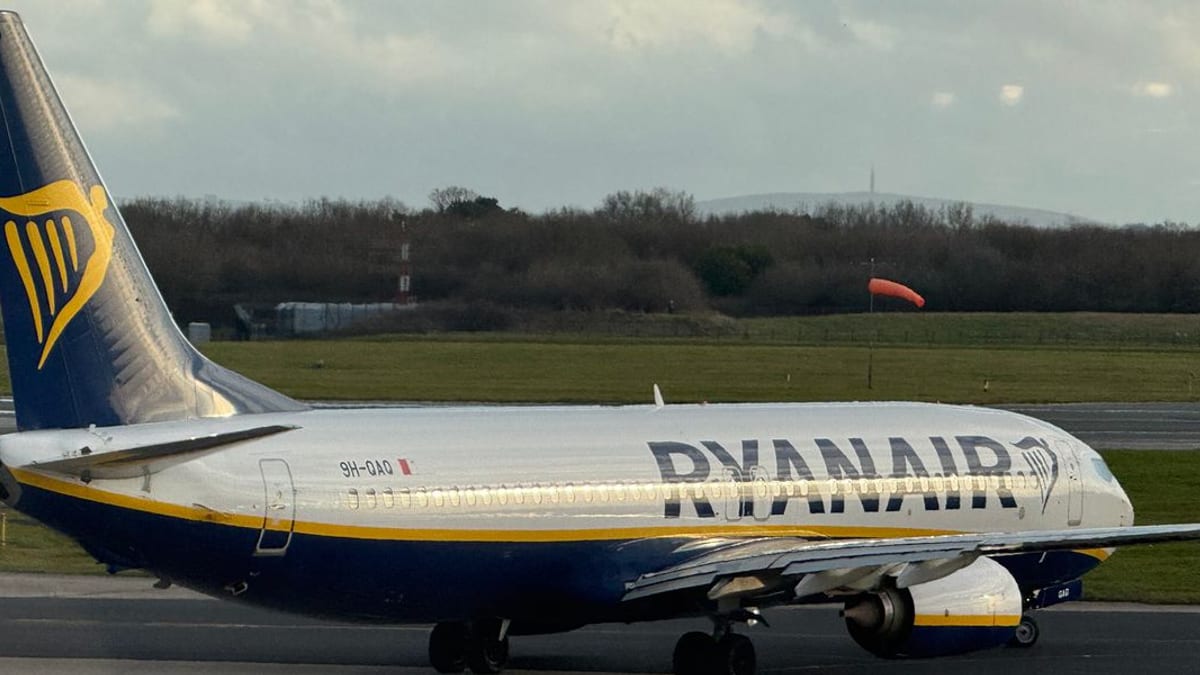
Empty departure from Vatry after security bottleneck
Publicly available reports indicate that the incident occurred at Vatry Airport in the Champagne region, where a Ryanair flight to Marrakech had been scheduled to depart with 192 ticketed passengers. Due to an apparent shortage of security staff and resulting bottlenecks at screening, many passengers were still waiting to clear checks as the scheduled departure time approached.
Accounts from the scene describe long queues and growing frustration as travelers waited to pass through security. By the time screening delays were resolved, the aircraft was no longer accepting passengers, and the flight ultimately left Vatry without anyone in the cabin. Coverage in aviation and travel industry outlets notes that the plane flew on to its Moroccan destination as an “operated” service despite having no passengers on board.
The decision to depart empty has prompted strong criticism from travelers and observers, who question why boarding could not be extended further given the scale of the disruption. Commentators have also focused on communication lapses at the airport, with passengers reportedly receiving limited real-time information about whether the flight would be held, cancelled, or rescheduled.
Ryanair has not publicly detailed the precise timeline of events at Vatry, but available information suggests that the airline considered the delay and staffing problems to fall under airport and security responsibilities rather than its own operational control.
Stranded travelers face overnight disruption
With the aircraft departed and no immediate replacement service available, all 192 affected passengers were left on the ground at Vatry. Reports indicate that many were forced to seek last-minute accommodation or alternative transport options, with some families and older travelers particularly impacted by the unexpected overnight disruption.
Several accounts describe passengers being informed that the flight was deemed to have operated normally from an airline perspective, even though none of the ticket holders had boarded. This classification has important implications for what assistance travelers may be entitled to under European air passenger rights rules, including provisions for meals, hotel stays, and rebooking.
Vatry is a relatively small regional airport compared with larger French hubs, and the scale of the disruption appears to have tested local infrastructure. Travel reports suggest that options for onward ground transport and late-night accommodation in the immediate vicinity were limited, adding to the stress of those stranded.
Some coverage notes that passengers bound for Morocco were left facing uncertainty over visas, connecting plans, and prepaid arrangements at their destination. As with many short-haul leisure routes, a significant share of travelers on the Vatry to Marrakech service were reportedly tourists traveling on tightly planned itineraries.
Questions over responsibility and EU261 protections
The Vatry incident has also renewed attention on how responsibility is shared between airlines, airports, and state services such as border and security staff. Publicly available information suggests that the initial trigger for the disruption was a staffing shortfall at security checkpoints, rather than a technical or operational failure within the airline itself.
Under European Union Regulation 261/2004, commonly known as EU261, airlines can be required to provide compensation and assistance when passengers are denied boarding, delayed, or their flights are cancelled. However, the rules make distinctions when disruptions are attributed to extraordinary circumstances or to factors outside an airline’s direct control, including some security and staffing problems.
Legal analysts quoted in travel and aviation coverage have noted that classification of the Vatry departure will be central to any compensation claims. If the event is treated as a form of denied boarding with the flight operating as scheduled, passengers may argue that they were prevented from boarding through no fault of their own. If, however, the disruption is framed mainly as a security staffing failure, some standard compensation provisions may not automatically apply.
Although formal rulings have yet to be reported, the case is likely to draw close scrutiny from consumer groups and national enforcement bodies responsible for air passenger rights in France and across the European Union.
Part of a wider pattern of airport bottlenecks
The Vatry episode has unfolded against a backdrop of broader concerns about congestion and staffing pressures at European airports. In recent months, several French airports have faced criticism after passengers were stranded or delayed because of long lines at security and border control, including at Marseille Provence Airport where dozens of travelers on another Ryanair service reportedly missed their flight while stuck in queues.
Industry observers point to a combination of rising travel demand, lingering staffing gaps after the pandemic, and the rollout of more stringent border checks on some routes as key factors behind recent bottlenecks. Smaller regional airports, which often operate with leaner staffing levels, can be particularly vulnerable when passenger volumes spike or when even a small number of staff are unavailable.
Published commentary also highlights communication and contingency planning as recurring weak points. Travelers affected by the Vatry incident and similar episodes often report receiving limited updates about expected delays or options for rebooking, leaving them uncertain about whether to remain at the airport, seek alternative travel, or arrange overnight accommodation.
Aviation analysts note that while airlines and airports are formally distinct entities, passengers typically experience them as a single journey. Events like the empty Ryanair departure from France illustrate how failures in one part of the system can have cascading effects on travelers, raising expectations that all parties coordinate more effectively in times of disruption.
Growing scrutiny of low cost operations
The incident at Vatry is also feeding into a wider public debate about how low cost carriers and regional airports manage operations at peak times. Ryanair, as Europe’s largest budget airline by passenger numbers, already attracts significant attention whenever mass disruptions occur within its network.
Analysts quoted in transport and consumer coverage observe that low fares often depend on tight schedules and quick turnarounds, leaving limited flexibility when unexpected delays occur at security or border control. If boarding windows close on time despite lengthy queues upstream, large numbers of passengers can be left behind even when the aircraft itself is ready to fly.
At the same time, critics argue that airports and state agencies must ensure staffing levels are sufficient to handle scheduled traffic, particularly on busy leisure routes. Episodes like the empty Ryanair flight from Vatry suggest that when resourcing falls short, it is passengers who bear the greatest cost in missed trips, additional expenses, and uncertainty over compensation.
With travel demand across Europe expected to remain strong, the experience of the 192 stranded passengers in France is likely to feature in ongoing discussions about air travel resilience, passenger protections, and how responsibilities are shared across the industry when flights depart without the people who were meant to be on board.