


More news on this day
A Ryanair flight from Vatry Airport in northeastern France to Marrakech departed completely empty after a security staffing problem prevented 192 ticketed passengers from boarding, prompting renewed scrutiny of how disruptions are handled at smaller regional airports and what protections travelers can realistically expect under European air-passenger rules.
Get the latest news straight to your inbox!
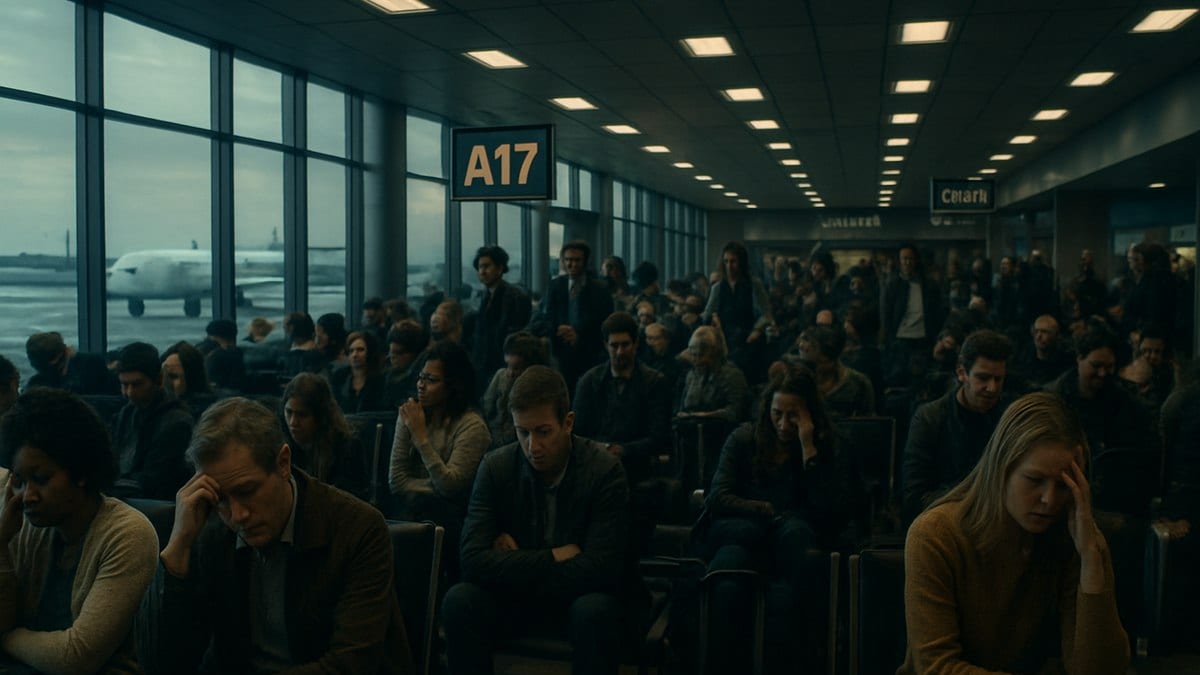
Empty Departure After Security Staff Shortage
Publicly available information indicates that the incident occurred on April 14, when a Ryanair service from Vatry Airport to Marrakech was scheduled to operate as a routine three-and-a-half-hour flight to Morocco. Instead, the aircraft departed with no passengers on board, while every traveler booked on the service remained on the ground.
Reports describe a chain of events beginning with an apparent shortage of security staff at the airport. Security screening is required before passengers can access the departure area and boarding gate. On the day of the flight, too few personnel were available to process travelers in time for departure, effectively blocking all 192 passengers from reaching the gate.
Accounts in French and international media state that airport security workers had called in sick, leaving the private security provider unable to fulfill its normal checkpoint duties. With no alternative arrangements in place, boarding could not begin, even though passengers with valid tickets were reportedly present at the terminal and had checked in for the flight.
As the scheduled departure time passed and the staffing issue was not resolved, the decision was taken for the flight to leave without any of the booked passengers. The aircraft operated the route as planned, but as a so-called “ferry” flight, carrying only crew.
Dispute Over Responsibility and Compensation
The empty departure quickly raised questions about who should bear responsibility for the disruption and any resulting expenses faced by stranded travelers. Airport representatives have indicated that, in their view, any compensation or rebooking falls under the airline’s remit, noting that the airport itself does not sell tickets or manage passenger contracts.
Ryanair, for its part, has reportedly pointed to the circumstances as being outside its direct control, referring to the shortage of security staff as an exceptional situation affecting the airport and its service provider. Based on this interpretation, the carrier has indicated that standard financial compensation under European air passenger rules does not apply, although basic rebooking and refund options are expected in line with its usual policies.
Some passengers have contested this position in media coverage, arguing that from a traveler’s perspective, the result was effectively a denied-boarding scenario: their flight operated, they held valid tickets, but they were unable to board. They maintain that the distinction between airline staff and airport staff is not meaningful to someone who has paid for transportation and watched their flight depart without them.
The disagreement highlights a recurring gray area in European aviation, where disruptions involving third-party airport contractors can fall between formal categories of delay, cancellation, and denied boarding, making it harder for passengers to understand their rights or obtain redress.
How EU Passenger Rights Apply in Such Cases
European Regulation EC 261/2004 sets out compensation and assistance rules for passengers facing cancellations, long delays, or denied boarding on flights departing from EU airports or operated by EU carriers. In practice, however, eligibility often depends on precise definitions and on where in the journey the disruption occurs.
Legal commentaries note that compensation for denied boarding typically requires passengers to be physically present at the gate and ready to board when the airline refuses carriage. In the Vatry case, passengers had reportedly checked in but were held back before security screening, meaning they did not formally reach the boarding area. This detail could be crucial in determining whether the event is treated as denied boarding or as a broader operational disruption.
If the security staffing shortfall is legally interpreted as an external event beyond the airline’s control, such as a strike or security incident, standard financial compensation may be excluded, even if travelers still have rights to care such as meals, accommodation, or rerouting. Passenger advocates, however, often argue that when a flight operates and ticketed travelers are left behind, the burden should not rest solely on individuals to absorb the cost of the failure.
The situation at Vatry is therefore likely to become a reference point for future discussions on how EU rules should apply when service failures involve airport contractors rather than airlines directly, particularly at smaller airports where alternative staffing and backup plans may be limited.
Spotlight on Smaller Regional Airports
The incident has also drawn attention to Vatry Airport itself, a small regional platform in the Marne department that has relied heavily on low-cost carriers to sustain passenger traffic. Public reports in recent years have highlighted the airport’s dependence on Ryanair for the bulk of its commercial activity, with routes to Morocco and Portugal playing a central role in its schedule.
Smaller regional airports across Europe often operate with lean staffing models and contracted services covering security, ground handling, and cleaning. While this can keep costs low and attract budget airlines, it can also reduce resilience when unexpected staff shortages occur. In such environments, a handful of absences may be enough to compromise core functions like security screening.
Observers note that the Vatry episode illustrates how fragile these systems can be for travelers. With limited alternative flights, fewer on-site facilities, and less redundancy in staffing, a problem that might be absorbed at a major hub can translate into a full-day disruption or worse at a smaller field, especially for holiday routes with less frequent service.
Several commentators in aviation-focused outlets suggest that regional airports may now face pressure to review contingency plans for critical services, including security checkpoints, in order to reassure airlines and passengers that similar incidents will not recur during busy leisure travel seasons.
Growing Scrutiny of Low-Cost Operations
The empty Ryanair departure from Vatry has unfolded against a broader backdrop of scrutiny of low-cost airline operations across Europe. Recent seasons have seen a series of high-profile disruptions involving weather, strikes, and airspace constraints, leaving passengers stranded or rebooked at short notice while airlines and airports debate who should cover costs.
Analysts point out that the low fares associated with budget carriers rely on tight turnaround times, high aircraft utilization, and limited slack in staffing and resources. When a disruption interrupts this finely tuned system, both airlines and airports may be reluctant to assume extra expenses, leaving travelers trying to piece together their options under complex regulations.
Consumer organizations frequently argue that current enforcement of EU air-passenger rules is uneven and that many travelers are not fully aware of their entitlements or how to pursue them. The Vatry case, in which a full planeload of ticketed passengers watched an aircraft depart without them, is likely to be cited in future campaigns for clearer guidance, stronger oversight, and more transparent communication to customers when disruptions occur.
As investigations and administrative reviews continue, the episode has already become a stark illustration of how operational vulnerabilities at smaller airports, combined with strict schedules in low-cost networks, can translate into unusually disruptive outcomes for ordinary travelers heading out on what should have been a straightforward holiday flight.