


More news on this day
Nearly 200 holidaymakers bound for Marrakesh were left stranded at a small regional airport in northeastern France after their Ryanair flight departed completely empty, following a sudden shortage of security staff that prevented any passengers from boarding.
Get the latest news straight to your inbox!
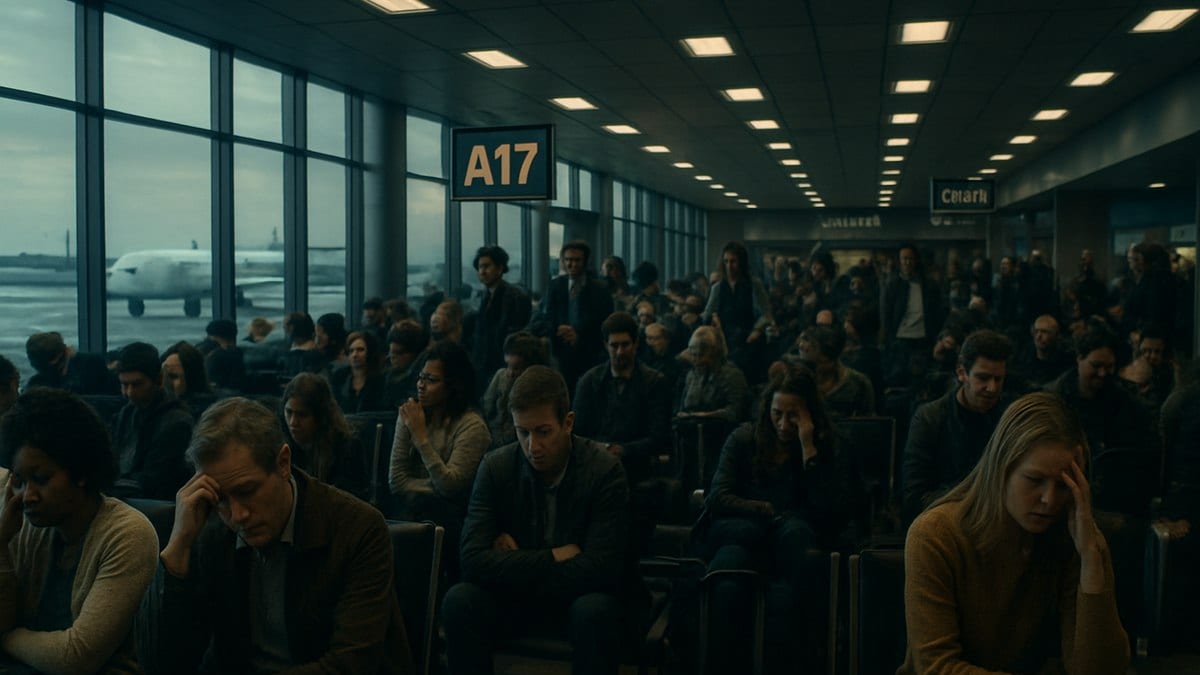
Security staff absences halt boarding at Vatry Airport
The incident occurred on April 14 at Châlons-Vatry Airport in the Marne department, where Ryanair flight FR4408 was scheduled to operate to Marrakesh. Reports indicate that when the terminal opened for departure, no security screening team was available to process passengers and baggage.
Publicly available information shows that security at the airport is handled by an external contractor, Sécurus. Eight staff members were reportedly rostered to work the flight, but most of them were said to be on sick leave, leaving the airport without the minimum manpower required to run security checks.
Without screening in place, passengers who had arrived for the flight were unable to pass through to the departure area. Witness accounts in local media describe travelers waiting for around three hours in the public zone as airport and airline teams attempted to identify a workaround.
As time passed, it became increasingly unlikely that a replacement security team could be assembled in time to meet Ryanair’s planned schedule. With no certified staff to manage access to the secure airside zone, boarding remained impossible and the departure window narrowed.
Aircraft departs empty for Marrakesh
While passengers waited in the terminal, the Boeing 737 scheduled to operate flight FR4408 was prepared on the apron. According to published coverage, the aircraft was needed for subsequent operations from Marrakesh, adding pressure to keep it moving through the network.
With security screening still unavailable and no passengers cleared to board, the aircraft ultimately departed Vatry Airport without a single traveler on board and flew to Marrakesh as a so-called “ghost flight.” The decision allowed Ryanair to maintain later services using the same aircraft, while leaving all booked customers behind in France.
For the 192 passengers who had tickets for the flight, the outcome was effectively a last-minute cancellation, despite the plane’s physical departure. Many travelers reportedly learned of the disruption through notifications on the Ryanair mobile app, which initially referred to an unexpected security staff strike.
Subsequent reporting from French media indicated that airport management disputed the description of a strike and instead attributed the disruption to a wave of sick leave within the contracted security workforce. Regardless of the terminology used, the result for passengers was the same: no boarding, no flight, and a scramble for alternatives.
Confusion over cause and responsibility
The unusual circumstances have added complexity to questions of accountability. The airport has publicly pointed to Sécurus, the private security firm, as the party unable to provide the required staff at short notice. Ryanair, for its part, has framed the problem as an external issue beyond its direct control.
According to available reports, Vatry Airport management has indicated that compensation or reimbursements for affected passengers fall under the airline’s responsibility, because the contractual relationship for the journey is between carrier and customer. The airport’s role is framed as an infrastructure and service provider to airlines rather than to individual travelers.
Ryanair has not issued a detailed breakdown of the operational chain of events in the hours leading up to the empty departure, but information circulated to passengers through the airline’s app characterized the situation as the result of a security staff work stoppage. That characterization has been challenged by airport representatives who describe the event as a staffing shortfall linked to sick leave rather than an organized industrial action.
The divergence in explanations feeds directly into how the situation may be treated under air passenger protection rules, particularly within the European Union framework. Whether the event is classed as an extraordinary circumstance, such as a sudden external disruption, or as an operational failure is likely to shape passengers’ options.
What it means for affected passengers
Travelers left at Vatry Airport on April 14 reported uncertainty over rebooking options and timing. Some passengers were advised via app notifications to return home and seek another flight through the Ryanair platform, effectively shifting the burden of rearranging travel back onto individuals and families who had been expecting a straightforward direct service.
Under European air passenger rights legislation, customers can be entitled to assistance, rerouting or financial compensation when flights are cancelled, significantly delayed or when boarding is denied against their will. However, the precise level of support depends on factors including notice periods, flight distance and whether the disruption is considered to be outside the airline’s control.
In cases where an airline argues that an external service failure is responsible, such as a sudden breakdown in airport security staffing, compensation claims often become more complex. Legal experts frequently assess whether the airline took all reasonable measures to avoid the disruption or mitigate its impact, including exploring rerouting on later services or with other carriers where feasible.
For many of the 192 stranded passengers at Vatry, documentation of what was communicated, when, and through which channels is likely to be important if they pursue formal claims. Receipts for additional expenses such as overnight accommodation, meals or replacement tickets may also be relevant as they seek reimbursement.
Spotlight on regional airports and low cost operations
The episode at Châlons-Vatry Airport has drawn renewed attention to the operational fragility that can arise at smaller regional facilities where critical functions rely on tightly staffed third party contractors. When a single team is unavailable, there may be limited backup capacity compared with major hubs that maintain larger pools of personnel.
Ryanair’s business model is built around rapid aircraft turnarounds and intensive utilization, often via regional airports that offer lower fees in return for traffic. In such an environment, keeping aircraft on schedule can sometimes take precedence over waiting for local staffing problems to be resolved, especially when delays risk disrupting multiple subsequent flights.
Industry observers note that the Vatry incident comes at a time when European aviation is already facing pressure from workforce shortages and cost constraints across airlines, airports and ground handling providers. These stresses can leave little margin for unexpected absences in roles that are essential for safety and security.
For travelers, the sight of an empty aircraft departing while nearly 200 ticketed passengers remain on the ground is a stark illustration of how interconnected the modern air travel system is, and how a problem in one corner of that system can rapidly translate into ruined plans far beyond the airport perimeter.