


More news on this day
Hundreds of passengers were left stranded at Tampa International Airport on Sunday as a wave of 79 delayed flights and at least two cancellations rippled across major domestic and international routes, disrupting travel on Delta Air Lines, American Airlines, United Airlines and several other carriers serving New York, Chicago, Atlanta and beyond.
Get the latest news straight to your inbox!
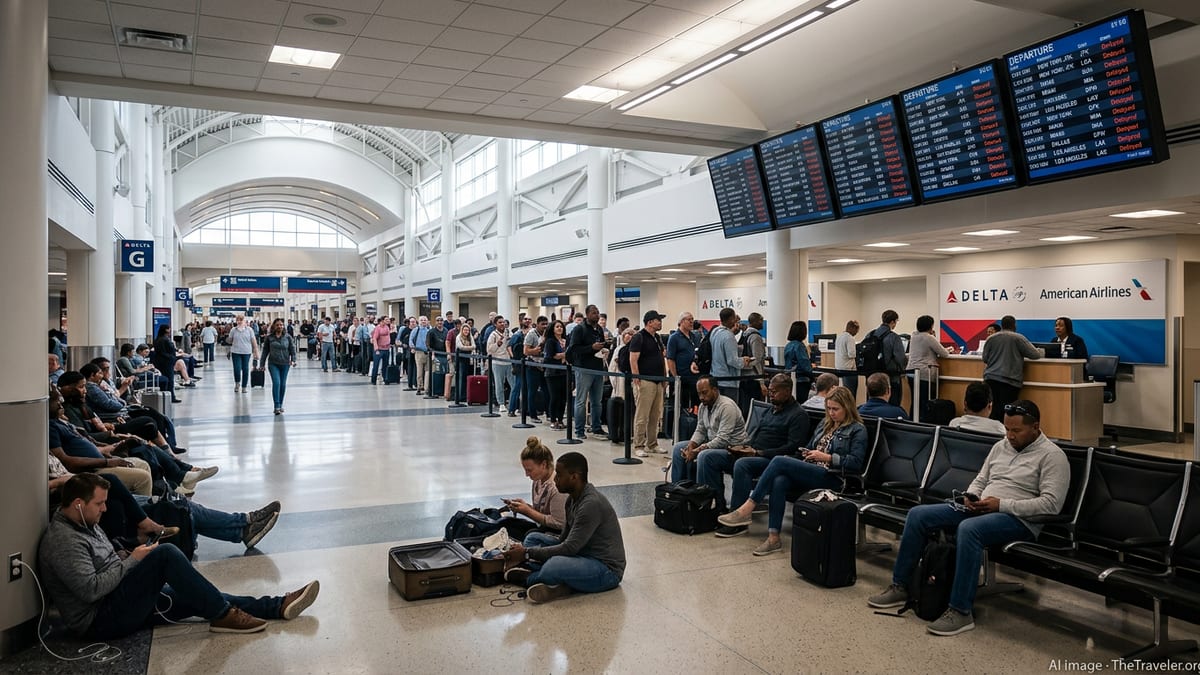
Knock-on delays ripple across major U.S. hubs
Publicly available flight-tracking data on Sunday showed Tampa International Airport coping with an unusually high number of schedule disruptions, with dozens of departures pushed back and a small but significant number of flights canceled outright. The impacted services included morning and afternoon departures to New York area airports, Chicago and Atlanta, routes that normally function as critical connectors for business and leisure travelers throughout the United States and overseas.
Reports indicate that the pattern in Tampa mirrors broader national turbulence in the aviation system in recent months, when weather systems, staffing gaps and technical snags have repeatedly triggered rolling delays at large hubs. When schedules tighten at airports such as New York and Chicago, even relatively clear skies in Florida are often not enough to keep flights running on time, leaving travelers at Tampa waiting for aircraft and crews stuck elsewhere in the network.
Data from aviation tracking and prior published coverage of similar episodes show that even a limited number of cancellations at a mid-size hub can cascade into hours-long waits for rebookings, missed connections and overcrowded gate areas. With 79 delayed flights in a single day, Tampa’s terminals were left absorbing a disproportionate share of that pressure.
Although operations at Tampa International continued, the high volume of disruptions effectively turned portions of the terminal into holding zones as travelers searched for updated departure times, alternative routings and hotel rooms for unexpected overnight stays.
Delta, American and United among affected carriers
The day’s problems did not appear confined to a single airline. Public flight boards and tracking tools showed delayed or canceled services across multiple major carriers, including Delta Air Lines, American Airlines and United Airlines, as well as several smaller domestic and international operators. The affected flights connected Tampa with major hubs such as New York’s LaGuardia and John F. Kennedy, Chicago O’Hare and Atlanta, which serve as onward gateways to Europe, Latin America and other regions.
Recent industry reporting has highlighted how tightly wound airline schedules have become, particularly at peak times, leaving limited spare aircraft or crew to recover when a disruption hits. When an inbound aircraft is delayed or diverted, the aircraft scheduled to operate the next leg from Tampa to a northern hub may not arrive in time, triggering a chain reaction that can spread delays throughout the day.
Historical analyses of U.S. airline performance also show that once delays start to stack up on major network carriers, passengers on connecting itineraries bear the brunt, facing missed onward flights and forced overnight stops. The situation at Tampa on Sunday fit that pattern, as a number of the disrupted departures were part of complex itineraries involving international segments beyond New York, Chicago or Atlanta.
Publicly accessible guidance from airlines and consumer advocates notes that passengers on canceled flights are typically entitled to either rebooking or a refund of the unused portion of their ticket, although practical access to those remedies can be complicated when hundreds of travelers are seeking assistance at the same time.
Weather, staffing and system strain behind persistent disruptions
While clear, single-cause explanations are often elusive, recent coverage of national air travel has frequently pointed to a combination of adverse weather events at northern hubs, staffing shortages at airlines and air traffic control facilities, and occasional technology failures as drivers of recurring disruption. Even when Tampa itself reports favorable conditions, storms and low visibility in New York, Chicago or along connecting routes can trigger ground stops and arrival spacing programs that slow the flow of aircraft.
Analysts note that the winter and early spring of 2025 and 2026 have produced several large-scale weather systems affecting the Northeast and Midwest, prompting elevated numbers of cancellations and delays across the country. When those systems intersect with spring break and holiday peaks, airports such as Tampa, which serve both business travelers and vacationers, can quickly become saturated during irregular operations.
Published discussions of airline operations also emphasize the thin margins under which carriers have been operating in the post-pandemic era. Many airlines have rebuilt capacity aggressively while still working to fully restore pilot, flight attendant and ground staff rosters, raising the risk that crew scheduling constraints will compound weather-related delays and leave aircraft out of position.
Against that backdrop, the disruption at Tampa International fits into a wider pattern of stress on the U.S. air travel system, in which local passengers experience the downstream effects of operational challenges unfolding hundreds or thousands of miles away.
Stranded passengers face long waits and limited options
For travelers on the ground at Tampa International, the statistics translated into practical difficulties. With 79 flights delayed, boarding times repeatedly revised and departure gates reassigned, airport concourses saw rising crowds throughout the day as travelers searched for seats, power outlets and real-time updates from airline apps and display boards.
Previous incidents documented at Tampa and other Florida airports show that once disruption reaches this scale, wait times at ticket counters and service desks can stretch into hours as staff work through backlogs of rebooking requests. Families and international travelers can be particularly vulnerable when hotel rooms near the airport begin to sell out, or when onward connections involve visas and time-limited entry requirements.
Consumer resources and prior advisories recommend that during such episodes, travelers monitor both their airline’s app and independent flight-tracking services, proactively look for alternative routings and, where possible, consider flights to secondary airports near their destination. However, when multiple airlines at the same airport are simultaneously affected by delays, these alternatives can quickly narrow.
For some passengers at Tampa whose flights to New York, Chicago or Atlanta were canceled, getting home or reaching their destination could involve waiting until the following day or accepting itineraries with lengthy connections in other hubs, extending journeys that were originally only a few hours long.
What travelers through Tampa should watch now
Travel organizations and airport-focused publications advise that passengers with upcoming trips through Tampa International in the coming days keep a close eye on their bookings, particularly if they are traveling to or through historically delay-prone hubs in the Northeast and Midwest. Even after the immediate backlog eases, aircraft and crew positioning issues can linger, leading to rolling schedule adjustments.
Guidance drawn from recent disruption events suggests that travelers should allow additional time at the airport, arrive earlier than usual for both domestic and international departures, and be prepared with backup plans such as later same-day flights or next-morning options. Keeping essential items, medications and a change of clothes in carry-on bags can reduce the impact of unexpected overnight stays.
Industry commentators also point out that as airlines refine their schedules and federal regulators continue to review on-time performance and customer service practices, periods of instability may persist. For airports such as Tampa, which link Florida’s tourism centers with business and financial hubs like New York and Chicago, those pressures can periodically translate into the sort of disruptive day seen with the latest wave of 79 delays and multiple cancellations.
For now, travelers are urged by publicly available advisories to stay informed, flexible and to know their rights regarding rebooking and refunds, as Tampa International and its tenant airlines work to restore normal operations and absorb the lingering effects of this latest round of schedule upheaval.