


More news on this day
Dozens of Ryanair passengers are describing a distressing scene of tears, confusion and anger after a flight departed without them, reportedly leaving as many as 50 people stranded at the airport while their luggage continued on board.
Get the latest news straight to your inbox!
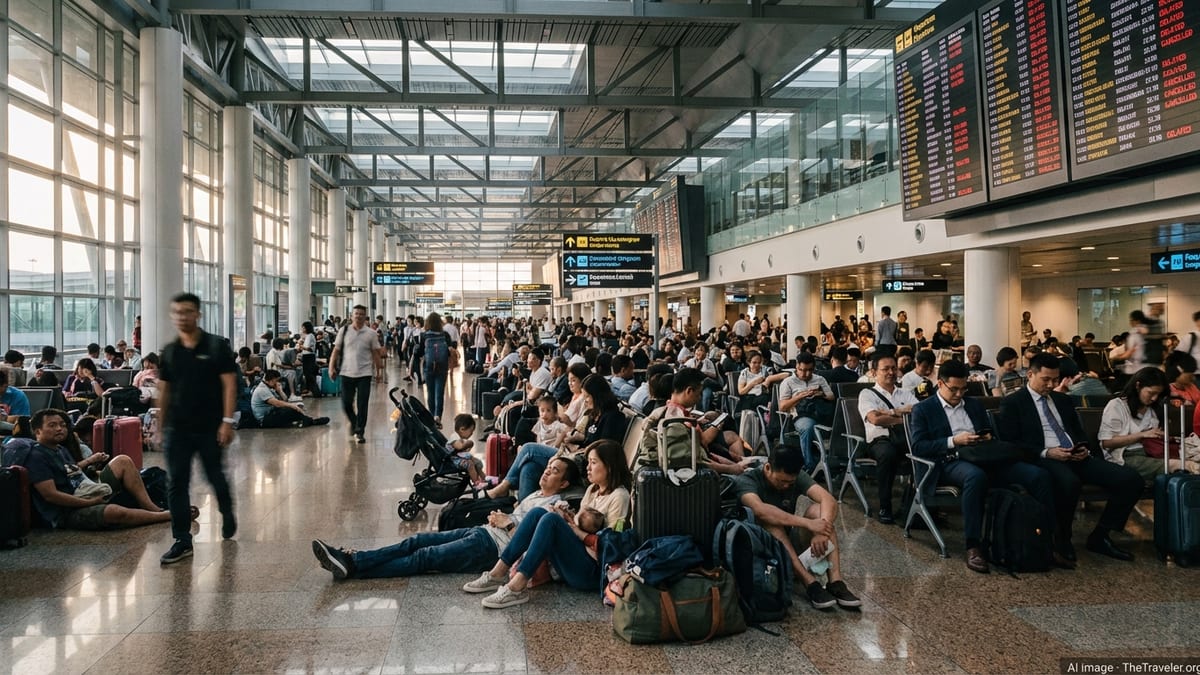
Reports describe gate confusion and disappearing flight information
Accounts shared on social platforms and in online travel forums describe an episode in which a Ryanair departure appeared briefly on airport information screens before vanishing, leaving a large group of passengers unsure where to go next. Several travelers say a gate number was displayed only for a matter of minutes before it disappeared again, with no further announcements that they could hear in the terminal.
By the time many of these passengers realised something was wrong, the flight had already left. Some reports suggest around 50 people who believed they were checked in and at the airport on time were left behind as the aircraft took off with their seats empty but their checked bags on board.
Parents traveling with young children have described scenes of distress, with children reportedly crying as families tried to understand how a flight could depart while so many ticketed passengers were still in the terminal area. Others say they were left to queue for alternative tickets and to arrange last minute accommodation at their own expense.
While details vary between individual accounts, many of the passengers involved describe a lack of clear communication in the crucial moments between the gate information appearing, disappearing and the aircraft’s departure.
Stranded travelers face costs and uncertainty
For those left behind, the immediate concern was finding a way to complete their journey. Travelers say they were offered limited options at airport desks, often involving paying for new flights at higher same day fares or accepting departures on later dates that disrupted holidays, onward connections and work commitments.
Some passengers report having to secure overnight accommodation at their own cost after learning that no immediate replacement flight would be available. Others describe scrambling to rebook hotels and car rentals at their destination, or losing pre-paid reservations altogether because arrival times changed.
The financial impact appears to have varied widely. While a few travelers were reportedly able to adjust plans with relatively minor extra cost, others say they faced substantial unplanned expenses running into hundreds of euros per family once new flights, meals, transfers and accommodation were added together.
In online discussions about the incident, some frequent flyers have pointed out that mass misconnection events like this can be especially difficult for inexperienced travelers, older passengers and families with young children, who may feel less confident navigating unfamiliar airport procedures when a flight is suddenly no longer available.
Questions over communication standards and passenger rights
The episode has revived debate about how clearly airlines and airports communicate fast changing gate information, particularly when flights are boarding under tight schedules. Some travelers commenting on the case argue that a brief posting of a gate on departure boards is insufficient when a large proportion of passengers may be away from the screens or moving through security and passport checks.
Others have questioned whether more proactive measures, such as text alerts, app notifications or targeted calls in the terminal, should be standard when dozens of checked in passengers have not yet appeared at the gate. Online discussions about the incident frequently reference European passenger rights rules and whether they apply in situations where passengers believe they have been ready at the airport but were not able to reach boarding in time because of unclear instructions.
Specialist passenger rights organisations note that European regulations can provide compensation and assistance in cases of denied boarding, cancellations or long delays when the airline is considered responsible. However, they also explain that each case is assessed individually, and outcomes may depend on whether the situation is defined as passengers missing a flight or being denied boarding through the actions of the airline or its partners.
Legal commentators observing the incident indicate that the central questions are likely to involve when and how gate information was communicated, whether announcements were audible and whether the carrier and airport made reasonable efforts to locate obviously missing passengers before departure.
Ryanair’s operational model under renewed scrutiny
Ryanair operates one of Europe’s most intensive low cost networks, with fast turnarounds and closely timed rotations that leave limited room for schedule disruption. Industry observers note that this model can sometimes contribute to difficult situations when delays, security issues or terminal congestion interfere with boarding, as airlines may be under pressure to avoid knock on cancellations later in the day.
Travel industry commentary on the latest incident suggests that leaving large numbers of passengers behind is highly unusual, even within a high frequency short haul operation. Some frequent travelers point out that crews and ground handlers can usually see when a significant portion of booked passengers has not yet reached the gate, and argue that the decision to close boarding in such circumstances deserves particular examination.
Ryanair has dealt with repeated criticism in recent years over its handling of disrupted flights, queues at busy bases and communication practices during weather events and air traffic control issues. Consumer advocates say this latest case will likely feed into a broader discussion about how low cost carriers balance operational efficiency with customer care obligations when something goes wrong.
Across social media, the airline’s defenders counter that passengers also have responsibilities to monitor departure boards, stay close to the gate once it is assigned and leave additional time for security lines and passport control. They argue that in crowded terminals it is not always possible for staff to locate every missing traveler before a cut off time designed to protect wider schedule integrity.
Calls grow for clearer accountability and data
Beyond the immediate frustration of those stranded, the episode has prompted calls from some commentators for better data on how often large groups of checked in passengers miss flights at specific airports and with specific airlines. Travel enthusiasts and passenger rights campaigners suggest that publishing statistics on these incidents could help travelers compare how different carriers handle boarding cut offs and communication.
Proposals being discussed in online forums include requiring airlines to provide more transparent explanations when multiple passengers miss a departure, and for regulators to examine patterns where similar complaints recur on particular routes or at particular bases. Some commentators argue that clearer rules on minimum announcement standards and gate display times would reduce the likelihood of confusion.
The travelers caught up in this latest Ryanair case now face the practical aftermath of disrupted plans, from insurance claims to refund requests and compensation applications where they believe regulations may support their position. Their accounts are also feeding into a much wider conversation about what passengers should reasonably expect in terms of information and assistance when a routine short haul flight turns into a night of tears and unexpected expense.
As peak summer travel approaches in Europe, the incident is serving as a cautionary tale across travel communities, with experienced flyers advising others to remain close to departure gates once they are announced, to keep airline apps active for last minute changes and to document any communication gaps in case disputes later arise.