


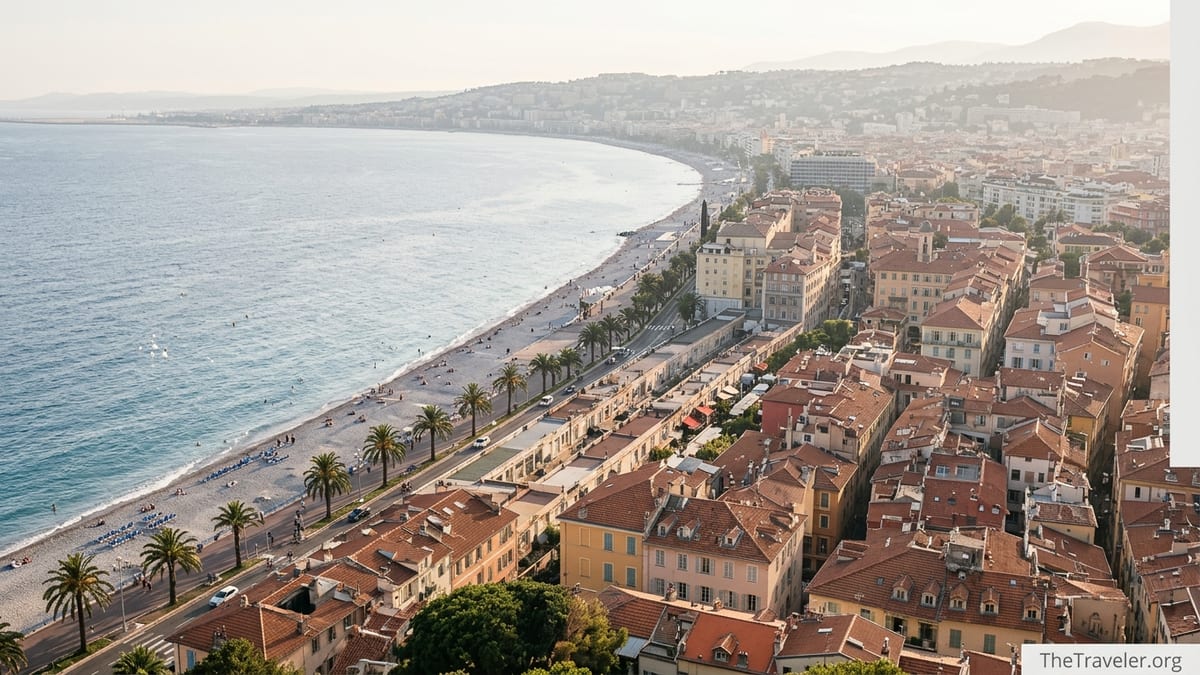
For well over a century, Nice has been the shorthand for the good life on the Côte d’Azur: palm trees along the Baie des Anges, Belle Époque facades glowing in late‑day light, café terraces humming until midnight. Yet what is striking in recent years is not just Nice’s postcard beauty, but how consistently travelers keep choosing it as their base on the French Riviera. With record-breaking air connections, a hotel scene for every budget, and a calendar full of high-profile events, Nice has quietly evolved from a winter resort for European aristocrats into a year‑round city that works just as well for a long weekend as for a week‑long coastal road trip.
Get the latest updates straight to your inbox!
A Riviera Classic That Keeps Reinventing Itself
Nice has long been synonymous with the Côte d’Azur, but the city visitors encounter today is far from frozen in time. Historic icons such as the palm‑lined Promenade des Anglais still define the seafront, yet the city has invested heavily in public spaces, transport and cultural sites, giving repeat visitors new reasons to return. The Promenade itself, roughly 7 kilometers of sea-facing walkway from the airport to the eastern edge of town, remains the city’s open‑air living room, where joggers, cyclists, families and sunbathers share the same strip of waterfront from dawn to late evening.
At the same time, Nice has been steadily modernizing. The seafront tram line connects the airport directly to the city center, so travelers landing in the evening can often be checking into a hotel around Place Masséna or in Vieux Nice within 30 to 40 minutes of touchdown, with a single tram ticket costing just a few euros. The Promenade du Paillon, a linear park that links the seafront near Jardin Albert 1er with the theater district, has transformed what used to be busy traffic corridors into fountains, lawns and play areas that make the city feel more livable for visitors and residents alike.
These improvements show up in the numbers. Local tourism data for the Côte d’Azur indicates that millions of overnight stays are concentrated in and around Nice each year, with the city continuing to attract both traditional European markets and growing long‑haul segments. Travelers feel the benefits in simple, concrete ways: it is easier to arrive, easier to move around without a car, and easier to combine seaside downtime with urban discoveries, from galleries and local markets to neighborhood bistros.
Effortless Access and Growing Flight Connections
One of the strongest reasons travelers keep choosing Nice is how simple it has become to reach. Nice Côte d’Azur Airport is France’s second‑busiest hub after Paris, and its international role has expanded significantly. In the 2024 summer season, the airport scheduled around 122 destinations in 45 countries, including a record number of long‑haul routes to North America and the Gulf. For practical trip‑planning, that translates to direct seasonal or year‑round flights from cities such as New York, Montreal, Dubai and Doha, in addition to dense links with European gateways like London, Paris, Amsterdam and Frankfurt.
These route additions do not just matter for aviation enthusiasts; they change how people actually travel. A couple from Toronto can now board an overnight flight and wake up on the Mediterranean without changing planes in Paris. A family from the Middle East can pair Nice with Monaco and the Italian Riviera in a single trip, flying in on a direct service from Riyadh or Dubai. More competition on busy routes often helps moderate fares, especially outside of peak July and August, so it is not unusual to see off‑season round‑trip tickets from major European cities for under 150 to 200 euros when booked in advance.
Once on the ground, the airport’s location is another major plus. Terminal 1 sits right on the seafront at the western end of the Promenade des Anglais. The city tram line connects both terminals to key stops such as Jean Médecin and Garibaldi in roughly 25 minutes, making it realistic to land mid‑morning and be having a coffee in the Old Town by late morning. For travelers connecting to nearby destinations, regular TER regional trains and intercity buses from Nice‑Ville station and the airport serve Cannes, Antibes, Menton and even Italian towns like Ventimiglia, reinforcing Nice’s role as a practical base for exploring the wider region.
A Seafront Lifestyle You Can Step Straight Into
For many repeat visitors, the enduring draw of Nice is the ease with which you can slip into a Mediterranean rhythm. The Promenade des Anglais, recognized in recent years for its heritage value, is central to that experience. From early morning, locals head out for runs along the Baie des Anges, commuters pedal e‑bikes in the dedicated cycle lane, and dog walkers claim their favorite benches. Late in the day, the same stretch fills with people watching the sky change color over the water, often from the city’s famous blue metal chairs that line the promenade.
The beaches themselves, mostly smooth pebbles rather than sand, are a characteristic part of the city’s identity. Public sections are free to access and run the length of the bay, while private beach clubs set up seasonal decks with loungers, parasols and table service. Prices vary, but in high summer it is common to pay roughly 25 to 40 euros per person for a full‑day lounger at a mid‑range club, slightly more for a front‑row spot with towel service and showers. This mix gives travelers freedom: one day you might simply spread a towel on the public beach near Opéra Plage, the next you might splurge on a daybed at a chic spot closer to the Negresco hotel.
Water activities are straightforward to arrange. Kayak and stand‑up paddle rentals operate from several points along the seafront during the season, typically charging around 15 to 20 euros per hour. Boat tours out into the bay or along the coast toward Villefranche‑sur‑Mer and Cap Ferrat can be booked from kiosks in the harbor, with short cruises starting near 25 to 30 euros per person. Importantly, all of this is within walking or tram distance of most central hotels and apartments, so you can be sitting at a café table in Vieux Nice one moment and floating in clear water 15 minutes later.
Characterful Neighborhoods and Year‑Round Culture
Beyond its waterfront, Nice continues to win travelers over with its mix of neighborhoods, each offering a distinct atmosphere. Vieux Nice, wedged between the sea and Castle Hill, remains a highlight. Its narrow lanes, pastel facades and baroque churches feel almost Italian, a reminder of the city’s history before it became part of France in the 19th century. In the morning, the Cours Saleya market is filled with flower stalls, seasonal produce and vendors selling local specialties; by evening, the same square turns into a lively outdoor dining room with terraces serving socca, stuffed vegetables and seafood.
North of the Old Town, the modern city stretches out along avenues like Jean Médecin, where international brands, cinemas and department stores sit alongside cafés and bakeries. Place Masséna, with its checkerboard paving and red‑fronted buildings, functions as a central meeting point, especially in the evening when the light installations come on. A few minutes’ walk away, the Promenade du Paillon’s lawns and fountains offer families a place to let children run off steam, while older visitors relax in the shade with takeaway coffee.
Culturally, Nice offers more depth than many seaside destinations. The city’s museums include the Musée Matisse in the Cimiez district, housed in a 17th‑century villa amid olive trees, and the Museum of Modern and Contemporary Art (MAMAC) near Place Garibaldi, showcasing works by artists associated with the Nice School and the broader European avant‑garde. Entry fees are generally modest, and the city periodically offers combined passes that keep costs predictable for culture‑focused travelers. For many visitors, this blend of beach and gallery, market and museum means they can spend a week in Nice without feeling they have exhausted its possibilities.
Value, Choice and Practical Comforts for Every Budget
Compared with some of its more exclusive neighbors on the Côte d’Azur, Nice tends to offer better value, especially outside peak weeks in July and August. The city’s large inventory of hotels and rentals keeps prices relatively competitive. On an average spring or autumn weekend, simple but well‑located three‑star hotels near the train station or in the city center might run between 100 and 160 euros per night, while contemporary four‑stars along or just behind the Promenade often range from 220 to 350 euros depending on sea views and amenities. During major summer events, those figures can rise sharply, yet even then it is often possible to find more affordable rooms in residential districts like Libération or Riquier, a few tram stops from the seafront.
Food and daily expenses are similarly flexible. A coffee at a standing bar in a local café may cost close to 2 euros, while a sit‑down cappuccino on the Promenade will be higher, reflecting the view. Lunchtime fixed‑price menus in bistros away from the busiest squares commonly fall in the 18 to 25 euro range for two or three courses, allowing visitors to sample Provençal dishes without breaking the budget. Self‑caterers staying in apartments often head to neighborhood markets or supermarkets, where prices are broadly in line with other French cities, and stock up on fruit, cheese and rosé to enjoy picnics on the beach or in parks.
For families and longer stays, practical comforts matter. Nice’s tram and bus network covers most areas that visitors stay in, with single tickets costing only a few euros and multi‑ride or day passes bringing down the cost further. The city center is flat and walkable, so many travelers happily combine public transport with walking, skipping car rentals entirely. For those who do hire a vehicle to explore inland villages or coastal roads, several underground car parks near the center offer daily rates that, while not cheap, are more predictable than hunting for street parking during high season.
A Launchpad for Easy Day Trips Across the Riviera
Another reason travelers keep anchoring their trips in Nice is the sheer range of day trips possible without changing hotels. Regional trains from Nice‑Ville station reach Antibes in roughly 20 to 25 minutes, Cannes in about 35 minutes and Menton near the Italian border in under an hour, with ticket prices that are usually under 15 euros one‑way in second class. This makes it realistic to spend your mornings on a Nice beach, then be strolling past the ramparts in Antibes or along the Croisette in Cannes in time for lunch.
To the east, the cliff‑side village of Èze and the principality of Monaco are classic excursions. Buses climb from Nice up to Èze‑Village, where travelers can wander cobbled alleys and visit the hilltop exotic garden with sweeping sea views. Monaco is an easy hop along the coast by train, with many visitors timing their arrival to see the Prince’s Palace, the old town and the harbor before returning to Nice for dinner. Further inland, organized tours and self‑drive routes open up the backcountry of the Alpes‑Maritimes, where perched villages, gorges and lavender fields contrast strikingly with the busy seafront.
Practically, basing in Nice simplifies logistics. You can book an apartment or hotel for an entire week, unpack once and use the city as a hub, rather than shifting luggage between several expensive coastal resorts. For example, a couple might stay in an apartment near Place Garibaldi, spend two full days exploring Nice on foot, then dedicate other days to Antibes and Cannes by train, Èze and Monaco by bus, and perhaps a boat trip to the Lérins Islands. Each evening, they return to familiar streets, favorite cafés and a tram system they already understand, reducing the friction that often comes with moving between destinations.
Events, Seasons and a City That Stays Lively
Nice’s appeal is no longer limited to summer holidays. The city now draws visitors in all seasons with a roster of events and a generally mild Mediterranean climate. In winter, daytime temperatures often hover in the low teens Celsius, cool but pleasant enough for outdoor café terraces, especially when sheltered from the wind. This is when the famous Nice Carnival, typically held in February, fills Place Masséna and the Promenade with parades and illuminated floats, adding a festive layer to off‑season stays and encouraging travelers to return at a different time of year.
In recent years, major sporting events have also spotlighted the city. The final stage of the Tour de France concluded in Nice in 2024, replacing the traditional Paris finish and bringing global attention to the seafront as riders sprinted along the Promenade des Anglais. The city also hosted football fixtures and training camps linked to international tournaments. For visitors, this translates less into one‑off spectacles and more into an underlying sense that Nice is a place where things are happening, from triathlons and marathons to open‑air concerts and food festivals.
Seasonality remains a key part of the city’s rhythm, but each season has its advantages. July and August offer reliably warm sea temperatures and a buzzing nightlife, though hotel rates peak and beaches feel busiest. Shoulder months such as May, June, September and early October often deliver warm days, quieter promenades and more favorable prices on both flights and rooms. Even in November or March, travelers report enjoying long seafront walks, museum visits and leisurely lunches, using Nice as a comfortable base while exploring less‑crowded coastal paths and inland villages.
The Takeaway
Nice’s continued popularity as a Côte d’Azur getaway is not simply inertia or brand recognition. The city has leveraged its enviable natural setting and Belle Époque heritage while quietly improving the pieces that matter most to modern travelers: flight connections, public transport, pedestrian spaces and cultural offerings. It remains recognizably itself, with the same curve of the Baie des Anges, the same markets and pastel facades, yet it now functions as a smarter, more convenient gateway to the wider Riviera.
For first‑time visitors, Nice offers a low‑stress introduction to the French Mediterranean: a place where you can land, hop on a tram, and be walking along the sea within the hour, with ample accommodation and dining choices at every price point. For repeat guests, the city’s evolving neighborhoods, events and restaurant scene keep trips feeling fresh. Whether you come for a long weekend of seafront strolls and museum visits, or a week using Nice as a hub for day trips to Cannes, Monaco and beyond, it is easy to see why travelers keep coming back to this enduring Riviera classic.
FAQ
Q1. Is Nice a good base for exploring the rest of the Côte d’Azur?
Yes. Regular regional trains and buses link Nice with Cannes, Antibes, Menton, Monaco and villages like Èze, so you can explore widely without changing hotels.
Q2. When is the best time of year to visit Nice?
For many travelers, late spring and early autumn offer the best balance of pleasant temperatures, swimmable sea, fewer crowds and more moderate hotel prices.
Q3. Are Nice’s beaches sandy or pebbly?
Most central Nice beaches are smooth pebbles rather than sand. Many visitors pack water shoes for comfort when entering the sea, or use beach‑club decks and ladders.
Q4. Do I need a car to enjoy Nice and the Côte d’Azur?
No. The city is walkable, the tram and bus network is extensive, and regional trains cover most Riviera towns. A car is helpful mainly for deeper inland excursions.
Q5. How expensive is Nice compared with other Riviera resorts?
Nice is usually more affordable than ultra‑luxury spots like Saint‑Tropez or Monaco, thanks to its larger choice of mid‑range hotels, apartments and casual dining options.
Q6. How far is Nice airport from the city center?
Nice Côte d’Azur Airport sits at the western end of the seafront. The tram reaches central stops such as Jean Médecin in about 25 minutes with inexpensive tickets.
Q7. Is Nice safe for solo travelers and families?
Nice is generally considered safe, with busy central areas day and night. As in any city, standard precautions with belongings in crowds and on the beach are advisable.
Q8. Can I swim in the sea in Nice outside of summer?
Many people swim from roughly May to October, depending on tolerance for cooler water. Shoulder seasons can offer sunny days with fewer crowds on the beach.
Q9. What local foods should I try in Nice?
Look for socca (chickpea pancake), pan bagnat (Niçoise tuna sandwich), stuffed vegetables, pissaladière (onion tart) and salads made with local olive oil and produce.
Q10. How many days should I plan for a first trip to Nice?
A three‑night stay gives time for the Old Town, seafront and one day trip. Five to seven nights allow a mix of beach time and several excursions along the Côte d’Azur.