


More news on this day
Europe’s new biometric Entry/Exit System is colliding with peak summer demand, with publicly available data and airline statements indicating mounting queues and disruption across major Ryanair bases from Spain’s Mediterranean coast to Poland’s tourist hubs.
Get the latest news straight to your inbox!
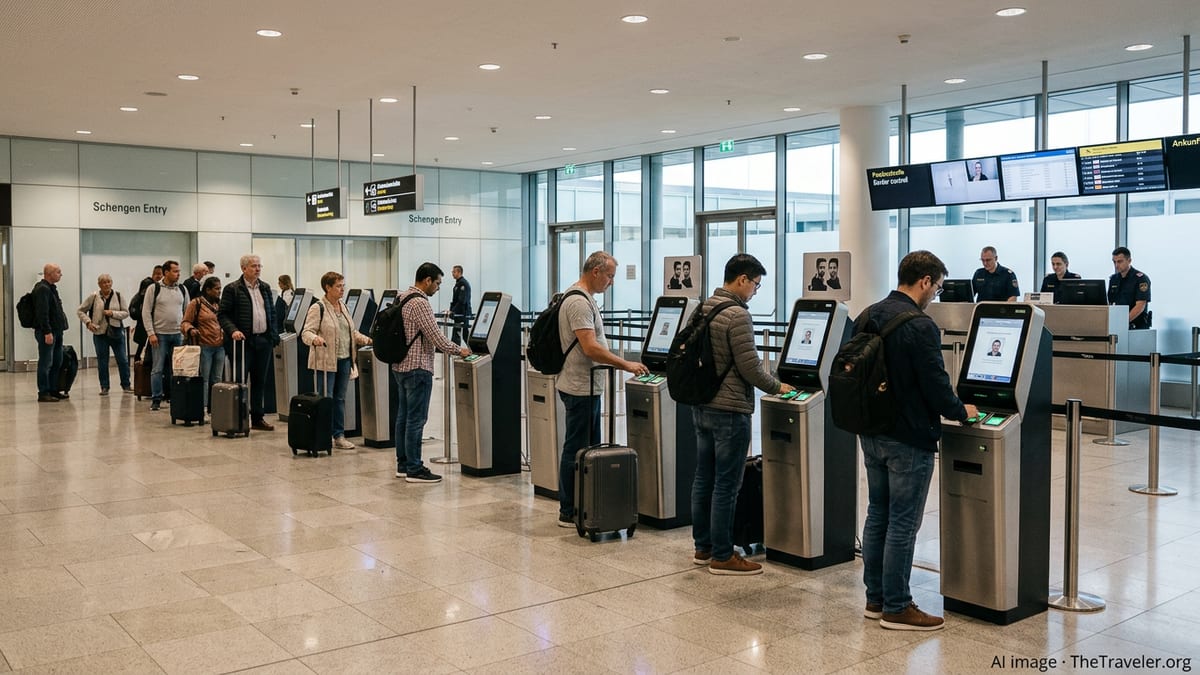
Ryanair Targets EES Rollout as Delays Mount Across Europe
Ryanair is intensifying warnings over the impact of the European Union’s new Entry/Exit System, highlighting growing disruption at a cluster of popular holiday airports in Spain, Poland, Italy and France. The low cost carrier has pointed to Palma de Mallorca, Alicante, Tenerife South and Malaga in Spain, Milan Bergamo in Italy, Krakow in Poland and Paris Beauvais near the French capital as particular pressure points where border queues are spilling into airline operations.
Published coverage of a recent Ryanair briefing indicates the airline is urging European governments to pause or significantly relax EES checks for the peak months of July and August. The carrier argues that, although the biometric process adds only a few minutes per traveler, the cumulative effect at leisure hubs handling dense waves of non EU arrivals is producing multi hour waits at passport control and missed departures on some days.
The concerns coincide with a rebound in summer traffic that has pushed many European airports back above pre pandemic passenger levels. Industry analysis suggests that even relatively modest processing slowdowns can rapidly overwhelm facilities that were originally designed around faster, stamp based border checks rather than full biometric enrollment for every eligible non EU passenger.
Ryanair’s warnings follow similar messages from other airlines serving the same markets. Publicly available information shows that carriers have begun advising customers to arrive much earlier for flights and to expect longer waits at the border, particularly on busy weekend and evening peaks when multiple UK and long haul services are scheduled to land within short time windows.
Palma de Mallorca and Alicante Emerge as Spanish Flashpoints
Reports from aviation outlets and passenger testimonies indicate that Palma de Mallorca and Alicante Elche Miguel Hernández have quickly become emblematic of the EES challenge in Spain. Both airports handle high volumes of short haul leisure traffic from the United Kingdom and other non Schengen markets, making them early test cases for how the system copes with compressed arrival banks.
At Palma, one of Europe’s busiest holiday gateways, data from travel industry monitoring sites and airline communications suggest that queues at passport control have at times stretched well beyond the designated border hall, particularly when multiple inbound flights from the UK, Ireland and Scandinavia land within a short period. Some airlines serving the Balearic hub have begun issuing direct guidance to customers to allow significant additional time on arrival and departure to clear border formalities under the new system.
Alicante, a key gateway for the Costa Blanca and a major base for Ryanair, is also under scrutiny. Regional media in Spain have carried comments from the airline’s leadership describing the EES rollout as a “chaos” risk at medium sized airports such as Alicante, with concerns that limited physical space for border control and high dependency on non EU holiday markets could create prolonged bottlenecks this summer.
While not every day has produced severe congestion, travel forums and crowd sourced wait time trackers point to highly variable experiences, with some passengers reporting relatively smooth passage and others citing waits of several hours when systems slow or staff are overwhelmed by simultaneous arrivals.
Krakow and Poland Pulled Into the EES Firing Line
The focus on Poland has sharpened as Ryanair and other carriers flag Krakow as one of the airports most exposed to EES related disruption in Central Europe. The city’s John Paul II International Airport serves as a major base for low cost airlines and a gateway for both inbound tourism and outbound Polish travelers heading across the Schengen area.
Ryanair oriented reports list Krakow alongside Spanish, Italian and French airports as locations where the new biometric checks are already contributing to lengthier queues for non EU nationals. With Poland positioned on the external Schengen border for many routes, the performance of its passport control lines under the new regime is likely to have wider implications for travel flows across the region.
Publicly available European Union documentation on the Entry/Exit System underscores that member states have some flexibility in how they phase in equipment and staffing, within an overall framework designed to improve security and automate border records. In practice, however, airport and airline groups argue that resource constraints and physical space limits at terminals such as Krakow are hindering the rapid scaling up of biometric booths and e gates needed to keep pace with peak season demand.
Passenger accounts shared online suggest that, as in southern Europe, delays at Polish border posts can be highly uneven from day to day. On quieter weekdays, travelers describe relatively normal processing times, while on busy weekends and public holidays queues can swell rapidly when multiple non EU flights arrive close together and first time EES registrations slow the flow.
France and Italy Join the List of Troubled Gateways
In France and Italy, Ryanair is drawing particular attention to Paris Beauvais and Milan Bergamo, two airports heavily reliant on low cost traffic and point to point leisure flows. Coverage of the airline’s recent statements indicates that both airports are now seeing regular periods of congestion at border control, especially for departures to and arrivals from the United Kingdom and other non Schengen markets.
At Milan Bergamo, one of northern Italy’s fastest growing secondary airports, aviation commentary notes that infrastructure built around rapid turnarounds and short walking distances is now under pressure from longer dwell times at the border. Ryanair and other carriers have adjusted schedules and boarding gate practices to factor in the possibility that significant numbers of passengers may still be stuck in queues as departure times approach.
Paris Beauvais, a key low cost gateway to the French capital region, is facing similar dynamics. Passenger reports describe crowded arrival halls at peak times and confusion among some travelers encountering EES kiosks for the first time. Industry observers say that staffing flexibility and additional signage will be critical at such airports to prevent queues from spilling back into airside circulation areas and affecting overall terminal safety.
The situation at these French and Italian hubs is feeding into broader calls from airline and airport associations for temporary derogations that would allow border posts to scale back EES use during the busiest summer weeks, in order to protect punctuality and avoid cascading delays across the network.
Industry Pushes for Temporary EES Relief While EU Tweaks Rules
Across Europe, airline and airport groups are stepping up public pressure on Brussels to allow more operational leeway during the first full peak season under EES. Joint industry letters and position papers argue that the current combination of mandatory full biometric registration for many travelers and limited staffing flexibility is creating what some airport leaders describe as an unmanageable situation at certain border posts.
Trade bodies representing both carriers and airports have warned that, without temporary relief, the system could produce rolling disruption throughout July and August as holiday traffic peaks. They have called for measures ranging from expanded use of pre enrollment tools and e gates to temporary suspension of EES in extreme cases where queues threaten safety or force large numbers of passengers to miss flights.
European institutions have already begun to adjust parts of the framework in response to the early experience. Recent updates to publicly available guidance indicate that authorities are simplifying requirements for some low risk nationalities at selected airports, particularly where trial data suggest that full fingerprinting and repeated checks may not be necessary to meet security objectives during the initial rollout phase.
For travelers planning summer trips through Ryanair’s key gateways, the evolving policy debate may offer limited immediate comfort. As of early July 2026, the most consistent advice from airlines and travel experts remains to allow significantly more time at departure and to be prepared for variable conditions at passport control in some of Europe’s busiest leisure airports.