


More news on this day
Singapore Airlines is deepening its commitment to Europe with a new Singapore–Barcelona–Madrid service and additional flights to several major cities for the 2026–27 northern winter season.
Get the latest news straight to your inbox!
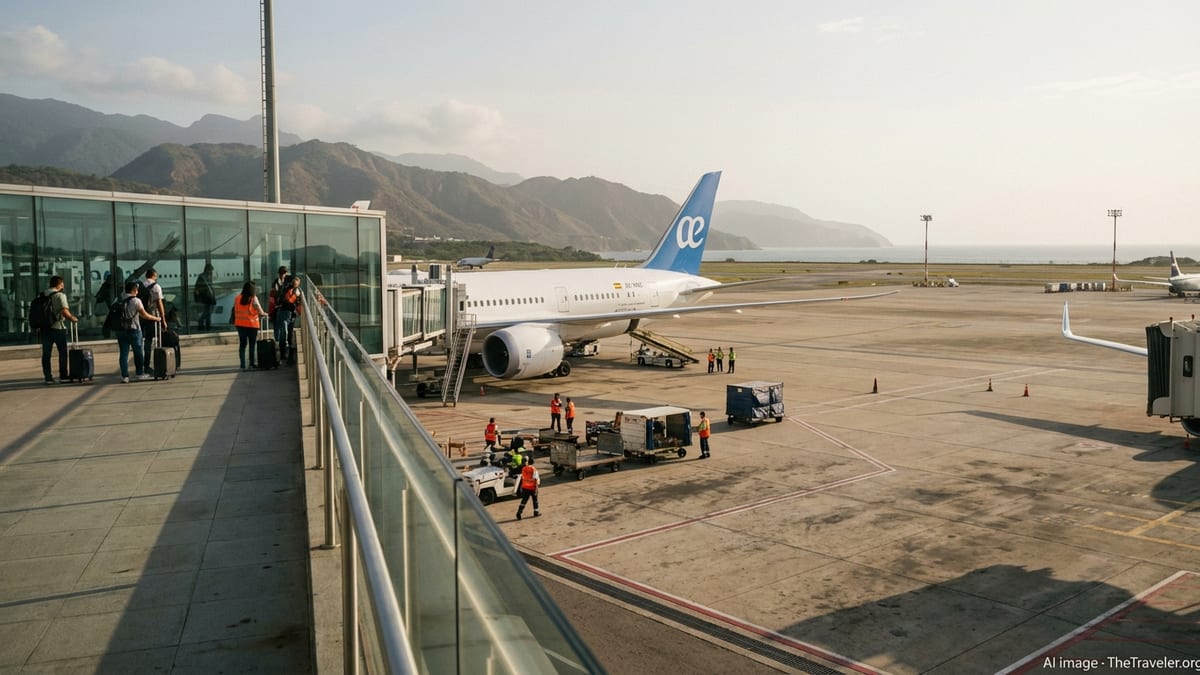
Madrid returns to the Singapore Airlines network
Madrid is set to rejoin the Singapore Airlines network from 26 October 2026, marking the carrier’s 15th destination in Europe and its second in Spain. Publicly available information shows that the new service will operate five times weekly, routed Singapore–Barcelona–Madrid, using Airbus A350-900 aircraft.
The new flights will build on the airline’s existing presence in Barcelona. Current Singapore–Barcelona services are being restructured so that the same flight numbers will extend onward to the Spanish capital, creating a one-stop option between Singapore and Madrid while preserving connectivity to Catalonia.
Schedule data published in aviation and travel industry reports indicates that flight SQ388 is expected to depart Singapore late in the evening and arrive in Barcelona the following morning, before continuing to Madrid. The return service, SQ387, is set to leave Madrid mid-morning, route via Barcelona, and reach Singapore the next day, giving travellers daylight connections out of Spain and overnight flying times between Europe and Asia.
Madrid has not been part of the Singapore Airlines network since it was last served via Paris in 2004. Its reintroduction underscores the growing importance of Spain as both a leisure and business market, as well as the broader recovery of long-haul demand between Europe and Southeast Asia.
Frequency increases on key European routes
The new Madrid link is part of a wider reshaping of Singapore Airlines’ European schedule for the northern winter 2026/27 season, which runs from late October 2026 to late March 2027. According to published coverage, the airline plans to raise frequencies on several existing routes where demand has rebounded strongly.
Routes earmarked for additional capacity include London Gatwick in the United Kingdom, Milan in Italy and Munich in Germany. In each case, the airline intends to add weekly flights to offer travellers more choice of departure days and times, while also strengthening onward connectivity across Southeast Asia and the South Pacific via its Changi hub.
Industry summaries indicate that some routes, such as Singapore–Manchester and Singapore–Milan, are moving towards daily service patterns, while Munich is set to exceed once-daily frequencies. The expanded schedules are designed to give corporate travellers more flexibility on weekdays and to cater to growing leisure traffic over weekends and peak holiday periods.
These additions come on top of earlier announced increases for the 2026 northern summer season, including extra services to Amsterdam. Combined, they suggest a multi-season strategy to build capacity on proven European routes rather than relying solely on new destinations to drive growth.
Strategic focus on Europe as demand rebounds
Recent financial and network updates from the airline group show that Europe remains one of Singapore Airlines’ most important long-haul regions. Passenger demand between Asia-Pacific and European gateways has been recovering steadily, supported by the return of tourism, business travel and visiting-friends-and-relatives trips.
By adding Madrid and boosting capacity to cities such as London, Milan, Munich and Amsterdam, the carrier is positioning itself to capture a larger share of this demand. The combination of a broad European footprint and a dense network across Southeast Asia, Australia and India allows the airline to offer one-stop itineraries that compete with both Gulf and European rivals.
Analysts note that the Madrid routing via Barcelona is consistent with this strategy. It allows Singapore Airlines to serve two major Spanish markets using a single flight, optimising aircraft utilisation while giving customers additional city-pair options, including Barcelona–Madrid links under the same flight number. This approach can be especially attractive to travellers who prefer to remain on one carrier throughout their journey.
The capacity increases in Europe also contribute to higher connectivity at Singapore Changi Airport, an important hub for traffic flows between Europe, Australasia and Southeast Asia. More arrivals from Europe mean more potential passengers for onward services, improving load factors across the broader network.
Aircraft deployment and onboard product
The Madrid service and many of the enhanced European frequencies are planned to use the Airbus A350-900, which is already a mainstay of Singapore Airlines’ long-haul fleet. The type is known for its fuel efficiency and range, making it well suited to the distances involved on Europe–Singapore sectors.
Network filings and public briefings indicate that the airline intends to continue refining its cabin products over the coming years. The group has signalled plans to unveil next-generation long-haul cabins and refreshed in-flight entertainment towards the end of 2026, coinciding with the period when the new Madrid route and wider European expansion will be in full operation.
For passengers, this could translate into updated seating, new amenity kits and an expanded entertainment catalogue on key European routes. While full details of the upcoming product changes have not yet been published, the timing suggests that travellers on the Madrid flights and other upgraded services may be among the first to experience the refreshed onboard offering.
The use of a consistent widebody type also simplifies scheduling and offers flexibility for future adjustments. If demand continues to grow, the airline will have the option to tweak frequencies or adjust capacity on specific routes without significant changes to its overall fleet plan.
Implications for travellers and tourism
For travellers in Spain, the new Madrid connection will provide a direct link to Singapore and one-stop access to a wide range of Asian and Pacific destinations via Changi. This could be particularly appealing for business travellers heading to financial and technology hubs, as well as leisure passengers bound for beaches in Thailand, Indonesia and the Philippines, or for cities in Australia and New Zealand.
Tourism bodies are expected to view the additional capacity positively, as more seats typically support higher visitor numbers in both directions. Spanish destinations could see more arrivals from Southeast Asia and Australasia, while Singapore and neighbouring countries may benefit from increased numbers of European holidaymakers taking advantage of the new schedules.
For North American and other long-haul travellers, the expanded European network may also open up new multi-city itineraries combining Spain or other European stops with time in Singapore and beyond. The ability to enter or exit Europe via different cities, such as arriving in Amsterdam and returning from Madrid, could become more convenient as schedules are built out.
As airlines globally continue to refine their networks after several years of volatility, Singapore Airlines’ decision to restore Madrid and strengthen multiple European routes signals confidence in sustained demand on the Europe–Asia corridor and highlights the strategic role of its Changi hub in connecting the two regions.