


More news on this day
Premium economy has shifted from a niche extra to a central battleground for long-haul airlines in 2026, as carriers race to offer more comfort without business-class prices.
Get the latest news straight to your inbox!
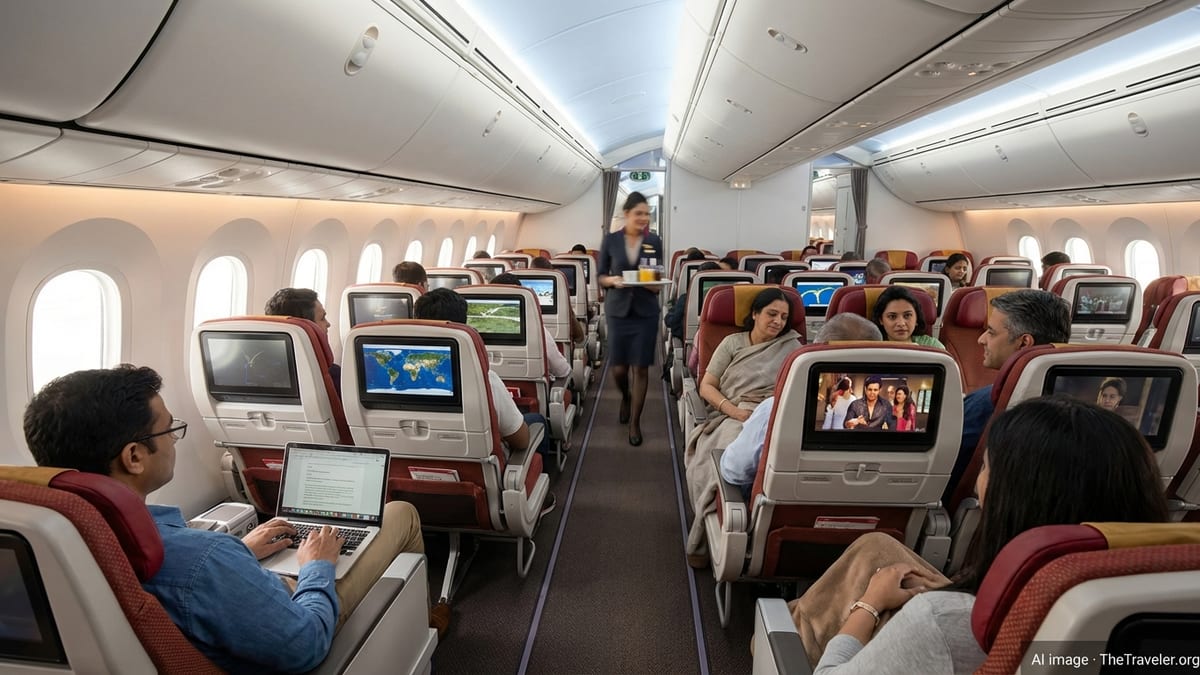
How Premium Economy Became the 2026 Sweet Spot
Industry data and recent rankings show that demand for a mid-tier cabin has accelerated since international travel fully rebounded, with many travelers no longer content with standard economy on flights of eight hours or more. Premium economy now commonly offers wider seats, extra legroom, a separate cabin and upgraded dining, at a price that is still significantly below business class.
Analyst reports and airline financial disclosures indicate that these cabins have become among the most profitable square meters on an aircraft, encouraging carriers to retrofit older jets and prioritize premium economy on new deliveries. Airlines that invested early, or that have recently unveiled new-generation seats, are now seeing their products highlighted in traveler surveys and independent rankings for 2026.
As a result, the competition has intensified around a few factors that travelers value most: seat width and pitch, recline and leg rests, cabin layout and noise levels, and consistent soft-product touches such as food, amenities and service training.
Emirates and Japan Airlines Set the Global Benchmark
In the 2026 travel season, Emirates and Japan Airlines are frequently cited by traveler-led awards, specialist aviation sites and industry roundups as setting the standard for premium economy. Both carriers combine hard-product comfort with consistent service and a wide network of routes where the cabin is available.
Emirates has expanded its premium economy quickly across its Airbus A380 and selected Boeing 777 aircraft, creating a large, dedicated cabin with a 2-4-2 layout, generous pitch, deep recline and calf rests. Travel features published in 2026 describe the cabin as offering near-business-class comfort in terms of space, along with the carrier’s extensive entertainment system and upgraded multi-course meals served on china in a quieter environment at the front of the main deck.
Japan Airlines continues to draw strong praise in global rankings for its spacious premium economy seats and thoughtful design, particularly on long-haul routes to North America and Europe. Reviews point to wide seats with fixed-shell designs or deep recline, large personal screens, leg rests and substantial under-seat space that allows for easier movement. The airline’s emphasis on considerate service, noise control and high-quality catering has helped keep its premium economy at or near the top of independent league tables.
Both carriers also benefit from operating premium economy on a high proportion of their flagship long-haul routes, making it easier for regular travelers to book the product without complicated aircraft changes or route-specific exceptions.
Virgin Atlantic, EVA Air and Cathay Pacific Compete for Comfort
Virgin Atlantic’s premium economy has long been a favorite among frequent travelers, and recent awards in 2025 and 2026 maintain its reputation as one of the strongest products across the Atlantic. Publicly available rankings highlight its distinctive deep-purple seats, substantial width, generous pitch and dedicated cabin. Travelers also point to small but meaningful touches such as welcome drinks, upgraded meals and attentive cabin crews that reinforce a feeling of being in a clearly separate class from standard economy.
EVA Air, which was one of the first airlines to launch a true premium economy decades ago, continues to appear prominently in 2026 assessments of the cabin. Reports describe EVA’s “Elite” or premium economy seats as among the most comfortable in terms of cushioning and support on ultra-long routes across the Pacific, with a focus on quiet cabins, large personal screens and reliable, methodical service. The consistency of the hard product on its long-haul fleet helps keep passenger satisfaction scores high.
Cathay Pacific has been refreshing its long-haul cabins, and coverage of recent aircraft deliveries notes a renewed focus on premium economy as an important bridge between its flagship business-class suites and a densified economy cabin. On many routes between Asia, Europe and North America, Cathay’s premium economy offers wider seating with leg rests, upgraded dining and a calmer cabin section, an attractive proposition for business travelers whose companies have tightened travel policies.
Together, these three Asian and transatlantic carriers illustrate how design details and soft-product refinement can keep a premium economy product competitive even as more airlines enter the segment.
North American and European Carriers Narrow the Gap
North American airlines once lagged behind their Asian and Gulf competitors in premium economy, but recent rankings and passenger surveys suggest they have begun to close the gap. Delta Air Lines in particular has drawn attention in 2026 after topping a major customer-satisfaction study in the premium economy segment, which measured factors such as onboard experience, staff interactions, ease of travel and digital tools.
Delta’s Premium Select cabin, now widely available on its international widebody fleet, offers wider seats with leg rests, a clearly separated cabin, upgraded dining and noise-reducing headsets. Reports indicate that passengers value the combination of extra space and predictable soft-product standards, especially on transatlantic and transpacific routes where business-class fares have surged.
American Airlines and United Airlines have also accelerated premium economy rollouts on new long-haul aircraft, including Boeing 787s and, in United’s case, forthcoming narrow-body jets configured for long-range flying. Industry coverage suggests that while their seat designs may be somewhat less spacious than the very top-tier Asian or Gulf products, the improvement over standard economy, especially in shoulder room and recline, is substantial enough that many travelers now view premium economy as the default choice when company budgets or personal finances cannot stretch to business.
Among European carriers, Lufthansa, Air France and British Airways have continued to refine their premium economy offerings with updated seats and refreshed soft products, seeking to match higher-rated competitors on comfort while capitalizing on strong demand from corporate and leisure travelers across the Atlantic and to Asia.
How Travelers Can Decide Which Premium Economy Is Best
With many airlines now marketing premium economy aggressively, the label alone is no guarantee of a superior experience. Seat maps and independent reviews show that pitch can vary by several inches between carriers, and cabin layouts can range from relatively spacious 2-3-2 or 2-4-2 configurations to tighter arrangements that feel closer to standard economy.
Travel analysts advise focusing on specific aircraft types when comparing options. On some airlines, the newest widebody jets or recently refurbished A380s feature the best premium economy seats, while older aircraft may carry previous-generation products with reduced recline or smaller screens. Published reviews also highlight differences in soft product, from multi-course meals and amenity kits to the availability of priority check-in and extra baggage.
Price differentials are another key factor. In 2026, fare data show that the premium over standard economy can range from relatively modest on certain off-peak routes to nearly business-class levels during peak periods. For travelers who value sleep and personal space on overnight flights but cannot justify lie-flat business seats, the airlines leading current rankings, including Emirates, Japan Airlines, Virgin Atlantic, EVA Air, Cathay Pacific and Delta, are frequently identified as offering the best balance between cost and comfort.
As more carriers modernize their fleets and retrofit cabins, competition in premium economy is likely to intensify further, giving long-haul passengers more choice and pushing airlines to continue improving this increasingly important middle ground.