


More news on this day
The United States has consolidated its status as the world’s largest air passenger market, handling about 890 million travelers in 2025, according to newly released World Air Transport Statistics from the International Air Transport Association (IATA).
Get the latest news straight to your inbox!
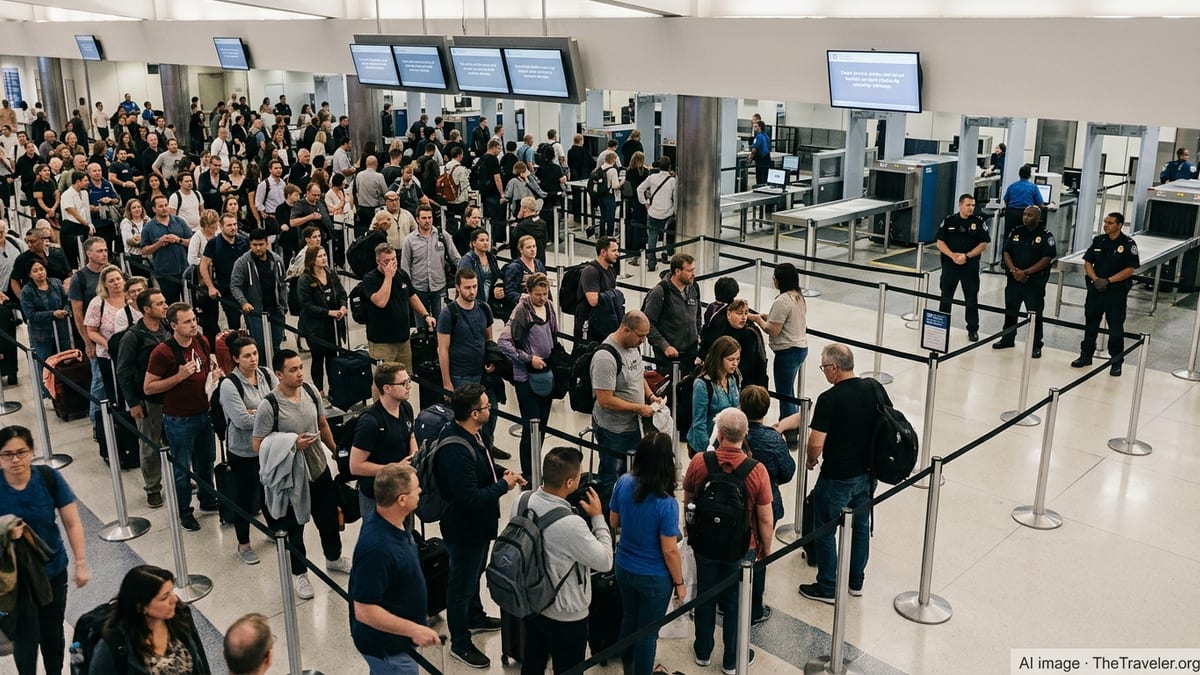
Latest IATA Data Confirms US on Top of Global Rankings
The latest edition of IATA’s World Air Transport Statistics report indicates that the United States remained the biggest passenger market worldwide, with 890.1 million passengers arriving and departing on scheduled services in 2025. The figure reflects the scale of both domestic and international demand and underscores the central role of the US in global aviation networks.
Publicly available information from the report shows that the US market stayed ahead of all other countries in terms of total passengers carried, continuing a long-running trend reinforced by the strength of its domestic network. The data encompass all scheduled operations by IATA member carriers and other airlines, providing a broad snapshot of global traffic patterns.
The ranking highlights how quickly US air travel has not only recovered from the pandemic shock but has expanded well beyond earlier levels. While several regions have experienced strong rebounds, the size of the US market means relatively modest percentage gains translate into very large absolute increases in passenger numbers.
The report also suggests that the gap between the US and the next-largest national markets remained significant in 2025, even as Asian and Middle Eastern hubs regained momentum. That dynamic positions the United States as a primary driver of global passenger flows and a key reference point for airline capacity and fleet deployment decisions.
Domestic Network Remains the Engine of Growth
IATA’s economic and traffic analyses over recent years have consistently identified the US domestic market as the single largest domestic air corridor in the world. High-frequency services linking hundreds of airports across the country continue to underpin the overall passenger total, supported by a mix of business travel, visiting friends and relatives, and leisure demand.
Monthly passenger market assessments published by IATA and data from the US Bureau of Transportation Statistics indicate that domestic revenue passenger kilometers and enplanements have steadily risen since 2023, with traffic surpassing pre-pandemic levels on several occasions. Strong holiday peaks and resilient demand for travel within the United States have been central to this expansion.
Industry data show that the “big four” US carriers and a range of low-cost and regional airlines have increased seat capacity, particularly on high-density routes linking major hubs and sunbelt destinations. At the same time, airlines have remained cautious about overexpansion, focusing on higher load factors and improved yields, which has helped sustain profitability while keeping planes full.
Beyond major metropolitan areas, smaller and mid-sized airports have also contributed to the overall passenger total. Federal and state investments in runways, terminals, and air traffic infrastructure, combined with airline network strategies, have supported connectivity to more remote regions, feeding additional passengers into the national system.
International Rebound Strengthens US Gateway Role
While domestic flying accounts for the majority of US passengers, international travel has played a growing part in the 890 million figure. IATA’s recent market analyses point to robust growth in transatlantic and transpacific routes as travel restrictions eased and tourism and corporate travel recovered.
Major US gateways on the East and West coasts have seen sustained increases in long-haul services, including higher frequencies to key European, Asian, and Latin American cities. Airports in New York, Atlanta, Dallas-Fort Worth, Los Angeles, Chicago, and Miami rank among the world’s busiest by passenger numbers, reflecting their dual domestic and international roles.
Publicly available statistics from Airports Council International and national regulators show that these hubs serve as critical transfer points, channeling passengers between regional US markets and overseas destinations. A sizable share of travelers counted in the IATA total use the United States as a connection point, particularly on North America–Latin America and North America–Europe itineraries.
Capacity restoration on long-haul routes, the return of widebody aircraft, and the opening of new city pairs have all supported the continued international rebound. Airlines have capitalized on pent-up demand for overseas leisure trips, while corporate travel volumes, though more uneven, have added higher-yield traffic to the mix.
Recovery Milestone for a Market That Drove Global Rebound
The confirmation of 890 million passengers marks a symbolic milestone in the broader global recovery. IATA’s earlier releases for 2023 and 2024 showed that total world passenger demand gradually approached, then matched, pre-2019 levels, with North America and the United States repeatedly among the strongest-performing regions.
Throughout this period, US domestic traffic acted as a stabilizing force at times when international flows were constrained. By maintaining relatively high levels of internal connectivity, US airlines were able to restart networks more quickly once borders reopened, in turn helping global traffic to rebound.
Analysts note that the scale of the US market provides airlines with a deep base of demand to support fleet renewal and investment in new services. The ability to deploy fuel-efficient aircraft at high utilization across dense domestic and transcontinental routes has encouraged carriers to proceed with large aircraft orders and cabin upgrades.
At the same time, the rebound has exposed capacity pinch points at some airports and within air traffic control systems. Industry commentary and official data releases have highlighted episodes of congestion and delay, particularly during peak travel periods, prompting renewed focus on infrastructure and staffing.
Strategic Implications for Airlines, Airports, and Policy
The United States’ position as the largest air passenger market carries significant strategic implications for airlines and policymakers worldwide. For carriers, the size and diversity of US demand influence decisions on alliance partnerships, joint ventures, and fleet deployment, particularly on transatlantic and transpacific corridors.
Airports across the country are responding to the sustained high volumes with multibillion-dollar terminal expansions, runway projects, and technology upgrades. Publicly available project descriptions emphasize improvements in security processing, baggage systems, and passenger amenities designed to accommodate additional travelers while reducing bottlenecks.
From a policy perspective, the 890 million figure reinforces the importance of regulatory frameworks governing competition, consumer protection, safety, and sustainability. Discussions around emissions reduction, sustainable aviation fuel adoption, and airspace modernization frequently reference the outsized contribution of US aviation to global traffic and carbon output.
Looking ahead, forecasts from industry bodies and research institutions suggest further moderate growth in US passenger numbers over the next decade, albeit at a slower pace than the immediate post-pandemic rebound. If those projections hold, the United States is expected to remain the world’s largest air passenger market for the foreseeable future, shaping the trajectory of global aviation strategy and investment.