


More news on this day
Summer holidaymakers heading to Europe are being urged to prepare for long queues and potential missed connections, after Ryanair highlighted 15 airports where new EU border checks are contributing to significant delays.
Get the latest news straight to your inbox!
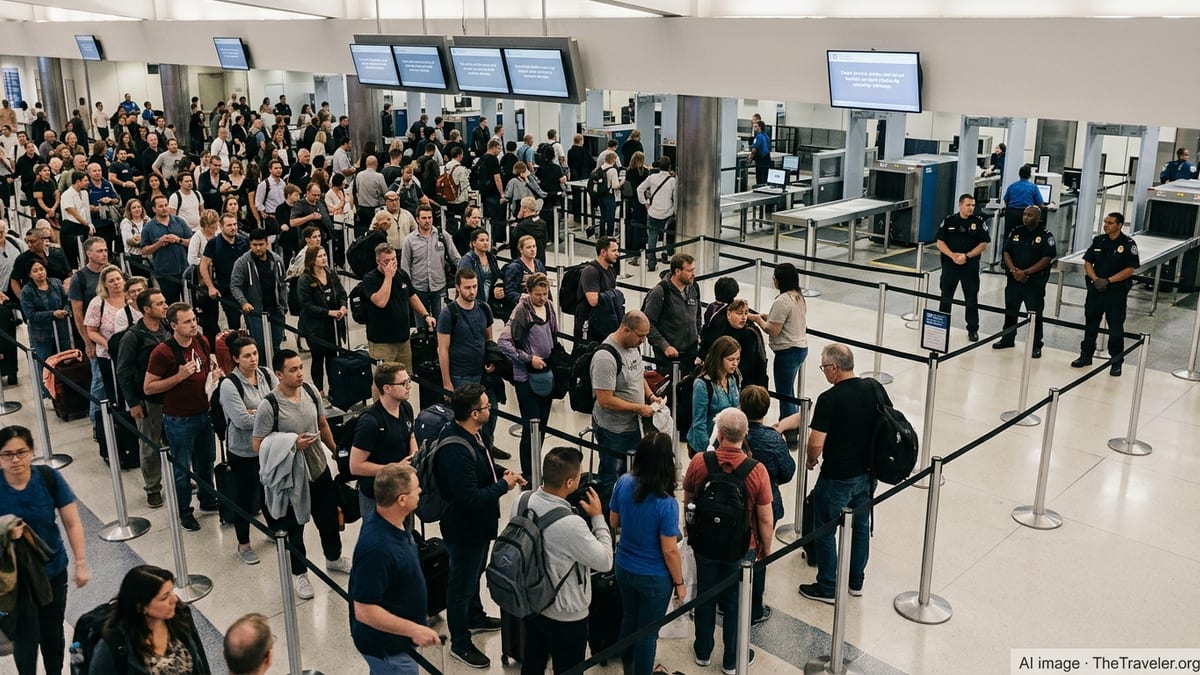
Focus on EU Entry/Exit System bottlenecks
According to recent statements on Ryanair’s corporate news channels and wider media coverage, the airline has linked the disruption to the rollout of the European Union’s new Entry/Exit System, which registers non-EU passengers through biometric checks. Reports indicate that slow processing at EES kiosks is creating long lines at passport control, particularly at popular holiday gateways.
Coverage in European travel and consumer outlets indicates that the 15 airports flagged by Ryanair are concentrated in Spain, Italy, France and Poland, with additional pressure points in Portugal and Greece. These hubs handle large volumes of leisure traffic from the United Kingdom and Ireland, meaning families travelling at peak school-holiday times are among the most exposed to delays.
Publicly available information shows that the new checks require each traveller to undergo fingerprinting and facial imaging on their first EES crossing, a process that takes longer than traditional passport stamping. The added time has been magnified at airports where facilities or staffing levels have not yet fully adapted to summer crowd volumes, leading to queues of an hour or more at busy times.
Industry briefings suggest that, while the system is intended to strengthen external border security and streamline future crossings, the current transition period is proving challenging. The combination of school holidays, record demand for low-cost flights and new procedures has created what aviation observers describe as a stress test for border operations at major tourist airports.
Fifteen high-risk airports for families this summer
While exact operational conditions change day by day, media summaries of Ryanair’s warning indicate that 15 specific airports have emerged as repeated hotspots for long waits. These include major Spanish destinations such as Palma de Mallorca, Málaga-Costa del Sol, Alicante-Elche and Barcelona-El Prat, where passenger volumes surge during July and August. Italian leisure gateways including Milan Bergamo and Rome Ciampino have also been highlighted for congestion at border checkpoints.
Reports in British and Irish newspapers further identify Polish hubs such as Kraków and Warsaw Modlin, as well as French and Portuguese coastal airports, among those facing particular strain. These airports serve as key entry points for UK holidaymakers heading to Mediterranean beaches and city-break destinations, concentrating demand at weekends and around school holiday changeover dates.
Travel coverage notes that the risk is not confined to arrivals. Departing passengers can also face extended checks when leaving the Schengen area, especially at times when multiple flights depart in close succession. In practical terms, that raises the possibility of some travellers missing flights despite arriving at the terminal well before scheduled departure.
Airport operators across Europe have acknowledged that they are still fine-tuning layouts, staffing rosters and signage to cope with EES requirements. Some have introduced additional staff during peak hours or opened overflow border-control lanes, but widespread reports of queues suggest that the 15 airports singled out by Ryanair are likely to remain pressure points through the heart of the summer season.
Calls for flexibility and system adjustments
Ryanair’s public communications sit within a broader push by airlines and airport groups for more flexibility in applying EES rules during the busiest weeks. Trade bodies representing carriers and airport operators have urged European institutions to allow more temporary exceptions when queues become unmanageable, in order to protect passenger flows and reduce the risk of missed flights.
Recent commentary from aviation analysts notes that some national authorities have already used provisions that permit them to suspend EES checks temporarily at specific border posts. This option has reportedly been used at a limited number of airports when queues exceeded acceptable limits, allowing officers to revert to traditional passport-stamping practices for short periods.
Publicly available policy material from EU institutions indicates that the long-term goal remains full, continuous use of the new system once airports and border services have adjusted. However, there is ongoing debate within the sector about whether that target should be pushed further into the future to avoid a repeat of this summer’s difficulties in 2027 and beyond.
Industry observers point out that airlines have limited control over border-control staffing or infrastructure, but face reputational pressure when passengers miss flights due to long queues. This has led carriers, including low-cost operators, to issue prominent advisories and to press governments to deploy additional officers at the worst-affected airports during peak travel weekends.
What passengers can expect at affected airports
Travel experts following the situation say that passengers heading to any of the 15 highlighted airports should plan for a more time-consuming experience at border control than in previous years. Published guidance from consumer groups now commonly recommends arriving at the airport earlier than usual for both outbound and return flights, particularly for families travelling with children or older relatives.
Reports indicate that queues can build rapidly when several large aircraft arrive within a short time frame, especially in the late morning and evening peaks. At some hubs, passengers have described long, slow-moving lines forming before the main passport halls, as travellers wait for access to EES kiosks and manual inspection booths. These bottlenecks can extend total journey times by an hour or more on busy days.
Air-travel specialists advise that passengers should ensure their travel documents are in order, follow airport signage to the appropriate lanes, and be prepared for initial biometric registration if they have not yet passed through EES. Families with young children may face slightly longer processing times, as each individual traveller needs to be registered in the system.
Although airport and airline staff are working to move people through as quickly as possible, publicly available accounts from recent travellers suggest that conditions may vary significantly from day to day. Calm periods can quickly give way to surges when delayed flights arrive simultaneously, and travellers are being urged to factor that unpredictability into their planning.
Outlook for the rest of the summer season
Aviation data for early summer 2026 shows that European short-haul traffic is running at or above pre-pandemic levels, leaving little slack in airport infrastructure when problems arise. Analysts commenting on the Ryanair warning say that the combination of high demand and evolving border systems means disruption risks are likely to persist at the 15 airports through at least late August.
Some governments and airport authorities have announced short-term measures such as redeploying staff, extending opening hours for border-control booths or revising passenger-flow layouts. However, industry commentary suggests that fundamental improvements, including additional infrastructure and fully optimised staffing models for EES, will take more than one peak season to deliver.
For now, publicly available guidance across multiple travel outlets converges on a similar message: travellers should allow extra time, stay informed through airline and airport updates, and be prepared for longer waits at passport control than in previous summers. While many flights continue to operate on schedule, the warning about 15 particularly affected European airports underlines how tightly stretched parts of the continent’s border-control system have become during this first high season under the new regime.