


More news on this day
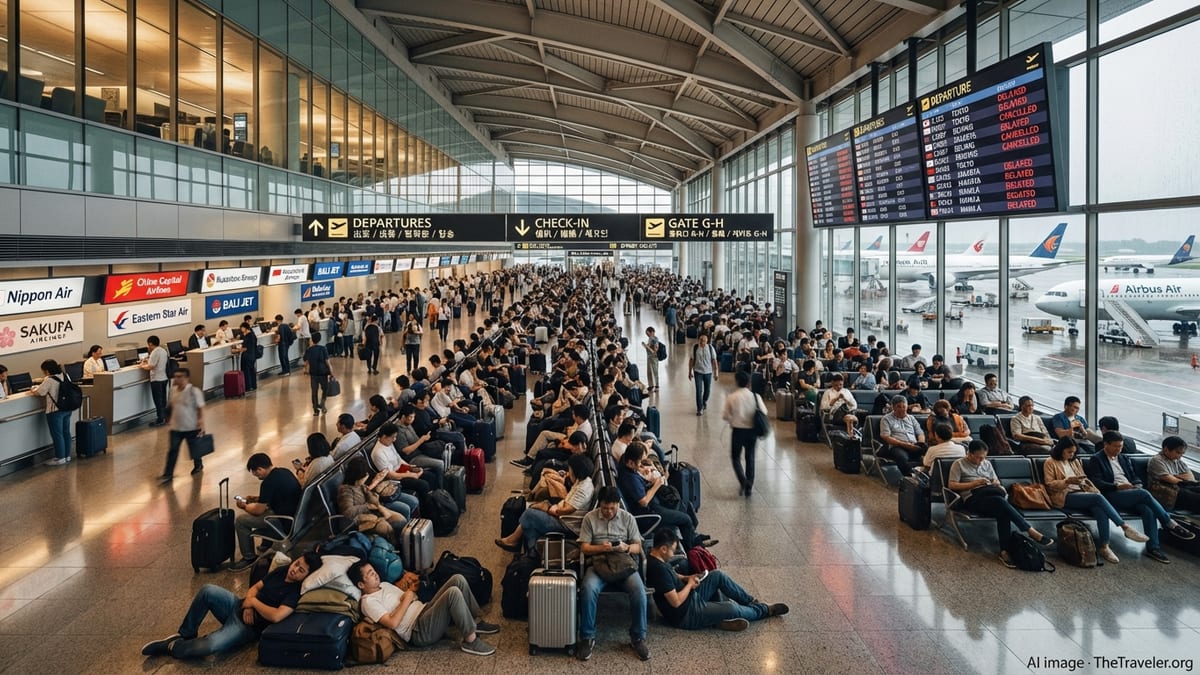
Asia’s aviation network has been hit by a new wave of disruption in 2026, with flight-tracking and industry data indicating 6,951 delays and 472 cancellations across key hubs in a single recent operating period, underscoring how fragile regional air travel remains in the face of weather shocks, geopolitical conflict and stretched airport capacity.
Get the latest news straight to your inbox!
Delay and Cancellation Totals Highlight a Fragile Recovery
Recent operational tallies compiled from real-time tracking platforms and passenger rights services show that Asia’s major airports collectively recorded 6,951 delayed flights and 472 outright cancellations in a concentrated period of disruption in 2026. The figures reflect both short-haul and long-haul operations and span primary hubs such as Guangzhou Baiyun, Shanghai Pudong, Tokyo Haneda, Jakarta Soekarno-Hatta and Singapore Changi.
Publicly available disruption dashboards focused on Asia report thousands of delayed or canceled operations on peak days, with one May snapshot alone recording more than 3,300 disrupted flights across several Chinese, Japanese and Southeast Asian gateways. Combined with subsequent events through midyear, the totals point to a pattern of rolling operational stress rather than a one-off incident.
Consumer advocacy and compensation platforms tracking same-day disruptions in Asia describe a landscape in which even historically reliable airports contend with triple-digit delay counts and multiple cancellations in a single day. While the majority of flights still operate, the spike in irregular operations has made punctuality increasingly difficult to guarantee across the region.
Industry analysts note that, unlike the demand-driven slumps of earlier years, Asia’s current problems are more closely tied to supply-side shocks, from airspace closures and route detours to crew and aircraft rotations that leave little margin when severe weather or congestion strikes.
Weather Shocks and Typhoon Season Amplify Operational Stress
Weather remains one of the most visible triggers for Asia’s irregular operations in 2026. Reports from regional media in July describe how Typhoon Bavi forced the cancellation of at least 20 flights from Singapore to Northeast Asia, disrupting services to destinations such as Shanghai and Taipei and prompting airport operators to warn that additional schedule changes were likely as the storm progressed.
Across the wider region, thunderstorms and heavy rain have repeatedly slowed departures and arrivals at large coastal airports, with ripple effects across domestic networks. Flight-status data for several busy Asian hubs shows clusters of delays building during evening peaks, when convective weather often intensifies and runway configurations become more constrained.
Operational bulletins and forecasting tools used by airlines indicate that weather-related disruption is now interacting with tighter schedules as carriers rebuild capacity. When storm systems or typhoons graze major corridors, aircraft and crews are quickly knocked out of position, forcing airlines to consolidate flights or cancel less profitable rotations to restore order.
Experts who track historical performance say that while weather has always been a factor in Asian aviation, the combination of fuller schedules, more congested terminals and growing reliance on connecting traffic means each storm episode now produces longer and more geographically widespread knock-on effects than in previous years.
Conflict, Airspace Closures and Fuel Costs Reshape Asia’s Skies
Beyond meteorological factors, geopolitical developments have delivered some of the most far-reaching aviation shocks in 2026. Economic and industry analyses of the war in Iran highlight how the closure of large swaths of Middle Eastern airspace has forced airlines to reroute traffic between Asia, Europe, Africa and the Americas, in some cases eliminating nonstop services altogether.
Research from international aviation bodies describes this disruption as a supply-side shock, in which airlines continue to see passenger demand but face structural constraints on where and how they can fly. The rerouting of long-haul flights away from traditional Gulf and Iranian corridors has added hours to some journeys and significantly raised fuel burn, particularly on routes linking Asia-Pacific with Europe and North America.
According to information published by the International Air Transport Association, passenger traffic to and from Asia-Pacific still expanded modestly year-on-year in early 2026, suggesting that demand remains resilient even as airlines grapple with higher operating costs and reduced flexibility. At the same time, some carriers based in the Middle East have temporarily suspended services, forcing Asian and European airlines to adjust capacity and reconsider connecting strategies.
Government briefings in markets such as Hong Kong indicate that airlines are canceling a small but material share of flights as they recalibrate schedules and respond to aviation fuel price volatility. While reported cancellation percentages at some hubs remain in the low single digits, those figures translate into hundreds of flights scrubbed from timetables during peak travel months, feeding into the broader regional totals.
Country Snapshots: Southeast and Northeast Asian Hubs Under Pressure
Country-level data and local reporting reveal how the regional disruption totals have been built from a mosaic of national challenges. In Indonesia, for example, Soekarno-Hatta International Airport near Jakarta reported a cluster of cancellations on services to the Middle East in March as airlines reduced exposure to conflict zones and reassessed long-haul economics. Flight information from the period shows multiple departures scrubbed within a single day as schedules were thinned.
In the Philippines, network adjustments have also contributed to the changing traffic pattern. Industry schedule databases show that Philippines AirAsia removed selected international routes from its Northern summer 2026 program, reflecting a strategic pullback that reduces options for some secondary Asian city pairs and funnels passengers through larger hubs where congestion is already elevated.
Northeast Asian gateways have not been spared. Tokyo-area airports and major Chinese hubs such as Guangzhou and Shanghai have repeatedly appeared on disruption trackers listing the highest numbers of delayed flights on specific days in 2026. Passenger rights monitors describe days when these airports logged combined totals of hundreds of delays alongside double-digit cancellations, particularly when adverse weather, air-traffic restrictions or military activity affected surrounding airspace.
Singapore Changi, long regarded as one of the world’s most efficient airports, has also faced rising schedule pressure. Media coverage of the July typhoon-linked cancellations noted that even Changi’s typically robust operations could not fully offset external shocks, reinforcing the message that no hub is immune when regional weather and geopolitical forces converge.
Travelers Confront Longer Journeys and Shifting Strategies
For travelers, the headline numbers of 6,951 delays and 472 cancellations translate into missed connections, unexpected overnight stays and rapidly changing itineraries across Asia. Accounts shared via travel forums and consumer platforms in 2026 consistently highlight longer total journey times, especially on itineraries that once relied on Middle Eastern hubs for fast one-stop connections between Asia and Europe or the Americas.
Passenger advisory sites and government consumer reports encourage Asia-bound travelers to build greater flexibility into their plans, suggesting earlier departures on important travel days, longer connection windows and careful monitoring of flight status via airline apps rather than waiting for gate announcements. Many also stress the importance of understanding refund and rebooking policies before departure, particularly on complex multi-carrier itineraries.
At the same time, industry performance databases point out that not all carriers and routes are affected equally. Some Asia-based airlines continue to post strong on-time performance on specific city pairs, reflecting robust scheduling discipline and the use of less congested hubs. For travelers able to choose between alternatives, these variations in reliability are playing a larger role in booking decisions than in previous years.
With Asia’s air travel market still expanding despite the headwinds, airlines and airports face the challenge of absorbing demand growth without allowing irregular operations to become normalized. The disruption figures logged so far in 2026 suggest that the balance between capacity, resilience and risk remains delicate, and that passengers planning trips across the region would be wise to expect more operational surprises in the months ahead.