

More news on this day
Thailand is ramping up its bid to become a global hub for remote workers, rolling out a long-stay visa tailored to digital nomads and “workcation” travelers as part of a broader push to boost tourism revenue and attract higher-spending visitors.
Get the latest news straight to your inbox!
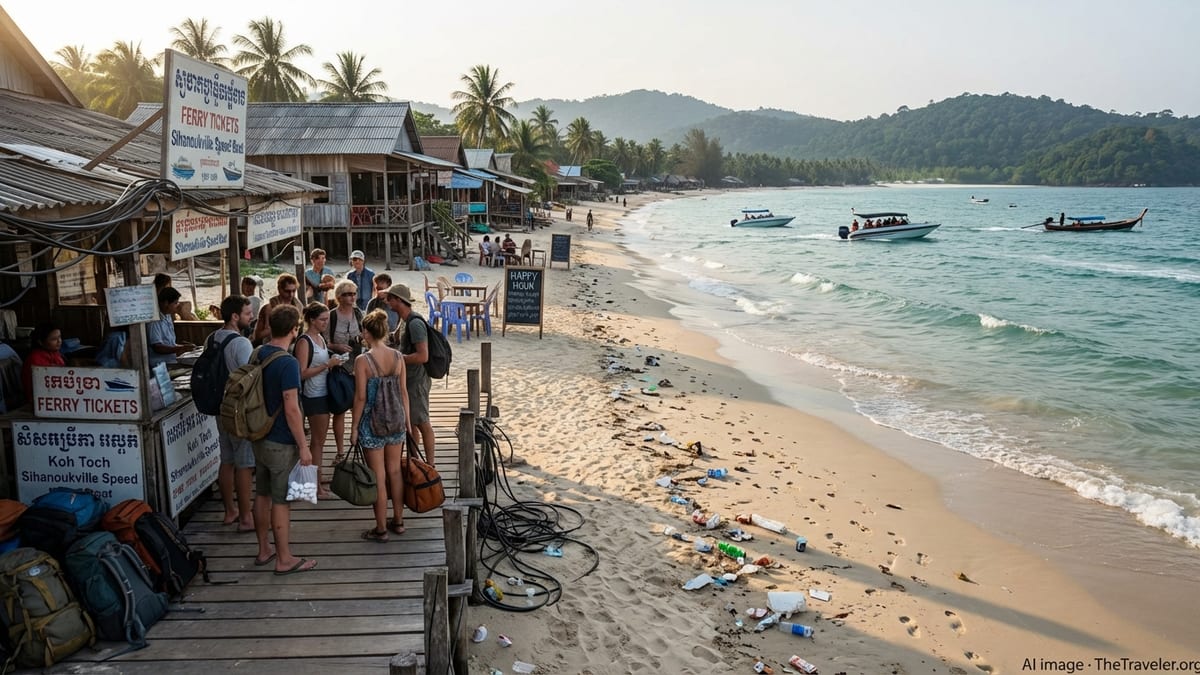
New Long-Stay Visa Puts Digital Nomads in Focus
Publicly available government documents and specialist visa briefings indicate that Thailand’s Destination Thailand Visa, widely described as a digital nomad visa, is now a central pillar of the country’s tourism and investment strategy. The scheme is designed for remote workers, freelancers and other long-stay visitors who earn their income from outside Thailand but want to base themselves in the kingdom for months at a time.
The visa offers five-year validity with multiple entries and allows stays of up to 180 days per entry, with the possibility of extending the stay once while in the country. That structure gives digital nomads significantly more flexibility than the standard tourist visa, which typically limits visits to 60 days with a short extension option. Analysts following the policy say the DTV is meant to support a shift from short holidays to “slow travel” and repeat stays.
Reports in regional media and law firm bulletins link the launch of the long-stay visa to Thailand’s wider economic goals, including lifting overall visitor numbers, diversifying the tourist base and encouraging higher per-capita spending. Officials have publicly framed the policy as part of a strategy to draw in globally mobile professionals in technology, creative industries and other knowledge-based sectors.
Industry commentary suggests that the DTV also responds to growing competition from destinations such as Portugal, Spain and Indonesia, which have rolled out their own digital nomad or remote work visas. By pairing its established tourism appeal with a clear legal route for long-term remote work, Thailand is seeking to defend and strengthen its position in this rapidly evolving market.
Key Features: Five-Year Validity and 180-Day Stays
According to embassy guidance and legal summaries, the Destination Thailand Visa is issued for a period of five years and operates on a multiple-entry basis. Each entry generally permits a stay of up to 180 days, which can be extended once with local immigration, allowing up to 360 days in-country on a single entry for those who meet the conditions and pay the required extension fee.
The visa is aimed at several categories of travelers, including digital nomads, remote employees of foreign companies, freelancers, and participants in certain cultural or “soft power” activities such as cooking, sports, music or Thai language studies. Public documents indicate that applicants must show sufficient financial means, often in the form of a minimum bank balance or proof of income, as well as health insurance and a clean criminal record.
The government has set the DTV fee at around 10,000 baht, positioning it as more affordable than premium long-stay options that require substantial investment or membership fees, while still generating revenue for the state. Observers note that the five-year window and relatively low barrier to entry make the visa attractive for younger professionals and freelancers who may not qualify for investor or elite schemes.
Unlike tourists relying on visa exemptions, DTV holders are granted a clearer legal framework for remote work as long as their clients or employers are based outside Thailand. Advisory notes caution that on-the-ground enforcement practices can vary, but emphasize that the new category is intended to remove longstanding ambiguity for foreign nationals working from laptops in cafes and co-working spaces.
Impact on Remote Work Tourism and Local Economies
Tourism analysts report that Thailand is betting on longer stays to deliver more stable and higher-value tourism income, particularly in major hubs such as Bangkok, Chiang Mai, Phuket and Koh Samui. Digital nomads typically rent apartments or co-living spaces, use local transport and services, and are more likely to frequent neighborhood cafes and coworking venues than short-stay package tourists.
Local business groups in popular nomad districts have welcomed the clearer pathway for remote workers, with coverage in regional outlets highlighting new coworking openings, coliving spaces and community-focused hostels catering specifically to long-stay professionals. In secondary cities and emerging beach destinations, local authorities are reportedly exploring ways to market themselves as quieter, more affordable bases for remote work.
Economic briefings suggest that the digital nomad segment is seen as a hedge against shocks to traditional mass tourism, such as health crises or geopolitical disruptions. Remote workers are typically less tied to high season travel and may be more willing to stay through shoulder periods, smoothing demand for accommodation and services across the year.
At the same time, urban planners and housing advocates note global concerns that long-stay visitors can add pressure to rental markets and strain local infrastructure if growth is not managed carefully. Commentators following the Thai market say that authorities will face a balancing act between encouraging remote work tourism and preserving affordability and quality of life in key districts.
How the New Visa Fits into Thailand’s Wider Entry Rules
The long-stay visa sits alongside a series of other updates to Thailand’s entry rules intended to simplify travel and attract more international visitors. Recent measures have expanded visa-free stays for some nationalities, adjusted visa-on-arrival rules and introduced digital systems for arrival cards and pre-arrival registration, according to publicly available policy summaries.
Specialist visa platforms point out that many digital nomads previously relied on back-to-back tourist visas, visa runs to neighboring countries or education visas to maintain a semi-permanent presence in Thailand. The DTV is designed to consolidate these fragmented approaches into a single, clearer route that better reflects how people work and travel in a remote-first era.
Legal analyses emphasize that immigration and tax rules remain distinct. While the DTV allows remote work from Thailand, spending more than a certain number of days in the country in a calendar year can trigger tax residency under Thai law, potentially requiring individuals to declare global income. Analysts advise long-stay visitors to take local tax guidance into account when planning how long to remain in the country each year.
Observers also note that, as with other visa categories, procedures at consulates and immigration offices can evolve over time. Travelers are encouraged by travel industry commentary to verify the latest requirements directly with official sources before applying or making long-term plans, especially as Thailand continues to fine-tune its visa regime in response to economic conditions.
What Prospective Applicants Should Watch Next
Travel and legal updates indicate that implementation details for the Destination Thailand Visa, including documentation checks and income thresholds, may be adjusted as authorities test demand and monitor compliance. Industry commentary suggests that additional guidance could emerge on issues such as remote work definitions, dependents, and pathways to longer-term residency or other visa types.
Remote workers considering the scheme are being advised by visa consultancies and travel media to prepare clear proof of employment or freelance activity with foreign entities, as well as comprehensive health insurance coverage. Maintaining careful records of entry and exit dates is also being highlighted as important, both to comply with stay limits and to understand potential tax obligations.
Analysts expect Thailand to keep promoting the DTV in key source markets for digital nomads, including Europe, North America and East Asia, through tourism campaigns and participation in remote work conferences and trade events. The outcome will help determine whether the country can convert its long-standing popularity with backpackers and short-term tourists into a more sustainable base of long-stay, higher-spending remote workers.
With global competition for digital nomads intensifying, observers describe Thailand’s long-stay visa as a significant experiment in aligning immigration policy with the realities of remote work. The next two to three years are likely to show whether this strategy successfully deepens the country’s remote work tourism economy or requires further adjustments to stay ahead.