


Italy is widely perceived as a relatively safe country, especially when compared with many large urban areas in North America and parts of Europe. National homicide rates are among the lowest in the world, and most crime affecting residents and newcomers is non-violent, such as theft and burglary. However, safety conditions vary significantly between cities and regions. For expats and families evaluating relocation, understanding which Italian cities combine lower crime indicators with a stable everyday environment is essential for informed decision making.
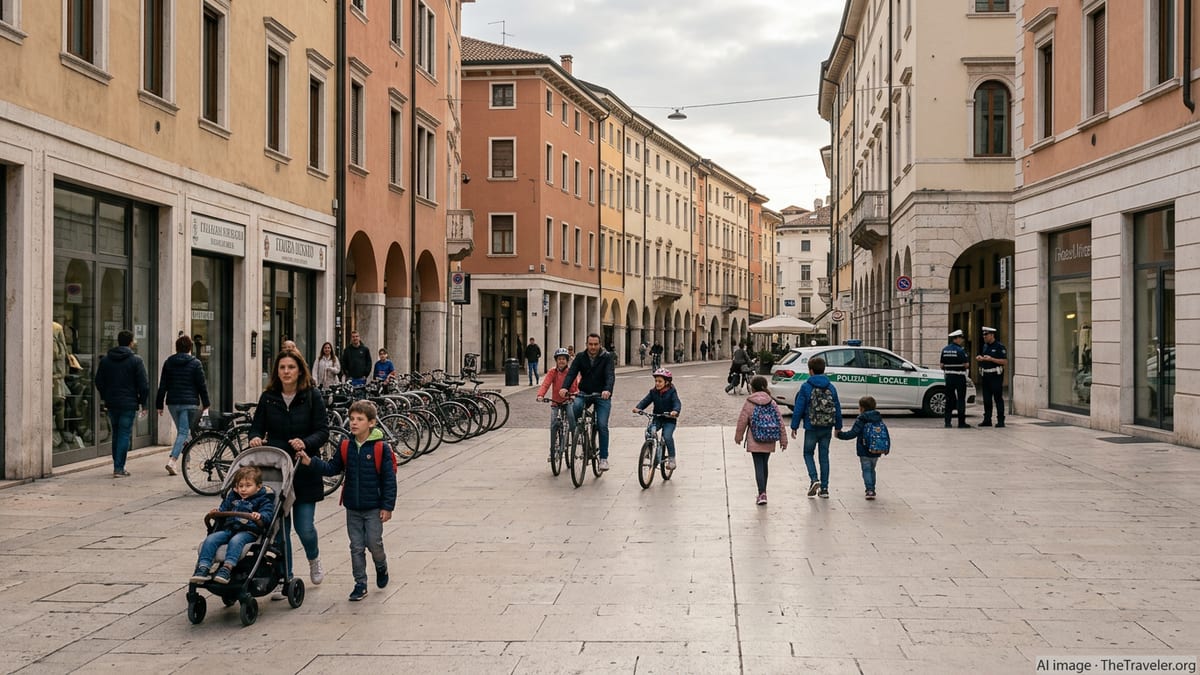
How Safety in Italian Cities Compares Internationally
Italy as a whole records a very low level of violent crime. Recent national data indicate a homicide rate of roughly 0.5 incidents per 100,000 inhabitants, placing Italy near the bottom of global and European rankings for lethal violence. By comparison, homicide rates in many large North American cities are multiple times higher. This context is important for expats arriving from countries where everyday exposure to violent crime may be more common.
Despite this favorable backdrop, reported crime in Italy has edged upward again since 2022 after a decade of decline, driven mainly by property offences, theft and certain categories of assault. Official statistics show a national increase of just under 4 percent in 2023 compared with the previous year, with approximately 30 percent of all reported offences concentrated in the 14 largest urban areas. This concentration means that safety levels in smaller and medium-sized cities can differ substantially from those in major metropolitan hubs.
Perception surveys conducted by the national statistics institute indicate that residents in many northern and smaller provincial cities feel significantly safer walking alone at night than those in larger metropolitan areas. Regions such as Trentino-Alto Adige, Valle d’Aosta, Basilicata and Molise regularly report higher-than-average feelings of security and lower perceived crime risk. These findings, combined with comparative crowd-sourced indices that measure perceived crime and safety in cities worldwide, provide a starting point for identifying locations that are particularly suitable for risk-averse expat families.
For relocation planning purposes, it is useful to distinguish between serious violent crime, which is generally rare throughout Italy, and high-volume issues such as pickpocketing, vehicle break-ins and minor street crime, which are strongly correlated with tourism flows, commuter numbers and nightlife districts. Families prioritizing safety often look for cities with lower exposure to those non-violent but disruptive risks while still offering adequate services, schools and international connectivity.
Methodology and Data Sources for Assessing Safety
Evaluating the safest cities in Italy for expats and families requires combining multiple data points rather than consulting a single ranking. Official crime statistics published at provincial level give counts of reported offences per 100,000 inhabitants, broken down by category such as theft, robbery, assault and burglary. These figures help identify which territories are structurally more exposed to crime and which remain consistently below the national average. However, they can be influenced by reporting behavior and the presence of large non-resident populations such as students, commuters and tourists.
Complementing official data, crowd-sourced indices such as Numbeo’s Crime Index provide a view of perceived safety and everyday experience from residents and long-stay foreigners. In recent editions of these indices, several Italian cities, including Trieste and Trento, appear with crime scores in the high 20s to low 30s on a 0 to 100 scale, corresponding to a classification of “low crime” and “high safety.” At the other end of the Italian spectrum, cities like Naples and Bari record crime-index values above 50, categorized as “moderate to high” crime perception, though still substantially lower than some global hotspots.
Quality-of-life surveys by Italian economic and statistical publications add another perspective by integrating crime, safety perception, emergency services performance and social cohesion into broader well-being scores. In recent years, provinces such as Trento, Bolzano, Aosta and various mid-sized northern cities have performed strongly in these composite rankings, thanks in part to favorable safety indicators. For relocation analysis, these sources are used descriptively rather than prescriptively: they highlight areas with consistently lower reported crime and higher subjective safety, but each expat household must still assess neighborhood-level conditions.
Given the variability of data by year and methodology, this article refrains from assigning definitive numeric rankings to individual cities. Instead, it identifies groups of cities where several independent indicators point in the same direction: lower-than-average crime rates, strong perception of safety, and a track record of stability. This approach is particularly relevant for families that value predictability and risk minimization over purely lifestyle-oriented considerations.
Northern Tier: Trieste, Trento, Bolzano and Similar Medium Cities
Several northern Italian cities consistently appear among the safest urban environments when crime statistics, perception surveys and international indices are considered together. Trieste, a port city near the Slovenian border, regularly records a low crime index in global comparison tables, with scores around the high 20s on a 0 to 100 scale. This places it in the low-crime category and aligns with resident feedback that serious violent incidents are rare and that walking alone in most districts is considered safe, including during evening hours.
Trento and Bolzano, both located in the Alpine region of Trentino-Alto Adige, combine low levels of reported crime with strong social indicators. National well-being reports and quality-of-life rankings frequently place these provinces among the top performers in Italy, with above-average satisfaction regarding local security and law enforcement responsiveness. Property crime levels per 100,000 inhabitants tend to remain well below those observed in the largest metropolitan provinces, and the local economies are relatively stable, which can help contain social tensions that sometimes contribute to petty crime.
For expat and family relocation, these northern cities offer several practical safety advantages. They are large enough to have comprehensive school systems, healthcare facilities and transport infrastructure, yet small enough that most residential neighborhoods retain a compact, community-based feel. Public spaces, parks and pedestrian areas are generally perceived as orderly and well-maintained. Problems most often reported by residents relate to opportunistic theft in specific locations, such as transport hubs and larger shopping areas, rather than systemic street violence.
However, risk-averse families should still treat city centers and railway-station precincts with typical European urban caution. Even in otherwise low-crime cities, unattended bags, visible high-value electronics and unlocked bicycles present opportunities for theft. While these locations are significantly safer in terms of violent crime than many international counterparts, the expectation of complete security would be unrealistic, especially around major events or seasonal tourism peaks.
Safe Mid-Sized Urban Hubs: Parma, Modena, Treviso and Udine
Beyond the Alpine cities, a cluster of mid-sized provincial capitals in northern and northeastern Italy demonstrate favorable safety profiles combined with family-suitable urban structures. Provinces such as Parma and Modena in Emilia-Romagna, and Treviso and Udine further northeast, typically show total reported crime rates that are materially below those of the country’s main metropolitan centers while still benefiting from diversified local economies and well-developed services.
Data compiled by national newspapers and research institutes using official police reports indicate that provinces like Treviso and some parts of Emilia-Romagna sit toward the lower half of the Italian crime-rate distribution. These territories record fewer reported offences per 100,000 inhabitants than tourism-heavy hubs such as Florence, Rome and Milan. The crime that does occur is heavily skewed toward non-violent property offences, including occasional burglaries in suburban areas and thefts from vehicles.
For expats and families, such mid-sized cities often provide a practical compromise between safety and opportunity. They are large enough to host international companies, universities, cultural institutions and sometimes international schools, while remaining relatively compact and navigable. Neighborhoods with good public-transport connections to the center frequently offer quieter streets, lower traffic volumes and fewer late-night venues, which can translate into reduced exposure to disorderly behavior and minor street crime.
In these locations, the key safety differentiators at neighborhood level are usually proximity to main transit nodes and industrial areas, as well as the density of nightlife activity. Residential districts slightly removed from rail stations or large bar clusters tend to experience less noise, vandalism and vehicle-related crime. Families are advised to combine high-level city safety data with on-the-ground viewing of potential neighborhoods at different times of day to validate that the local environment matches expectations.
Relatively Safer Choices Among Larger Italian Cities
While the safest overall conditions for families are often found in smaller and mid-sized cities, many expats require the connectivity and job markets of larger Italian urban centers. Within this group, it is useful to differentiate between cities with structurally high volumes of reported crime and those where risk is more localized. Major metropolitan provinces such as Milan, Rome, Naples and Florence account for a disproportionate share of national crime reports, in some cases exceeding 6,000 to 7,000 offences per 100,000 inhabitants per year. Much of this is linked to dense commuter flows, tourism and large numbers of non-resident users.
For families that nonetheless need a large-city base, certain locations within these metros can provide comparatively safer environments. In Milan and Rome, residential neighborhoods away from central rail stations and mass-tourism corridors generally exhibit lower rates of street theft and visible disorder. Gated condominiums, buildings with doormen and areas with active residents’ associations tend to maintain stricter building security and more consistent enforcement of local regulations, which can help reduce opportunistic crime.
Turin and Bologna represent larger Italian cities that often appear in the middle range of both official crime rates and perception-based safety indices. They are not among the very safest cities nationally, but they compare relatively favorably with metropolitan peers when adjusted for population and commuter volumes. In these cities, families commonly select residential districts characterized by tree-lined streets, limited nightlife venues and strong public-transport links instead of proximity to the entertainment or stadium zones.
In all large Italian cities, the primary practical risks for expats and children tend to be pickpocketing on crowded public transport, theft of unattended items in public spaces, and, in some areas, vehicle break-ins. Violent street crime directed at random individuals is comparatively rare, especially when judged against global benchmarks. Nonetheless, relocation decision-makers should treat big-city living in Italy with the same level of situational awareness and neighborhood research that would apply in other European capitals.
Regional Safety Patterns and How They Affect City Selection
National security and well-being reports show clear regional patterns that can inform city-level safety choices. Northern and northeastern regions such as Trentino-Alto Adige, Friuli Venezia Giulia and parts of Veneto often report higher-than-average feelings of safety, lower perceived crime risk and fewer residents who limit their movements because of fear of crime. Southern regions and parts of central Italy, while still generally safe in global terms, tend to report lower subjective safety scores and higher concern about issues such as organized crime, vandalism and environmental degradation.
This does not mean that all cities in the north are safer than those in the south, or that southern cities should be excluded from consideration. Urbanized coastal areas in the north, including industrial belts and major ports, can experience elevated levels of certain crimes, while smaller inland cities in the south and on the islands may offer very calm and secure environments. However, for expats and families without prior regional ties, starting the search in territories with systematically strong safety metrics can reduce overall risk.
Another regional consideration is the presence of organized crime groups. Their activities may not translate directly into higher everyday risk for law-abiding residents, but they can influence certain crime categories, such as extortion, drug trafficking and specific forms of property crime. Larger cities in regions traditionally affected by such organizations can still be viable options, but due diligence should be more granular, with attention to local law-enforcement capacity, ongoing regeneration projects and the reputation of specific districts.
Families should also consider environmental and infrastructural safety alongside crime statistics. Some regions have higher exposure to seismic risk or hydrogeological events, while others invest more heavily in safe transport infrastructure, street lighting and public-space maintenance. These factors influence real everyday safety even though they are not captured in conventional crime indices.
Practical Safety Assessment for Expat Families
Selecting a safe Italian city is only the first step. Within each city, neighborhood conditions vary, and expat families benefit from applying a structured assessment framework. Key criteria include street lighting, pedestrian infrastructure, distance to schools, presence of late-night venues, and the general state of building maintenance and public spaces. Clean, well-maintained areas with active resident communities are typically associated with lower levels of vandalism and petty crime.
Prospective residents should visit potential neighborhoods at multiple times of day, including late evening, to observe actual patterns of activity. Indicators such as groups loitering around transit hubs, frequent street altercations or visible open-air drug dealing warrant caution, even in otherwise safe cities. Conversely, a visible presence of local police or carabinieri patrols, organized community events and well-used parks generally suggest a stable environment, though no single factor should be treated as definitive.
Families with children should pay particular attention to the safety of routes to school and public-transport nodes. In many Italian cities, vehicular traffic and road-user behavior can present a greater everyday hazard than crime itself. Sidewalk continuity, safe crossings, and traffic-calming measures around schools are critical. Some of the cities identified as relatively safe from a crime perspective, such as Trento and Parma, have invested in cycling and pedestrian infrastructure, which can improve practical safety for children and teenagers.
For expats with higher risk sensitivity, residential buildings with limited entry points, videophone systems, secure mailrooms and underground parking provide additional layers of protection against opportunistic theft. While such features may slightly increase housing costs, they can help maintain a low-risk home environment even in city districts that experience moderate levels of street crime.
The Takeaway
Italy offers a generally safe environment for expats and families, with low levels of violent crime when compared with many international benchmarks. Nevertheless, safety conditions vary meaningfully between cities and regions. Northern and northeastern medium-sized cities such as Trieste, Trento, Bolzano, Parma, Modena, Treviso and Udine stand out for their combination of low crime indicators, strong resident perceptions of safety and relatively orderly urban environments.
Larger metropolitan centers like Milan, Rome, Naples and Florence exhibit higher volumes of reported crime, especially theft and other non-violent offences concentrated around tourist zones, major stations and nightlife districts. Families who require a big-city location can still identify comparatively safer neighborhoods by prioritizing residential districts away from high-traffic hubs, assessing building security and verifying local conditions on the ground.
Regional patterns also matter, with northern regions generally performing better on safety and well-being metrics, while selected smaller cities in central and southern Italy can offer secure, community-oriented settings that compare favorably with international standards. Ultimately, the most effective strategy for expat families is to use national and city-level data as a filter, then conduct detailed neighborhood assessments to ensure that everyday safety aligns with household risk tolerance.
Approached in this structured way, relocation to Italy can provide families with a high degree of personal security alongside the broader benefits that attract many expats to the country. While no city is entirely free from crime, Italy’s safer urban centers offer conditions that are well suited to long-term family life, provided that standard urban precautions and due diligence are observed.
FAQ
Q1. Is Italy generally safe for expat families compared with other countries?
Italy is considered relatively safe, with very low homicide rates and comparatively rare violent street crime. Most issues expats encounter involve non-violent theft and minor property offences.
Q2. Which Italian cities are most often cited as particularly safe for families?
Cities such as Trieste, Trento, Bolzano, Parma, Modena, Treviso and Udine regularly appear in data and surveys as low-crime environments with strong perceptions of safety.
Q3. Are large cities like Milan and Rome unsafe for children?
Milan and Rome have higher overall crime volumes, but most offences are non-violent and concentrated in specific zones. Many residential districts remain suitable for families that apply standard big-city precautions.
Q4. How reliable are online crime indices when choosing a city in Italy?
Online indices provide useful perception-based benchmarks but should be combined with official statistics and on-site neighborhood visits, as methodology and sample composition can vary by city.
Q5. Is southern Italy significantly more dangerous than the north?
Some southern regions report higher concern about crime and organized criminal activity, but many smaller southern cities and towns remain calm and safe in everyday life, especially away from specific high-risk districts.
Q6. What are the main crime risks expats face in Italian cities?
The primary risks are pickpocketing on crowded transport, theft of unattended belongings in public places and occasional residential burglary. Random violent attacks are comparatively uncommon.
Q7. How important is neighborhood choice within a generally safe city?
Neighborhood selection is critical. Proximity to major stations, nightlife clusters or neglected areas can significantly affect exposure to petty crime, even in cities with favorable overall statistics.
Q8. Are Italian schools and routes to school generally safe for children?
Most school areas are safe from a crime perspective, but traffic and road safety can be a concern. Families should assess sidewalks, crossings and traffic-calming measures around schools and along walking routes.
Q9. Do expats need gated communities to feel secure in Italy?
Gated residences and buildings with controlled access can add reassurance, particularly in larger cities, but many families live comfortably in standard apartment buildings in low-crime neighborhoods.
Q10. How often should safety conditions be reassessed after relocating?
It is prudent to monitor local news and community feedback continuously and reassess neighborhood conditions at least annually, or sooner if major urban changes, regeneration projects or incidents occur nearby.