


More news on this day
A wave of flight cancellations and delays at San Antonio International Airport is disrupting air travel across Texas, with publicly available tracking data showing dozens of disrupted departures and arrivals for Southwest and American Airlines and knock-on effects for connecting travelers.
Get the latest news straight to your inbox!
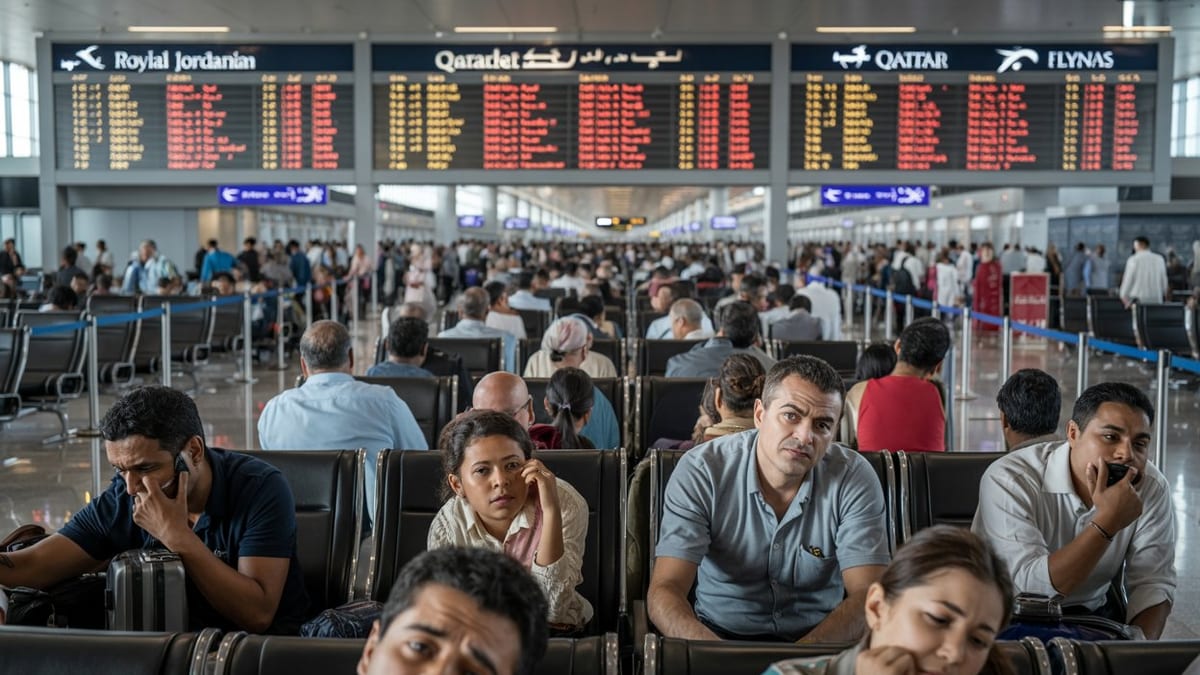
San Antonio Disruptions Ripple Across Texas Routes
Real-time tracking dashboards on May 26 indicate that San Antonio International Airport is facing a cluster of cancellations and more than 70 delayed flights across multiple carriers, with Southwest Airlines and American Airlines absorbing a significant share of the operational strain. The pattern is creating bottlenecks on high-demand short-haul routes that link San Antonio with Dallas, Houston, and other regional hubs.
Published data on national cancellation and delay statistics shows that carriers have been operating under elevated disruption levels in recent weeks, with hundreds of flights canceled across the United States on a typical busy travel day. San Antonio’s local spike is feeding into that broader picture, turning what would normally be short hops into all-day odysseys for many Texas travelers.
While exact tallies fluctuate throughout the day, aggregated information from tracking services and airline performance dashboards points to rolling delays of 30 minutes or more for a substantial share of San Antonio departures. That level of disruption is enough to cause missed connections at major hubs such as Dallas Fort Worth, further magnifying the impact beyond the immediate Texas market.
Travel-focused outlets that monitor airport performance note that Texas has been particularly sensitive to localized weather and air traffic management constraints this spring, with operational turbulence at Austin and Dallas often spilling over into nearby San Antonio as aircraft and crews are shuffled to keep core schedules running.
Southwest and American Bear the Brunt of Schedule Stress
Southwest Airlines and American Airlines, both of which maintain large networks within Texas, appear prominently in delay and cancellation tables tied to San Antonio. Southwest’s point-to-point model and American’s hub-and-spoke system through Dallas Fort Worth mean that operational issues in San Antonio can quickly echo across multiple states.
Historical performance data compiled by aviation analytics firms shows that both airlines typically run relatively low cancellation rates in normal conditions, but experience spikes when storms or air traffic control programs compress already busy schedules. In today’s disruption, short-haul flights into and out of San Antonio are especially vulnerable, because any late-arriving inbound aircraft can throw off a full day of rotations.
Industry tracking of recent weeks shows Southwest handling elevated levels of delays on key domestic routes, while American has also been navigating its own network challenges. When those broader pressures intersect with a day of heavy demand in Texas, San Antonio quickly becomes a chokepoint, particularly for travelers who rely on fast connections to and from smaller regional airports.
Publicly available route data underscores how central San Antonio is to both carriers’ intra-Texas operations. Nonstop services between San Antonio and Dallas Fort Worth, as well as links to Houston, Phoenix, and Las Vegas, are heavily used for both business and leisure travel. Any prolonged irregular operations on these corridors can disrupt conferences, family travel, and onward international itineraries.
Ground Delays, Weather and Network Knock-On Effects
Reports from aviation monitoring sites indicate that a mix of factors is contributing to the Texas travel crunch, including intermittent thunderstorms in the region, ground delay programs at major hubs, and the lingering effects of tight aircraft and crew availability at several airlines. Even when skies appear clear at San Antonio itself, constraints elsewhere in the network can strand planes and crews needed for outbound flights.
Recent coverage of Texas air travel has highlighted how fast-changing weather bands in central and north Texas can force holding patterns, diversions, and reroutes, particularly around Dallas Fort Worth and Houston. When those large airports institute traffic management initiatives, flights bound for smaller fields such as San Antonio are often slowed or held, cascading into late-night departures and last-minute cancellations.
Government transportation dashboards comparing airline customer-service commitments show that both Southwest and American pledge certain amenities during controllable delays and cancellations, including meal vouchers in some circumstances and rebooking assistance on their own flights. However, those commitments do not prevent disruption; they only shape how airlines are expected to respond once a schedule begins to unravel.
Travel forums tracking today’s disruptions describe passengers facing missed connections, lengthy rebooking lines, and limited seat availability on later flights, particularly on popular Texas routes. With aircraft already heavily booked for the late-May travel period, some travelers are being pushed onto flights departing much later in the day or even on subsequent days.
What Today’s Chaos Means for Texas Travelers
For travelers passing through San Antonio and other Texas airports today, the operational turbulence translates into an unusually high risk of extended delays and last-minute schedule changes. Published accounts of recent disruption days in the state show that itineraries involving tight connections through Dallas Fort Worth or Houston are especially susceptible to missed onward flights when short regional legs run late.
Consumer advocates note that the current situation illustrates how interconnected airline networks have become. A thunderstorm over one part of Texas or an air traffic control program at a distant hub can create extended waits for passengers many hundreds of miles away, as airlines reposition jets and crews to keep their most critical routes moving.
Travel planning resources recommend that, on days with elevated disruption, passengers give themselves longer connection windows, travel with carry-on baggage whenever possible, and monitor both airline apps and independent tracking services for real-time updates. For those starting their journeys in San Antonio, arriving early and preparing for potential rebooking has become a prudent strategy when irregular operations spike.
With the busy summer travel season underway and Texas airports already handling strong passenger volumes, today’s wave of cancellations and delays at San Antonio International underscores how quickly the system can seize up when multiple stressors collide. Unless conditions stabilize and airlines are able to reset their schedules overnight, travelers across the region may continue to feel the effects of this latest bout of Texas travel chaos.