


More news on this day
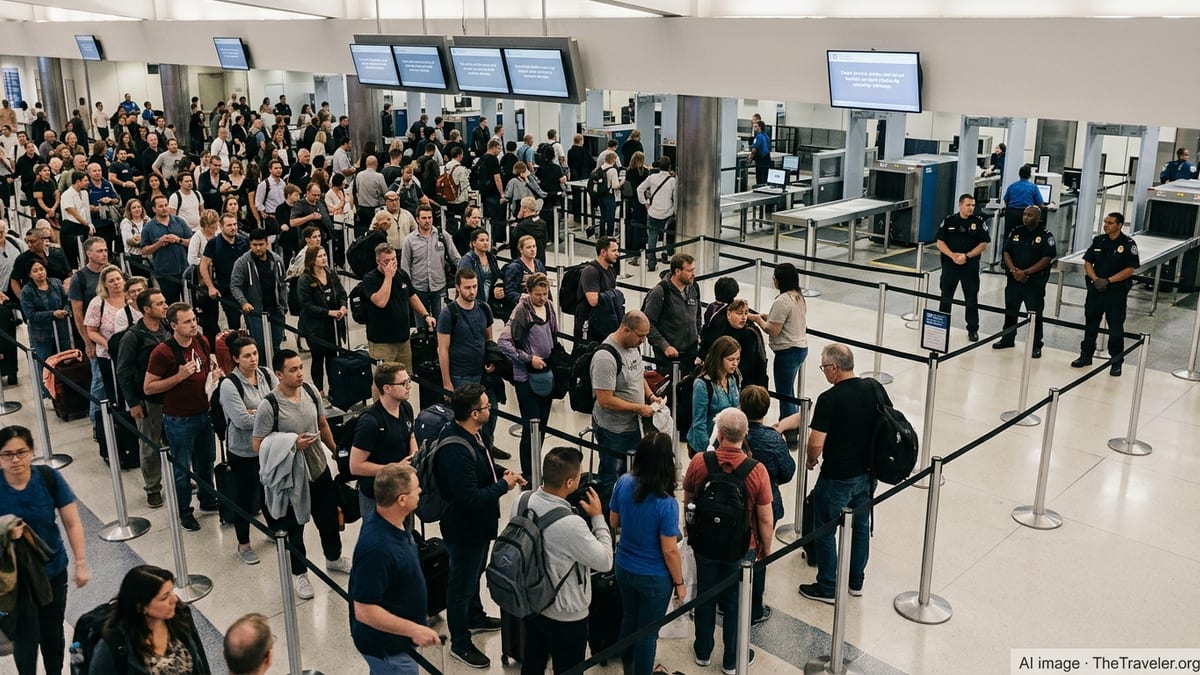
San Diego International Airport experienced a turbulent start to the week as at least 52 flights linked to Southwest Airlines, Alaska Airlines, and regional operator SkyWest were disrupted, creating hours of uncertainty for departing and arriving passengers and rippling across key West Coast routes.
Get the latest news straight to your inbox!
Chain Reaction of Delays Hits Key West Coast Routes
Publicly available flight-tracking data for services into and out of San Diego on June 15 and June 16 indicate a broad pattern of late departures, rolling delays, and select cancellations affecting Southwest, Alaska Airlines, and SkyWest-operated regional flights. The disruption centered on high-frequency routes connecting San Diego with San Francisco, Denver, Salt Lake City, and other Western hubs.
Several Alaska-branded flights operated by SkyWest between San Diego and San Francisco showed delayed or heavily delayed operations, with some services arriving significantly behind schedule after late inbound aircraft from other cities. Similar patterns appeared on Southwest-operated services into San Diego from major connecting points such as Denver and San Francisco, amplifying the impact for passengers relying on tight connections.
The knock-on effects were felt across the network as aircraft and crews arrived late into San Diego, compressing turn times and driving fresh schedule changes throughout the day. For travelers, that translated into extended gate holds, gate changes, and, in some instances, missed onward connections and overnight rebookings.
Although the number of formally cancelled flights remained relatively limited compared with major nationwide meltdowns seen in recent years, the scale of delays and schedule adjustments within a short window created a perception of chaos among passengers attempting to depart or land at San Diego at peak times.
Operational Strains Converge at a Growing Hub
San Diego International has been one of the fastest-evolving airports in the Western United States, with airlines adding capacity and new routes in the run-up to the busy summer season. Airport traffic reports and schedule filings show that Southwest remains the single largest carrier at the airport, while Alaska Airlines has been rapidly expanding its presence with new and restored routes, often operated by regional partner SkyWest.
That growth means more banks of departures in crowded morning and afternoon windows, leaving less room to absorb even modest operational hiccups. Late inbound aircraft, crew reassignments, and short maintenance checks that might pass almost unnoticed on a less constrained schedule can quickly trigger rolling delays when an airline is operating a dense pattern of flights through a single-runway airport.
Recent airport planning documents highlight a series of new and returning services from San Diego, including Alaska’s expansion into additional West Coast and Mountain destinations and Southwest’s new long-haul transcontinental flights. As frequencies rise, the system becomes more sensitive to irregular operations, particularly when multiple airlines are depending on finely tuned turnarounds to keep their daily schedules on track.
SkyWest’s role as a regional operator for Alaska and other major carriers adds another layer of complexity, because disruptions on one partner’s route can affect aircraft and crews assigned to a completely different brand or city pair later in the day. This can help explain how a local operational issue or weather-related slowdown outside San Diego can evolve into a 52-flight wave of disruptions within the region.
Passengers Report Ground Delays and Confusion
On social media platforms and aviation forums, travelers transiting San Diego on June 15 described extended ground holds, sudden gate changes, and sparse information at departure boards. Several travelers on Southwest flights referenced receiving notification of significant delays only after arriving at the airport, forcing improvised changes to ground transportation, hotel stays, and business schedules.
Alaska and SkyWest customers reported repeated gate moves within San Diego’s Terminal 2, sometimes requiring long walks across the concourse as boarding times shifted. For families and less-frequent flyers, the combination of short-notice changes and unclear departure times added to the sense of disorder, even on flights that ultimately departed within an hour of the original schedule.
Publicly available information from a federal airspace status portal showed congestion advisories affecting San Diego around the same period, indicating that air traffic management initiatives may also have played a role in slowing arrivals and departures. While not all delays can be traced directly to these measures, any restrictions on arrivals or departures have an outsized impact on a single-runway airport operating near capacity.
As is typical during irregular operations, some passengers were able to secure same-day rebooking onto later departures, while others described longer waits for available seats due to already-heavy summer booking levels across the Southwest and Alaska networks.
Network Implications for Southwest, Alaska, and SkyWest
The 52-flight disruption in and around San Diego underscores how exposed Southwest and Alaska are to shocks at the airport, given their expanding schedules. Southwest uses San Diego as a key West Coast node, with frequent short- and medium-haul flights feeding into larger domestic connections. Alaska, for its part, has been building San Diego into a more prominent focus city, adding routes and frequencies that rely heavily on SkyWest-operated regional jets.
When irregular operations take hold in San Diego, aircraft rotations that involve multiple out-and-back legs in a single day can quickly fall behind. A delayed morning departure on a SkyWest-operated Alaska flight from San Diego to San Francisco, for example, can echo through several downstream flights, affecting not only those two cities but also subsequent services from San Francisco and other hubs.
For Southwest, disruptions on dense intra-California and Western routes add pressure because these flights often carry a high proportion of connecting passengers. A late arrival into San Diego can strand travelers who expected to continue on to destinations across the Mountain West, Texas, or the Midwest, multiplying the customer-service impact of what might appear on paper as a single delayed flight.
Industry observers note that both Southwest and Alaska have, in recent years, invested in operational resilience and schedule padding after high-profile disruptions elsewhere in their networks. The recent San Diego turbulence suggests that even with those adjustments, localized surges in delay volume can still overwhelm day-of-operation recovery plans during the busiest travel periods.
What Travelers Can Expect in the Coming Days
With the disruption hitting just as the summer peak begins, travelers booked on Southwest, Alaska, or SkyWest-operated flights to and from San Diego over the next several days can expect residual schedule adjustments as airlines reposition aircraft and crews. Timetables may show updated departure times or swapped flight numbers as carriers attempt to restore normal rotations.
Publicly available schedule data suggest that all three operators intend to maintain their planned capacity from San Diego, particularly on high-demand routes such as San Diego to San Francisco, Denver, Phoenix, and Salt Lake City. However, airlines may selectively trim individual frequencies or consolidate lightly booked services if operational conditions remain tight.
Travel experts commonly recommend that passengers departing San Diego build extra time into their itineraries, particularly if they are connecting onward in another city. Booking earlier flights in the day, tracking flight status closely, and being prepared for same-day rerouting options can help mitigate the effects of any lingering instability in the schedule.
As airlines and the airport work through the aftershocks of the 52-flight disruption, San Diego’s role as a rapidly growing coastal hub means any future operational hiccups could again produce outsized turbulence for travelers. The episode serves as a reminder that even in an era of generally improving on-time performance, local factors at a single busy airport can still send shock waves across multiple airline networks.