


Sliding a kayak into calm saltwater at sunrise or gliding across a glassy bay under a canopy of stars offers one of the most intimate ways to experience a coastline. Guided kayak tours let travelers get close to wildlife, slip into quiet coves, and explore tidal inlets and fjords that larger boats simply cannot reach. From short evening paddles to multi day wilderness expeditions, there is a sea kayaking experience for almost every fitness level and comfort zone.
Get the latest updates straight to your inbox!
How to Choose the Right Kayak Tour
Before you book a paddle anywhere in the world, it helps to understand how tours typically differ. Operators usually organize their trips by duration, environment and difficulty. In Puerto Rico’s bioluminescent bays, for example, many guided night paddles in Laguna Grande near Fajardo last about two hours and focus on calm, sheltered mangrove channels that are suitable even for first time paddlers. In contrast, a five day expedition from Haines in Southeast Alaska with an outfitter such as SEAK Expeditions can involve daily open water crossings, camping on remote beaches and paddling in variable weather, which requires better fitness and a tolerance for rougher conditions.
Price is another useful signal when comparing tours. In coastal North America and Europe, a half day guided sea kayak outing with all equipment included often falls in the range of about 80 to 140 US dollars per person, depending on the season, group size and whether transportation is included. In places with more complex logistics, such as remote parts of Alaska where operators charter small boats to reach wild shorelines, a multi day package can run to several hundred dollars per day, especially when food and camping gear are provided. When a price looks much lower than comparable options in the same area, double check what is included, how experienced the guides are and whether the operator holds the required permits.
Safety and group size matter just as much as scenery. Reputable outfitters limit groups to manageable numbers, often around six to ten guests per guide on the water. Companies in popular destinations such as Puerto Rico’s bioluminescent bays and New Zealand’s Abel Tasman National Park typically provide stable double kayaks, life jackets, spray skirts where needed and dry bags for small items. Look for guides who carry marine radios, towing lines and first aid kits, and who give a thorough safety briefing that covers basic strokes, what to do in a capsize and how the group will stay together in narrow channels or at night.
Finally, think carefully about your own comfort level. If you are unsure about spending hours in a kayak, consider a short introductory paddle, such as a two hour wildlife tour near Orcas Island in Washington State or a sunset paddle on San Juan’s Condado Lagoon. These trips offer sheltered water, easy access back to shore and guides who spend extra time on basic technique. Travelers who already enjoy paddling and camping can look at overnight journeys in places like Abel Tasman National Park, where outfitters combine coastal hiking with sea kayaking and stays in beachfront lodges or campsites.
Wildlife Rich Sea Kayak Tours in Alaska and the Pacific Northwest
Cold water coasts reward paddlers with some of the most dramatic wildlife viewing opportunities on Earth. In Southeast Alaska, outfitters based in communities such as Haines offer multi day kayak expeditions through the Chilkat Inlet and Lynn Canal, a region where glacial rivers meet the sea and create rich feeding grounds for marine life. On a typical five day itinerary, guests paddle to remote beaches, watch for humpback whales feeding in the distance, and hear the exhalations of harbor porpoises at the surface while bald eagles perch in shoreline trees. Operators usually provide dry suits or heavy paddling jackets, tents, meals and water taxi transfers, which is one reason these trips tend to sit at the higher end of the price spectrum.
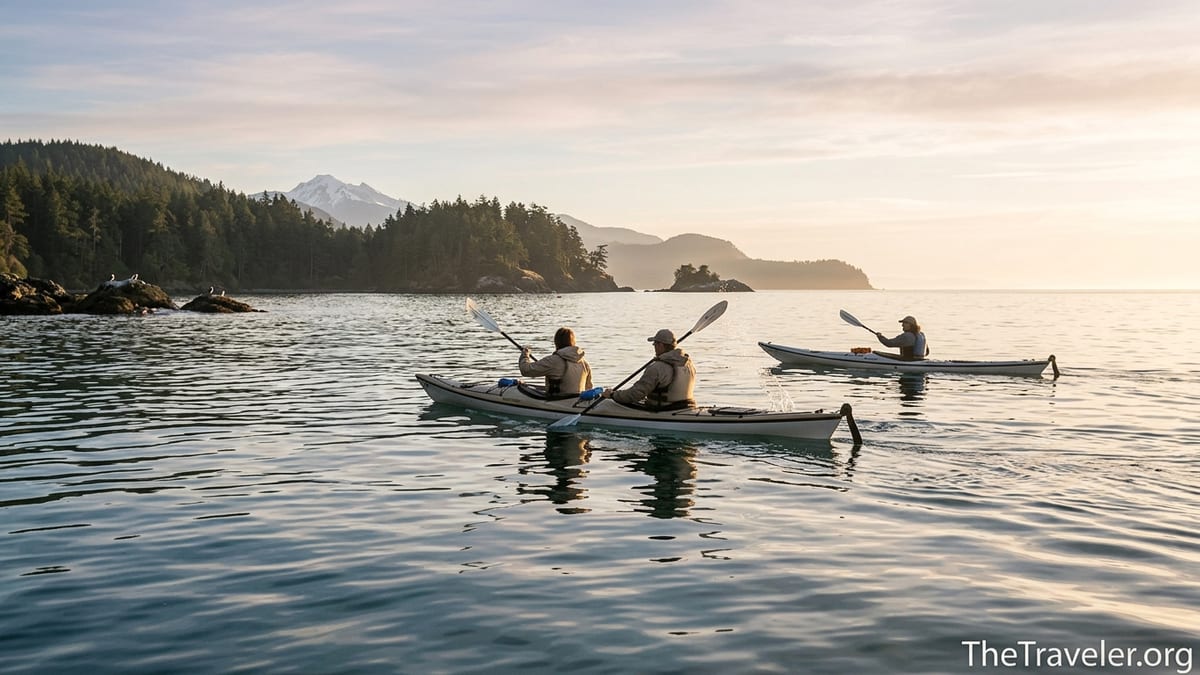
Farther south, the islands of Washington State offer wildlife experiences with more moderate conditions. On Orcas Island in the San Juan archipelago, long established outfitters such as Shearwater Adventures run two to five hour guided kayak tours from late spring through early fall. Paddlers on these tours often depart from sheltered harbors like Deer Harbor and trace low rocky shorelines and kelp beds in search of harbor seals, river otters and sea stars, with distant views across the Salish Sea to the forested coast of British Columbia. Three hour wildlife trips typically cost a little over 100 dollars per person, with small groups and stable tandem kayaks that make the outings accessible to families with older children.
Conditions off the Pacific Northwest and Alaska coasts can change quickly, so timing and equipment are important. Even in midsummer, water temperatures remain cold, and guides emphasize dressing in layers with synthetic or wool tops, windproof shells and warm hats. Fog and afternoon winds are common, so many operators schedule wildlife tours in the morning or early evening, using handheld marine radios to monitor conditions and coordinate group movements. For travelers who might be nervous about ocean swell, half day wildlife paddles in protected waters, such as the inlets behind barrier islands or within narrow channels between forested islets, offer much of the same bird and marine mammal viewing without the exposure to open seas.
Travelers who combine sea kayaking with other Alaskan experiences often appreciate so called mothership trips, in which a chartered vessel serves as a moving base camp. After breakfast on board, guests load their kayaks from the stern and spend several hours exploring coves and shorelines before returning for lunch and repositioning to a new anchorage. These itineraries can be more expensive but are well suited for those who enjoy wildlife and scenery yet prefer to sleep in a warm cabin rather than a tent on a beach.
Golden Beaches and Easy Paddling in New Zealand’s Abel Tasman
New Zealand’s Abel Tasman National Park has become one of the world’s classic coastal kayaking destinations, particularly for travelers seeking a mix of relaxed paddling and overnight comfort. Located at the northern tip of the South Island, the park is known for its golden sand beaches, clear turquoise water and a relatively mild climate that allows kayaking for much of the year. Local operators such as Wilsons Abel Tasman and Abel Tasman Kayaks run a range of trips from short half day outings around Split Apple Rock and Adele Island to multi day itineraries that combine sections of the Abel Tasman Coast Track with guided paddling.
A typical one day guided tour might start in the seaside village of Marahau, where participants receive a briefing, life jackets and spray skirts before boarding a water taxi that shuttles them up the coast to bays like Torrent Bay or Bark Bay. From there, groups paddle back along sheltered shorelines, stopping for lunch on quiet beaches such as Tinline Bay while watching for fur seals and seabirds. Prices for full day guided tours often sit in the range of 150 to 250 New Zealand dollars, including water taxi transport and lunch, which compares favorably with other full day adventure activities in the country.
For travelers with more time, multi day walk and kayak packages offer a comfortable alternative to carrying camping gear. Companies based in the region operate beachfront lodges where guests sleep in proper beds and enjoy hot showers and restaurant style meals, while guides handle navigation, safety and logistics. Guests might spend the first day paddling between small islands and lagoons, the second hiking a section of the Abel Tasman Coast Track, and the third kayaking through tidal inlets rich in birdlife. Such trips typically span three to five days, and although they cost more than simple day tours, they appeal to travelers who want an immersive yet relatively gentle adventure.
Because Abel Tasman’s waters are generally calm and sheltered by headlands, the park is particularly suitable for first time sea kayakers and families. Even so, conditions can change with wind and tide. Local operators schedule itineraries according to the tides at shallow landings and provide detailed packing lists that emphasize quick drying clothing, sun protection and light footwear suitable for walking on wet sand. Booking in the shoulder seasons of late spring or early autumn can provide warm days and fewer crowds while still avoiding the more unsettled winter weather.
Arctic Light and Island Scenery in Norway’s Lofoten Archipelago
Norway’s Lofoten Islands offer a very different coastal paddling experience, with steep granite peaks plunging straight into cold, clear water and tiny fishing villages scattered along sheltered bays. Outfitters such as Skrova Kayak on Skrova Island and Henningsvær Adventure Sports near the village of Henningsvær run daily sea kayak tours from late spring through early autumn. Three hour guided trips typically allow visitors to weave between small islands and white sand beaches, with guides pointing out seabirds and sharing stories about local fishing culture and the region’s history.
Wildlife encounters in Lofoten tend to focus on birdlife and smaller marine animals rather than whales. Kayakers frequently see eider ducks, cormorants and, with luck, white tailed sea eagles gliding overhead or perched on rocky outcrops. In calm conditions, paddlers can peer down through exceptionally clear water to see kelp forests and fish moving below the hull. The setting itself holds much of the appeal: towering mountains rise from the sea on all sides, and in early summer the low angle of the sun creates long shadows and warm light late into the evening, especially during the midnight sun period.
Day tours in Lofoten are generally priced similarly to other European sea kayaking hubs, with half day excursions often costing the equivalent of about 100 to 150 US dollars, including all paddling gear and a dry bag for cameras and extra layers. Many visitors add a kayak outing as part of a broader trip that includes hiking popular peaks, staying in converted fishermen’s cabins known as rorbuer and exploring local galleries and cafes. Because water temperatures remain cold, guides usually recommend synthetic or wool base layers, windproof shells and closed toed footwear, even on sunny days.
Given Lofoten’s location north of the Arctic Circle, weather can shift rapidly. Sensible operators cancel or reroute tours if wind, swell or fog create unsafe conditions, sometimes substituting a more protected paddle inside sheltered sounds instead of an exposed coastal route. When planning a trip, it is wise to build in a flexible day or two in case high winds temporarily shut down kayak operations. Travelers who arrive primarily for the paddling often choose to stay in or near villages that serve as bases for multiple outfitters, which makes rebooking or adjusting plans easier.
Bioluminescent Bay Adventures in Puerto Rico
Few kayak experiences feel as otherworldly as dipping a paddle into a dark bay and watching the water light up with tiny points of blue green light. Puerto Rico is home to three famous bioluminescent bays: Laguna Grande near Fajardo on the main island, Mosquito Bay on Vieques and La Parguera on the island’s southwest coast. Licensed operators run guided kayak tours in all three locations, typically timed to avoid the brightest moonlight so that the glow from microscopic plankton is easier to see. In Laguna Grande, for example, many companies offer two hour evening tours that depart from the village of Las Croabas and travel through narrow mangrove channels before reaching the inner lagoon.
Prices for bioluminescent bay kayak tours in Puerto Rico commonly fall in the range of about 60 to 100 US dollars per person, with some operators including round trip transport from San Juan for an additional fee. Equipment usually consists of stable sit on top double kayaks, life jackets and sometimes simple backrests. Guides explain how the dinoflagellates that cause the glow react when the water is disturbed, encouraging guests to trail their hands through the bay or gently splash their paddles to see the effect. During busy periods, multiple tour companies share the same access points and routes, so travelers who prefer a quieter experience sometimes choose later evening departures.
The other bioluminescent bays offer slightly different styles of trip. At La Parguera, some companies run combined boat and kayak excursions in which a small vessel carries guests out to the glowing waters, then anchors so they can climb into kayaks or even swim in the bioluminescent pool under close supervision. On Vieques, operators based in the town of Esperanza guide small groups into Mosquito Bay from simple beach launch sites, using clear bottom kayaks or traditional boats. Recent visitor reports suggest that prices there often start around the upper end of the Puerto Rico range, reflecting the additional logistics of operating on a smaller island and preserving a very delicate ecosystem.
Because the intensity of the glow depends on water quality, recent rainfall and the phase of the moon, expectations are important. On nights close to the full moon or after heavy rains, the effect can appear more subtle, and operators sometimes manage this by scheduling trips around darker periods or by explaining conditions clearly at booking. Online tools created by local enthusiasts now help travelers choose dates with darker skies, but even on less optimal nights, guests often describe the experience of paddling through mangrove tunnels at night as a highlight of their trip. As with any night paddling, guides emphasize staying close together, following instructions carefully and avoiding bright white lights that can spoil night vision.
Family Friendly Coastal Kayak Experiences
Not every kayak outing has to be a multi day expedition or a late night paddle through mangroves. Many coastal destinations now offer short, family friendly tours that focus on scenery and simple fun. In San Juan’s Condado Lagoon, for example, outfitters rent kayaks and run guided sessions in calm, protected water just a short distance from city hotels. These trips are ideal for children or nervous adults, with clear boundaries, easy return points and frequent breaks. Some operators offer evening paddles with LED lights on the kayaks, adding a gentle novelty without leaving the safety of the inner lagoon.
In the Pacific Northwest, similar gently paced options exist on sheltered bays and lakes near major cities. Around Seattle, half day coastal paddles in protected areas introduce beginners to basic strokes and safety while still offering the chance to see seals, herons and, in the right season, migrating seabirds. Prices for such family friendly outings often start at around 60 to 100 dollars per person for two to three hours on the water, making them comparable to other half day activities like zip line tours or beginner surf lessons.
When choosing a family oriented tour, look for operators who specify minimum age requirements and provide tandem kayaks so that younger children can paddle with an adult. Many companies set a minimum age of around 6 to 8 years for calm water trips and higher limits for night tours or open coastal paddles. Guides who specialize in family groups often incorporate games, simple wildlife identification and plenty of shore time so that children can stretch their legs and explore beaches. Checking recent reviews can help confirm whether a particular tour delivers the low stress, high enjoyment experience that families usually want.
For multi generational groups, the combination of a short, guided paddle followed by an easy coastal walk or a picnic can work particularly well. In regions like Abel Tasman or Lofoten, many visitors book a morning kayak tour and then spend the afternoon ambling along nearby trails or exploring small towns, ensuring that less active family members do not feel pressured into a long day on the water. Asking operators about private or semi private departures can also be worthwhile if your group includes both confident paddlers and complete beginners.
Planning, Gear and Responsible Paddling
Regardless of destination, a bit of planning and the right gear can dramatically improve the comfort and safety of any kayak tour. Most reputable operators provide all specialized paddling equipment, including boats, paddles, buoyancy aids and, where appropriate, spray skirts or dry suits. Travelers are usually responsible for personal clothing and small extras. In warm water destinations like Puerto Rico, this often means quick drying shorts or swimwear, a light long sleeved top for sun protection, and sandals or water shoes that can get wet. In cooler climates such as Alaska or Norway, operators commonly recommend synthetic or wool base layers, a warm fleece, windproof shell, beanie and gloves, even on trips that take place in midsummer.
Sun, wind and dehydration affect comfort more than many first time paddlers expect. It is wise to bring a brimmed hat, polarized sunglasses and reef safe sunscreen, as well as a reusable water bottle that can be clipped into the kayak. On longer tours, guides often carry snacks or lunches, but having a small personal supply of high energy food such as nuts or dried fruit can help maintain energy levels. Travelers who wear glasses or contact lenses should consider retaining straps or backup lenses stored in a dry bag in case of accidental splashes or capsizes.
Responsible paddling also means respecting local wildlife and coastal ecosystems. Good operators train their guides to maintain appropriate distances from nesting seabirds, haul out sites for seals or sea lions, and resting sea turtles, and to approach any animals slowly and at angles that avoid cutting off their routes to safety. In bioluminescent bays, environmental guidelines often limit the number of tours per night and restrict the use of sunscreen or insect repellent that could harm the delicate organisms that create the glow. Guests can support these efforts by following guide instructions, packing out all trash and choosing companies that clearly state their environmental commitments.
Finally, travel insurance and flexibility can protect both your budget and your experience. Coastal weather, sea conditions and even road closures can affect whether a tour runs on the planned day. Many outfitters offer refunds or free rescheduling when they cancel for safety reasons, but policies vary, especially for small, locally owned businesses. Booking early in a trip rather than on the final day gives you a buffer in case conditions force a change. Reading confirmation emails carefully, noting the exact meeting time and place and allowing extra time for parking or transport help ensure that once you arrive at the water’s edge, the focus can be on the paddling and the scenery, not on logistics.
The Takeaway
From Arctic archipelagos to tropical mangrove lagoons, guided kayak tours provide some of the most memorable wildlife, coastal and adventure experiences available to travelers. Paddling quietly at water level lets you notice details that slip past when you are on a larger tour boat or standing on shore, whether it is the whiskers of a curious seal, the delicate glow of plankton under your fingertips or the way evening light paints a cliff face. With thoughtful planning and the right match between tour and traveler, sea kayaking can be both approachable and deeply rewarding.
Choosing among the world’s best kayak tours comes down to your priorities. If close wildlife encounters and rugged wilderness appeal, multi day expeditions in Southeast Alaska or the fjords of Norway might be the right fit. For gentle scenery, warm water and accessible day trips, places like Abel Tasman National Park or Puerto Rico’s bioluminescent bays offer forgiving conditions and well organized operations. Family friendly and city adjacent tours round out the options for those who want a taste of paddling without committing to an entire vacation around it.
Wherever you decide to go, a few constants apply: pick licensed operators with strong safety records, respect local ecosystems and listen closely to your guides. Doing so not only enhances your own trip but also helps protect the coastlines and wildlife that make these kayak adventures so special. With coastlines and marine habitats under increasing pressure worldwide, traveling thoughtfully and choosing low impact experiences such as guided paddling is one way to ensure that future travelers can enjoy the same magic of sliding a kayak quietly along a wild shore.
FAQ
Q1. Do I need kayaking experience to join a coastal wildlife tour?
Most short coastal wildlife tours and bioluminescent bay trips are designed for beginners, using stable double kayaks and including a basic paddling and safety lesson before launching.
Q2. How much do guided kayak tours typically cost?
Prices vary by region and duration, but many two to three hour guided tours fall between about 60 and 140 US dollars per person, with multi day expeditions costing more.
Q3. What should I wear on a sea kayak tour?
Wear quick drying layers suited to the climate, avoid cotton, and bring a windproof outer layer, sun protection, secure footwear and a hat; cold water destinations may also require thermal layers.
Q4. Are bioluminescent bay kayak tours in Puerto Rico suitable for children?
Many operators accept children above a minimum age, often around 6 to 8 years, but it is important to check age limits, tour length and departure time before booking for a family.
Q5. How close do kayak tours get to wildlife like whales or seals?
Responsible guides follow local regulations that require minimum approach distances, so you may watch whales or seals from a respectful distance rather than paddling directly toward them.
Q6. What happens if the weather is bad on the day of my tour?
Reputable outfitters monitor conditions and will reroute, reschedule or cancel tours if winds, waves or storms make paddling unsafe, often offering a refund or a new date.
Q7. Can I bring a camera or phone on a kayak tour?
Yes, many people bring phones or small cameras in waterproof cases or dry bags, but you should secure electronics with lanyards and be prepared for splashes or the possibility of a capsize.
Q8. Do I need to be a strong swimmer to join a guided kayak trip?
Basic comfort in the water is recommended, but you will wear a buoyancy aid at all times, and guides are trained in rescue techniques for capsizes in sheltered conditions.
Q9. How far in advance should I book popular kayak tours?
In peak seasons, iconic experiences such as bioluminescent bay trips or Abel Tasman coastal tours can sell out days or weeks ahead, so advance booking is strongly advised.
Q10. Are guided kayak tours environmentally friendly?
Kayaking is generally low impact compared with motorized tours, but the overall footprint depends on group size, guide practices and whether operators follow local conservation guidelines.