


More news on this day
Amsterdam Airport Schiphol has been plunged into fresh travel turmoil as a sweeping wave of disruptions affecting 163 flights sends shockwaves across global networks operated by KLM, Delta Air Lines, British Airways, and their partners, according to live schedule data and industry tracking reports on June 16, 2026.
Get the latest news straight to your inbox!
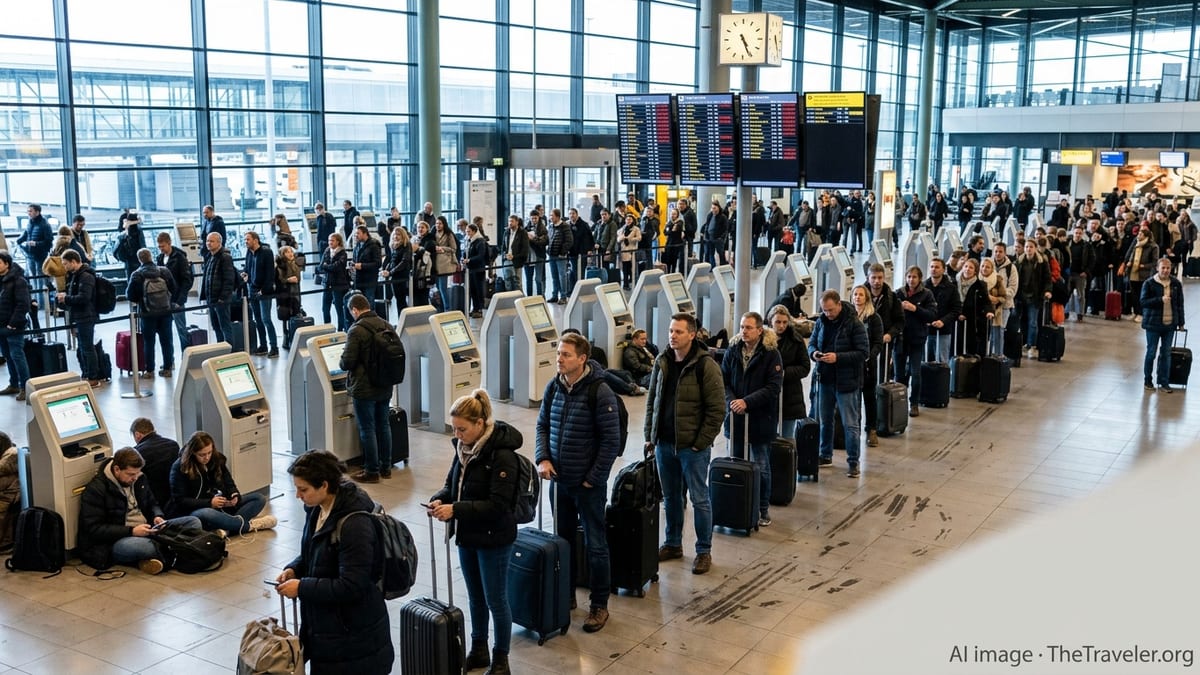
Major Hub Buckles Under New Wave of Disruptions
The latest disruption at Schiphol comes at a time when European aviation has already been grappling with heightened operational strain, with several hubs reporting rolling delays and targeted cancellations throughout June. Publicly available flight status feeds and aviation tracker data indicate that Amsterdam’s primary airport has again emerged as one of the hardest-hit nodes, with the knock-on effects rapidly spreading to long-haul and regional routes.
Reports from travel-industry coverage describe a pattern of cancellations and extended delays across both intra-European and transatlantic services touching Schiphol, with a combined impact estimated at 163 disrupted flights over a short operational window. While the precise mix of cancellations versus long delays varies by carrier and route, the overall effect has been to sharply reduce available capacity at one of Europe’s busiest transfer hubs at the height of the early summer travel period.
Operational data suggests that the disruption is not confined to a single cause, with a combination of air traffic control constraints, crew-availability issues and residual weather-related knock-ons cited in recent weeks across the continent. Schiphol’s position as a tightly scheduled hub means even modest schedule shocks can quickly cascade into missed connections, aircraft rotations out of place and mounting pressure on customer service channels.
KLM and Delta See Network Ripple Effects
As Schiphol’s primary hub carrier, KLM Royal Dutch Airlines has borne a significant share of the current disruption. Recent industry articles and consumer guidance pieces note that the airline has already faced multiple rounds of cancellations in 2026 linked to weather events and capacity management, prompting renewed attention to its disruption-handling policies and rebooking tools.
In the latest wave, KLM-operated services to major North American and European destinations are among those affected, with travelers reporting missed connections and schedule changes on routes linking Amsterdam to key cities such as Rome, Los Angeles and other long-haul destinations. Public posts on aviation forums and passenger communities on June 15 and 16 describe instances where connecting itineraries through Schiphol were automatically rebooked, only for onward legs to be cancelled again due to technical or operational reasons.
Delta Air Lines, which partners with KLM at Schiphol as part of the transatlantic joint venture, has also been caught in the turbulence. Jointly marketed flights and codeshare services linking Amsterdam with US hubs have seen schedule volatility, according to live flight-status platforms. In practical terms, this has meant some Delta passengers encountering last-minute equipment swaps, retimed departures or overnight layovers in Amsterdam as aircraft and crews are repositioned.
Industry analysts note that airlines increasingly use what they describe as proactive cancellations to stabilize operations during periods of strain, sacrificing a portion of the schedule to avoid broader network collapse. At a hub as interconnected as Schiphol, however, even targeted cuts can strand passengers far beyond the Netherlands, as missed connections reverberate across long-haul links.
British Airways Passengers Snagged in Wider European Turmoil
Although British Airways is not based at Schiphol, its customers have not escaped the current wave of disruption. Recent European aviation coverage highlights that parallel issues at other major hubs, including Frankfurt, Paris Charles de Gaulle and Brussels, are intersecting with Schiphol’s difficulties to create a patchwork of unstable connections for travelers moving through the region.
Wide-ranging cancellations and delays on British Airways services at nearby hubs have contributed to missed onward links and forced reroutings for passengers whose journeys were originally planned via Amsterdam or other continental gateways. In some cases, traveler reports indicate that itineraries involving British Airways segments into or out of Brussels or other European cities have required rebooking through alternative hubs once Schiphol or partner flights became unreliable.
This convergence of problems at multiple airports underscores how interdependent the European network has become. Disruptions at Schiphol can quickly entangle passengers ticketed on a different carrier but relying on coordinated schedules, especially when their journeys span several countries and involve alliances or codeshares. For British Airways customers, the result has been an uptick in unplanned stopovers, lengthy layovers and short-notice schedule changes, even when their original flights did not depart from Amsterdam.
Passenger Impact: Long Queues, Rebookings and Rights Questions
Firsthand accounts posted across online forums in recent months, resurfacing during the latest disruptions, paint a familiar picture for passengers caught in Schiphol-related chaos: long customer-service queues, uncertainty over rebooking options and confusion about compensation rights. Travelers describe being advised by digital tools to rebook mid-journey, only to have new flights later delayed or cancelled, forcing additional itinerary changes.
Consumer advocacy resources point to the continued relevance of European passenger-protection rules in such scenarios, particularly when flights originate in the European Union or are operated by EU carriers such as KLM or Air France. Guidance published by compensation specialists in June 2026 reiterates that travelers may, under certain conditions, be entitled to fixed-sum compensation or refunds when cancellations or long delays are not caused by extraordinary circumstances and when notice periods are short.
At the same time, publicly available information from KLM’s travel-alert pages emphasizes self-service tools, such as managing bookings through airline apps or online accounts, as the primary channel for rebooking disrupted flights. Passengers are encouraged to monitor flight status continuously and, where possible, to consider alternative routings or nearby hubs if their journeys are flexible. Nonetheless, for those already en route or traveling with complex itineraries, these tools have not always been sufficient to prevent overnight stays or missed onward plans.
Travel forums also highlight the emotional and financial toll such disruptions can inflict, especially when accommodation, meals and missed events are involved. While some travelers report successful claims and reimbursements, others describe protracted disputes over eligibility and documentation, illustrating a widening gap between formal passenger rights on paper and the real-world experience of securing redress.
What Travelers Through Schiphol Should Do Next
For passengers planning to transit Amsterdam in the coming days, industry commentators and consumer guidance suggest adopting a more defensive travel posture until operations stabilize. That includes building longer connection buffers, avoiding tight same-day transfers on separate tickets and closely monitoring any itinerary that relies on multiple hubs currently experiencing strain.
Publicly available advice from airline and airport channels recommends checking flight status through multiple sources, including airline apps, airport departure boards and independent tracking platforms, to detect early signs of schedule changes. Travelers are also urged to ensure their contact details are up to date in carrier profiles so that automated rebooking notifications, where available, reach them quickly.
For those who are already affected by cancellations or severe delays, consumer resources advise keeping detailed records of boarding passes, booking confirmations, receipts and any written notices regarding the cause of disruption. These documents can be critical when later pursuing compensation or reimbursement under European regulations or airline policies.
While the precise duration of the current 163-flight disruption wave at Schiphol remains unclear, the episode reinforces the airport’s growing reputation as a fragile yet essential node in the global aviation system. Until the current turbulence subsides, travelers connecting through Amsterdam are likely to face a heightened risk of last-minute changes, and many may decide to proactively reconfigure their routes to reduce exposure to Europe’s most volatile hub of the summer so far.