


More news on this day
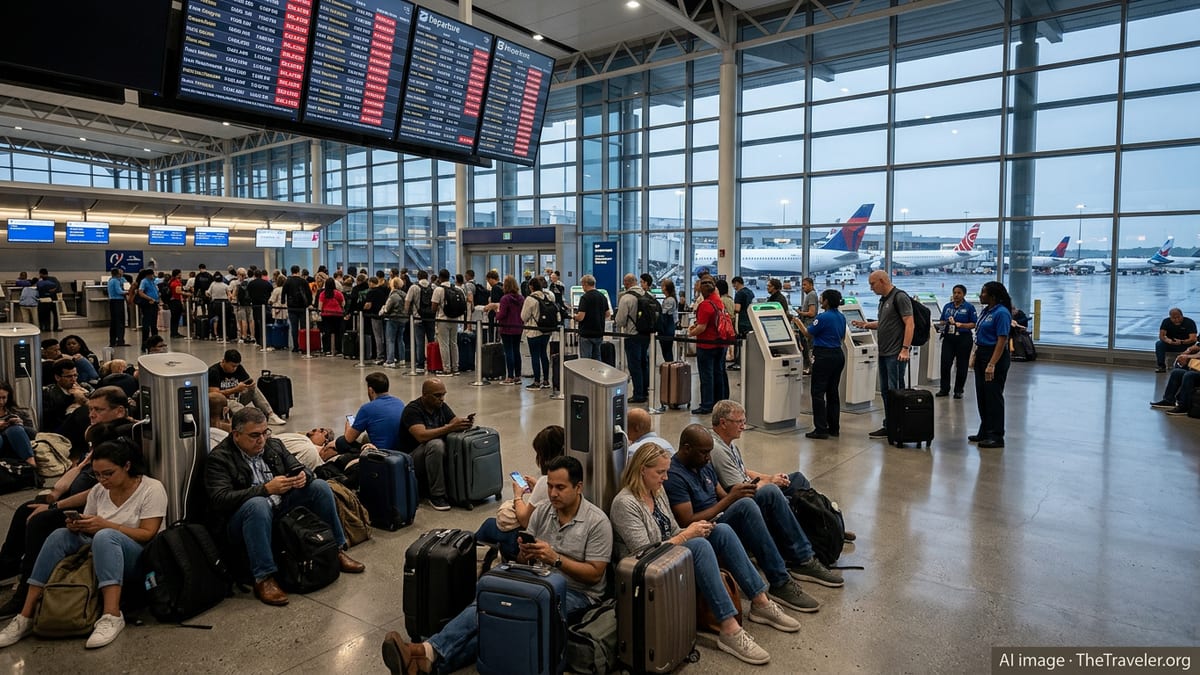
San Francisco International Airport experienced fresh turbulence for travelers as a cluster of ground stops and rolling delays on major Air Canada, United Airlines and American Airlines routes left hundreds of passengers facing missed connections and hours-long waits at the start of the July 4 weekend.
Get the latest news straight to your inbox!
Grounded Departures Hit Transborder and Coast-to-Coast Routes
Publicly available flight-status boards for San Francisco International Airport on July 4 show at least six departures operated by or marketed through Air Canada, United Airlines and American Airlines listed as grounded or canceled within a several-hour window, affecting both domestic and transborder services. The disruptions concentrated on high-demand connections linking San Francisco with major hubs including Toronto, Washington Dulles and key East Coast and Midwest cities.
One of the most heavily impacted corridors involves San Francisco to Toronto, a vital transborder link for both business and leisure travelers. Tracking data for Air Canada flight AC738 on this route indicates that the most recent scheduled operation, planned for July 3, was canceled outright, creating residual rebooking pressure into July 4 as passengers attempted to secure new itineraries on limited alternative services.
United’s role as the dominant hub carrier at San Francisco has amplified the effects of each cancellation. Airport planning documents show United accounting for roughly two-fifths of international departing seats at the airport this summer, while Air Canada ranks among the largest foreign-flag operators. When multiple departures in that group do not operate as scheduled, the knock-on impact extends across connecting banks, from European long haul to shorter-haul domestic spokes.
American Airlines, which maintains a smaller but still significant presence at the airport, has also been affected by the operational strain. Real-time departure boards list select American flights to and from major hubs such as Dallas and Los Angeles in delayed or “no movement” status during peak mid-day hours, further tightening already constrained gate and runway capacity.
Delays Stack Up as SFO’s On-Time Performance Slides
While a handful of outright cancellations has drawn immediate attention, the broader picture at San Francisco International Airport is one of extensive delays rather than a single large-scale shutdown. Data compilations by regional media drawing on live airport feeds show that in recent weeks only a slim majority of flights have reached the gate within fifteen minutes of schedule, and average delays have climbed several times higher than year-earlier levels.
Travelers on July 4 encountered a similar pattern. Live status boards show more than one hundred flights arriving or departing with reported delays of at least fifteen minutes, with many pushed back well beyond half an hour. Delays cluster around the busiest morning and evening banks, where even minor spacing increases between arrivals and departures quickly ripple across tightly timed schedules.
Recent analysis of historical data and current operations points to a mix of structural and short-term causes. San Francisco’s runway layout, which relies heavily on closely spaced parallel runways, has long made the airport vulnerable to capacity reductions during low visibility or when air-traffic constraints limit the use of simultaneous operations. New federal restrictions on parallel landings, combined with ongoing runway work, have reduced the number of arrivals the airport can handle per hour, increasing the likelihood that weather or congestion will trigger holding patterns and ground delays.
For passengers, the practical result is a travel day that appears normal on paper but slowly unravels as delays accumulate. Flights may still depart, but often well behind schedule, causing travelers to miss onward connections at hub airports or arrive too late for same-day ground transport and hotel plans.
Weather, Airspace Limits and Airline Scheduling Under Scrutiny
Operational disruptions at San Francisco rarely stem from a single cause, and the latest wave of cancellations and delays is no exception. Meteorological conditions around the Bay Area, including the familiar pattern of morning marine layer and shifting winds, continue to constrain runway configurations and visibility, particularly during peak departure banks. When clouds or low ceilings intersect with the reduced arrival capacity tied to federal landing rules, even modest schedule peaks can overwhelm available slots.
Airspace management policies remain a central factor. Federal aviation updates in recent months have highlighted the potential for ground delay programs and temporary traffic restrictions at high-demand airports, especially during holiday travel periods or large events. When flow limits are imposed on arrivals into San Francisco, departing flights from other cities must be held at the gate or slowed en route, while outbound departures from San Francisco can also be affected as airlines reposition aircraft and crews.
Airline scheduling practices are also under renewed attention. As carriers seek to maximize aircraft utilization across hubs, small disruptions in one part of the network can cascade rapidly. United’s extensive connecting bank structure at San Francisco, combined with Air Canada’s role feeding transborder and international traffic and American’s links into its own domestic hubs, creates a tightly interdependent system. When six or more flights are grounded on a single day, as occurred across these three carriers around the July 4 weekend, recovery windows narrow, and later flights must absorb both delayed passengers and shifted crews.
Industry analysts note that while some cancellations may be preemptive, aimed at preventing more severe disruptions later in the day, the practice can still leave passengers with limited alternatives. At a constrained airport like San Francisco, spare seats on competing carriers are scarce during peak summer periods, and same-day reaccommodation often requires circuitous routings or overnight stays.
Passenger Impact: Missed Connections, Rebookings and Compensation Questions
For travelers, the immediate impact of the San Francisco disruptions has been a wave of missed connections and extended time spent in terminals. With more than one hundred delayed flights intersecting with a cluster of ground stops across Air Canada, United and American routes, families and business travelers alike are facing long lines at customer-service counters and uncertainty over when they will reach their destinations.
Consumer advocacy groups and compensation platforms report heightened interest from passengers seeking clarification on their rights in the face of delays and cancellations. Guidance published in recent weeks on San Francisco-specific disruptions emphasizes that eligibility for monetary compensation or assistance varies widely depending on the cause of the disruption, the carrier involved and whether flights are international or domestic. Weather and air-traffic-control restrictions frequently fall into categories where cash payments are limited or unavailable, while airline-caused issues such as maintenance or crew scheduling may open the door to hotel vouchers, meals or partial refunds.
Travel-advice outlets recommend that affected passengers retain boarding passes, screenshots of flight-status updates and any written communication from airlines regarding the reason for a disruption. These records can be critical in later reimbursement claims or in appeals through airline customer-service channels. Passengers are also encouraged to monitor their itineraries proactively through airline apps, as same-day protected rebookings sometimes become available before gate agents announce broader changes.
With peak summer travel still ahead, the latest episode of cancellations and delays at San Francisco underscores the importance of building extra time into connections, especially on itineraries that rely on single daily departures or involve a mix of domestic and international legs. For now, the combination of structural constraints at the airport and high seasonal demand suggests that travelers using San Francisco International Airport should be prepared for continuing volatility in schedules.