


More news on this day
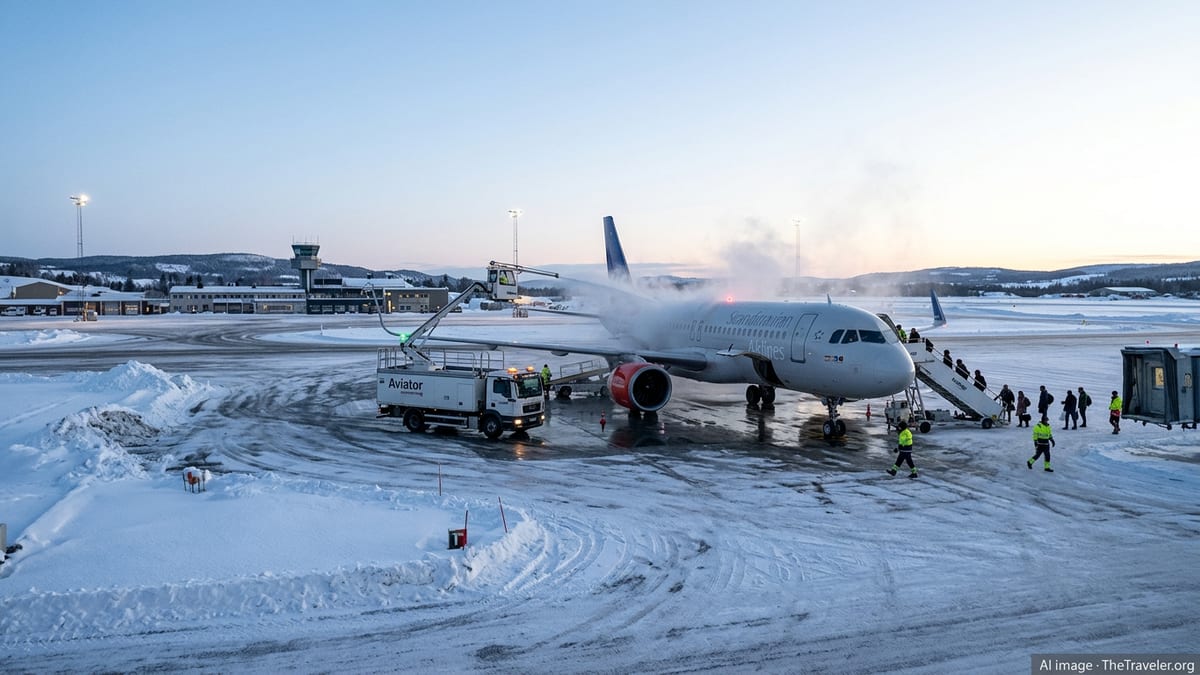
Travelers across Scandinavia faced major disruptions today as Scandinavian Airlines (SAS) reported at least 15 flight cancellations and 53 delays centered on its hubs in Copenhagen, Oslo, and Stockholm, affecting both domestic services and long-haul routes to New York, Boston, Berlin, and London.
Get the latest news straight to your inbox!
Knock-on Disruptions From Nordic Hubs to Major Long-haul Markets
The latest operational disruption has highlighted how concentrated SAS traffic is through its three main hubs. Publicly available schedule and tracking data show that services linking Copenhagen, Oslo, and Stockholm with major intercontinental destinations in the United States and Europe, including New York and Boston as well as Berlin and London, form the backbone of the carrier’s network.
Published coverage in recent weeks has already pointed to periods of instability in the SAS timetable across Scandinavia, with earlier waves of cancellations reported from Oslo and Copenhagen affecting both domestic sectors and feeder flights into the long-haul system. Today’s 15 cancellations and dozens of delays appear to be a continuation of that pattern, with disruptions at the hubs cascading across the broader network.
Travelers originating or connecting in the Nordics are reporting missed onward connections and extended waiting times at transfer points as delayed inbound aircraft knock subsequent departures off schedule. Passengers booked on transatlantic services from Copenhagen and Stockholm to New York area airports and Boston, as well as on key European routes to London and Berlin, are among those facing last-minute changes to their itineraries.
Operational data available from flight-tracking platforms indicates that while some long-haul rotations are still operating, irregular operations at the hubs are resulting in aircraft swaps, retimed departures, and crews reaching duty limits, contributing to the tally of delayed and canceled flights.
Domestic Travelers in Norway, Denmark, and Sweden Hit Hard
The impact is particularly acute for domestic and short-haul passengers in Norway, Denmark, and Sweden, who rely on frequent SAS services between regional cities and the three capital hubs. Earlier reports from Scandinavian media and traveler forums have highlighted how previous rounds of schedule cuts and ad hoc cancellations in Norway, tied in part to high fuel costs, have already reduced resilience on busy domestic corridors.
Today’s cancellation of multiple departures feeding into Copenhagen, Oslo, and Stockholm has again left travelers facing curtailed options for rerouting. With some regional routes already operating at lower frequencies than in past seasons, a single canceled rotation can translate into several extra hours of travel time or even an unplanned overnight stay.
Passengers booked on itineraries involving connections, such as trips from secondary Norwegian or Swedish airports to long-haul flights via Copenhagen or Stockholm, are especially vulnerable. When a feeder flight is canceled or heavily delayed, travelers can lose access to their transatlantic or key European onward sectors, forcing rebookings onto later dates or alternative routings through other European hubs.
Social media posts and online travel communities reflect mounting frustration among affected passengers, including those traveling for time-sensitive events who find themselves stranded in Nordic hubs or regional airports while they wait for new options to become available.
Transatlantic and European Links to New York, Boston, Berlin, and London Affected
The disruption is reverberating well beyond Scandinavia, particularly along SAS routes that connect the Nordic capitals with major US and European cities. The airline’s transatlantic portfolio, which in the current season includes links from Copenhagen and Stockholm to New York and from Copenhagen to Boston, is highly dependent on smooth hub operations and punctual feeder traffic.
Reports indicate that today’s cancellations and delays are affecting both nonstop long-haul services and the connecting passengers who feed those flights from across the Nordic region and continental Europe. Travelers headed to or from New York and Boston are experiencing extended layovers, rebooked itineraries, and in some cases overnight stays after missed connections.
Within Europe, SAS operates a dense schedule between Copenhagen, Oslo, Stockholm, and major European capitals including Berlin and London. Publicly available network information shows that these routes are key for both business and leisure travel. Disruptions today on these sectors are compounding the strain, as aircraft and crews that usually cycle quickly between Nordic capitals and European gateways are delayed or grounded, reducing the availability of onward options.
Travelers who began their journeys in cities such as Berlin or London on flights timed to connect with onward SAS services in Scandinavia are among those most affected. Even if their initial departure operated as planned, delays or cancellations on the connecting leg within the SAS network can lead to missed final destinations or reroutes on partner carriers where capacity allows.
Rebooking Policies, Passenger Rights, and Limited Alternatives
Information on the SAS website indicates that when flights are canceled, travelers are typically offered rebooking on the next available SAS-operated service or, in some cases, the option to adjust their travel dates within a defined period. Recent travel alerts for parts of the 2026 summer season outline flexible rebooking windows for affected passengers, reflecting a broader attempt by the airline to manage ongoing operational volatility.
However, the scale of today’s combined 15 cancellations and 53 delays means that seats on near-term alternatives are limited, especially on high-demand routes linking the Nordics with New York, Boston, Berlin, and London. This capacity squeeze is particularly challenging at the start of the main travel season, when load factors are already elevated and spare seats are scarce.
Publicly accessible consumer guidance reminds travelers on flights departing from or within the European Union that EU261 and related regulations may entitle them to assistance, refunds, or compensation under certain conditions when faced with cancellations or long delays. Online discussion forums focused on SAS show that many travelers are now weighing their options between accepting rebookings, requesting refunds, or later submitting claims once their journeys are completed.
For some passengers, especially those on complex itineraries involving multiple carriers or code shares, the process of determining which airline is responsible for rebooking and potential compensation can be complicated. Travel experts in public commentary often recommend keeping detailed records of delays and out-of-pocket expenses to support any future claims.
What Travelers Can Do Now
With disruption continuing across Copenhagen, Oslo, and Stockholm, travelers scheduled to fly with SAS today and in the coming days are being advised in public guidance and online travel communities to monitor their bookings closely. Checking real-time flight-status tools, airline apps, and airport departure boards before leaving for the airport can help identify problems early enough to adjust plans.
Published recommendations also suggest that passengers who see their flight canceled or significantly delayed should initiate rebooking as soon as possible through digital channels if available, since call centers and airport service desks can quickly become congested during widespread disruption. Many travelers are also turning to self-service tools to search for alternative routings through partner hubs when direct options from Copenhagen, Oslo, or Stockholm are no longer available.
For those already stranded at airports, understanding the assistance that may be available is essential. Consumer advice sources note that, depending on the circumstances and applicable regulations, travelers on affected flights may be entitled to meals, hotel accommodation, and ground transportation during long waits. Keeping receipts and clear documentation can be important if reimbursement is pursued later.
As SAS works through the operational challenges behind today’s 15 cancellations and 53 delays, the situation serves as a reminder of how quickly disruptions at a few key hubs can ripple outward, temporarily reshaping travel plans for passengers across Scandinavia, North America, and Europe.